Business Briefcase Styles for Corporate Buyers: Top-Loaders, Slim Cases and Shoulder Bags
There is no single “corporate briefcase” that works for every programme. A sales team, employee onboarding group, client-gift project and conference distribution programme can all require different shapes, capacities and carrying styles. Choosing the correct briefcase style is one of the simplest ways to improve recipient use and reduce the risk of ordering a bag that looks good but does not suit the working day.
This guide compares the most practical business briefcase styles for corporate projects and explains how to match each format with the people who will carry it.
Start with the movement of the user
Briefcase style should follow the user’s routine. Consider where the bag will be carried, how long it will be carried and what must be inside. A briefcase for a manager walking from car to meeting room can be more structured and formal. A bag for a sales representative who travels between appointments may need a shoulder strap, quick-access pockets and more flexible capacity. A training attendee may only need a slim format for documents and a notebook.
The best style is not the most feature-rich one. It is the one that supports the actual journey from home to office, meeting, client site or event venue.
Top-loader briefcases: the classic professional format
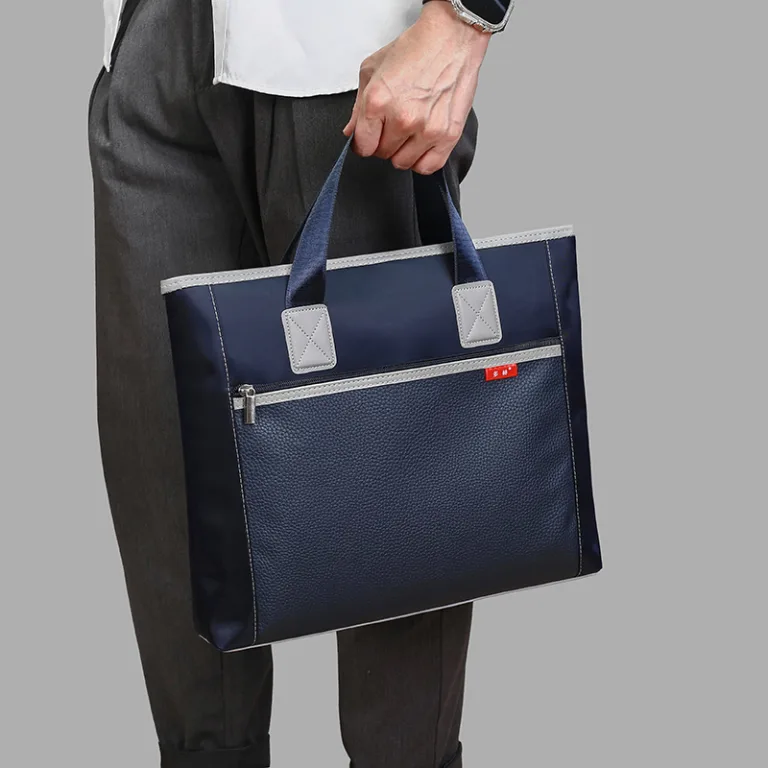
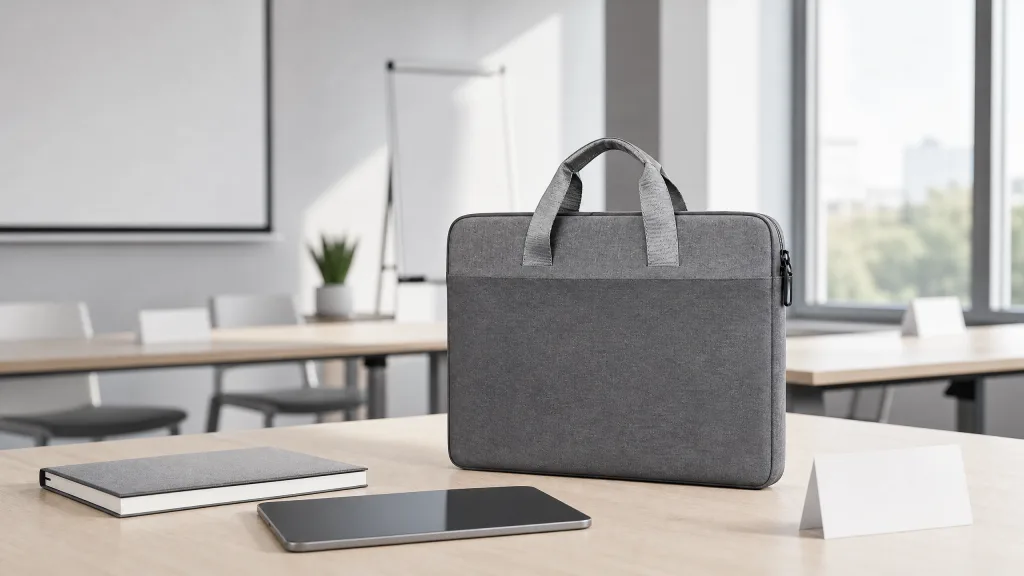
A top-loader briefcase opens across the top and is usually carried by handles, often with an optional shoulder strap. It is a familiar choice for formal corporate environments because it presents documents and work items in an organised, professional way.
Top-loaders can be effective for management teams, client meetings, sales staff and employee gifts. They often provide a structured silhouette and enough capacity for A4 papers, notebooks, selected accessories and, in some designs, a laptop compartment.
Best fit
- Executive and management teams.
- Client-facing sales staff.
- Corporate gifts requiring a refined appearance.
- Programmes where document organisation matters.
Points to confirm
Check whether the opening is wide enough to access documents easily. Assess handle comfort when loaded. If a shoulder strap is included, confirm that it is adjustable and reinforced. The bag should keep its shape when placed beside a chair or meeting table.
A more formal top-loader direction can be explored through DH75, particularly for projects that need a professional, executive-facing look.
Slim document cases: lightweight and efficient
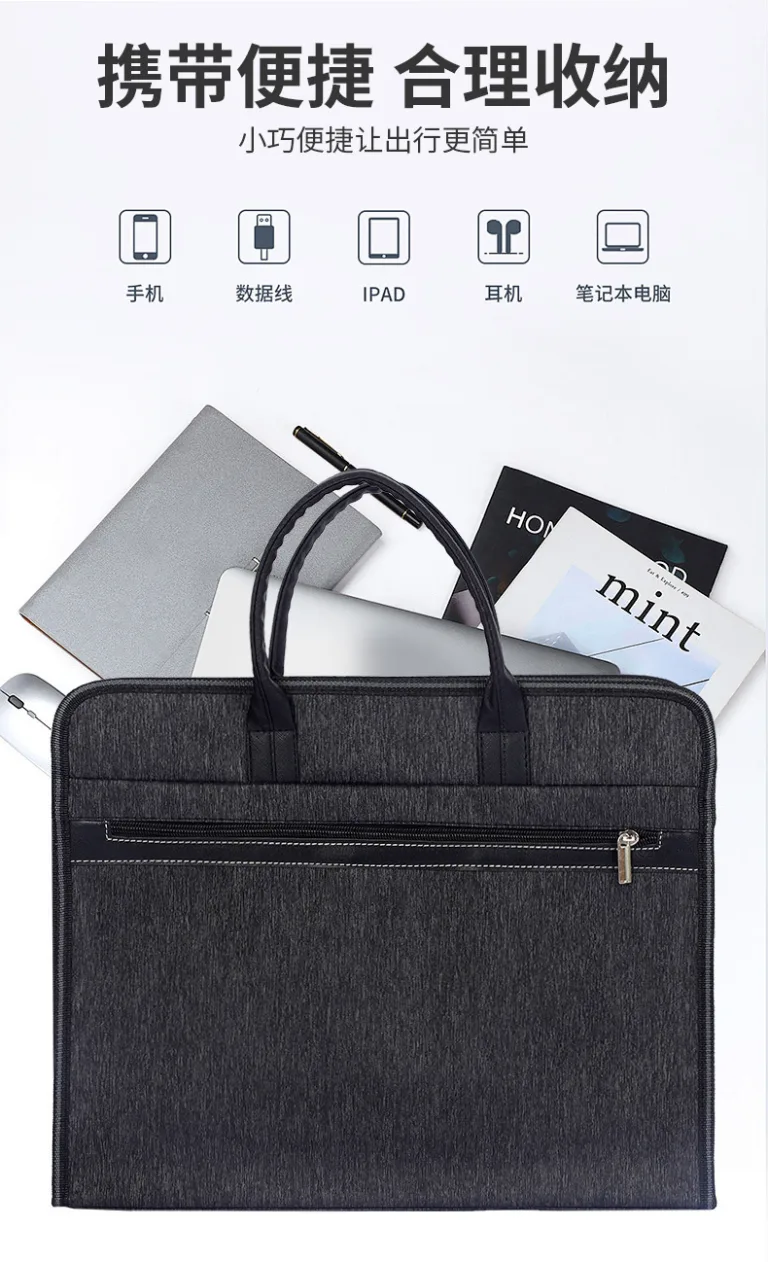
Slim cases are designed for lower-volume carry. They are often used for A4 documents, notebooks, tablets, event materials and light daily essentials. Their low profile makes them easy to distribute, stack and store, which can be valuable for training sessions, conferences and internal meetings.
A slim case is not necessarily a lower-quality choice. When specified well, it can feel clean and professional while helping recipients avoid bulky carry. The limitation is capacity: it may not suit users who need a large charger, several folders or a full laptop setup.
Best fit
- Seminar and training participants.
- Meeting programmes.
- Document-focused office roles.
- Lightweight client handovers.
- Large event distributions where storage and carton efficiency matter.
Points to confirm
Make sure A4 papers fit without bending. Check whether the case needs a separate tablet or laptop sleeve. Confirm the logo panel size and whether a shoulder strap is necessary for the expected carry distance.
Shoulder briefcases: flexible carry for active teams
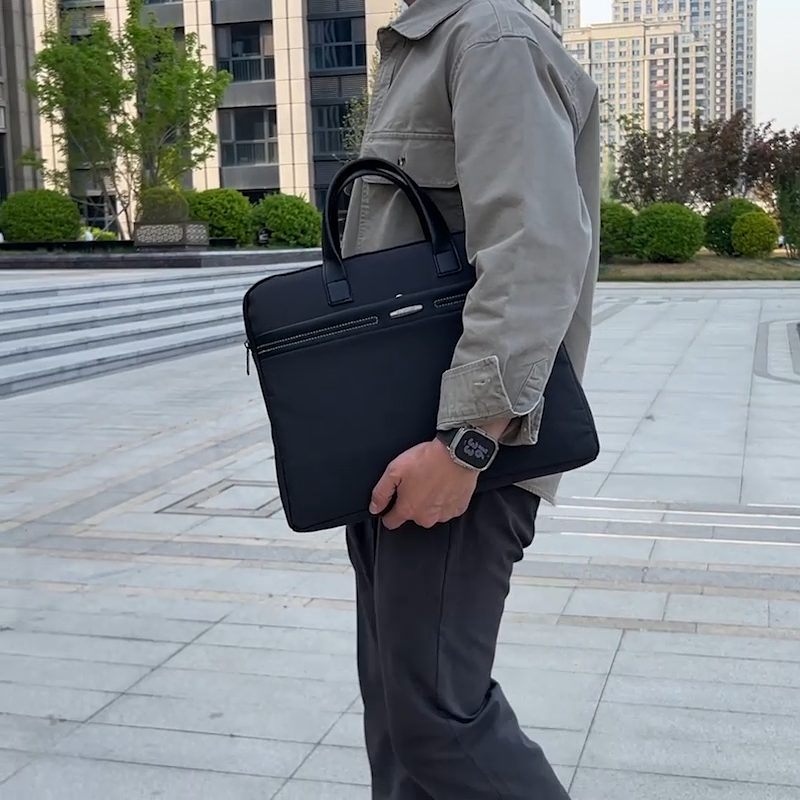
Shoulder briefcases are designed for users who move frequently and need hands-free convenience. They are commonly chosen for sales teams, field staff, commuters and training organisers. A well-designed shoulder style can provide space for documents, a device, charger and personal items while remaining manageable during travel.
The strap is one of the most important components. It should have secure hardware, comfortable webbing and an adjustment range suitable for different users. The bag should also remain balanced when the main compartment contains a laptop and documents.
Best fit
- Sales and field teams.
- Employees who commute by public transport.
- Business travellers carrying devices and paperwork.
- Project staff who move between multiple sites.
Points to confirm
Review shoulder strap attachment, handle reinforcement, internal padding and quick-access pocket position. Do not assume that every shoulder bag is suitable for a laptop; confirm the device compartment dimensions and protection level.
Model 6046 offers a useful business-oriented reference for projects that need practical carry and a professional Oxford briefcase appearance.

Laptop-ready briefcases: a hybrid corporate solution
Laptop-ready briefcases combine a business look with defined device protection. They are especially relevant for modern office teams, hybrid workers and client-facing employees who carry a computer every day but do not want a casual backpack-style product.
The key is to identify whether the bag is truly laptop-ready. Check the internal sleeve measurements, padding, closure design and separation from chargers or hard accessories. A laptop compartment should protect the device without making the rest of the bag unusable for documents.
The Model 162 laptop briefcase is a lightweight option to consider when the programme is device-led. It may be more appropriate than a document-first briefcase for commuting employees, while a top-loader may still be better for document-heavy client work.
Structured executive cases: presentation-led choices
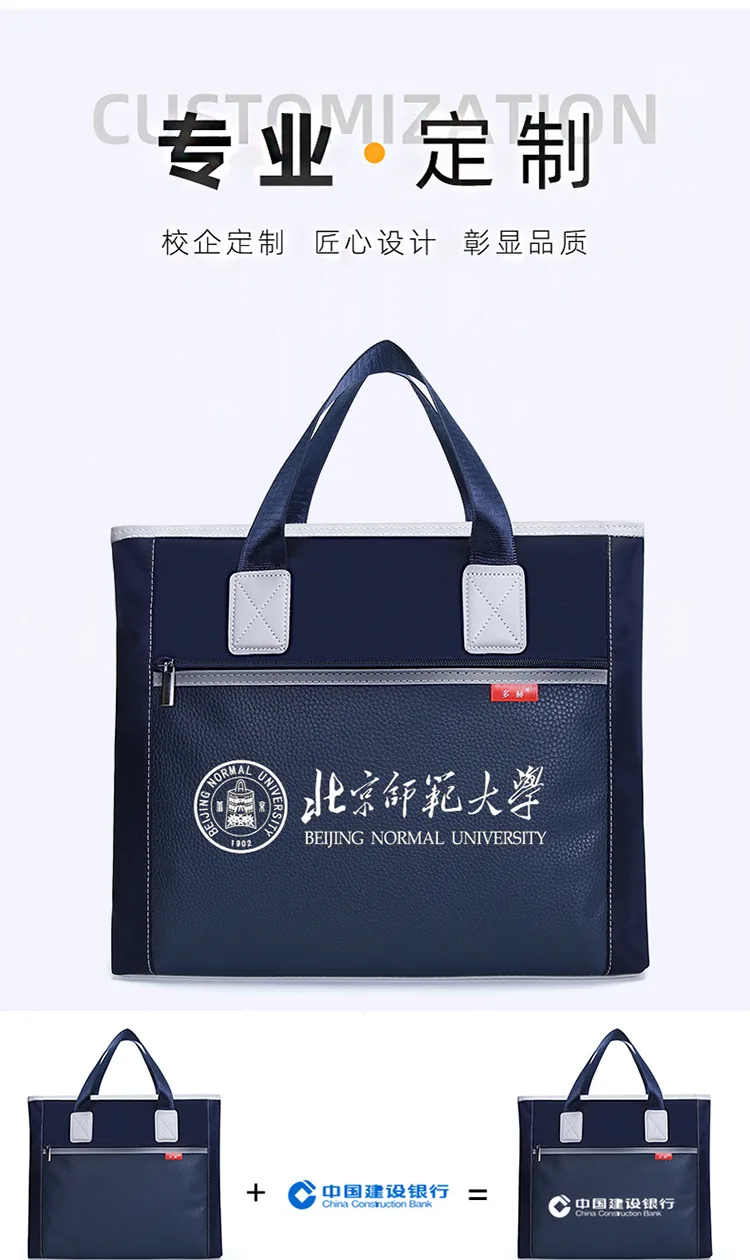
A structured executive case is selected when the briefcase itself is part of the gift experience. It may use a more formal silhouette, refined hardware, premium material direction or discreet branding. This style can be suitable for leadership gifts, partner programmes and client appreciation projects.
The buyer should be realistic about use. An executive case should still fit the recipient’s core work items. If the bag is too rigid, too heavy or too specialised, it may be admired but not carried. The strongest premium projects combine a refined appearance with everyday usefulness.
Compare styles before requesting a quotation
| Style | Typical capacity | Best corporate application | Branding approach | Main caution |
|---|---|---|---|---|
| Top-loader | Documents, notebook, accessories, selected laptop protection | Management, sales, client gifts | Small print, patch, label or metal mark | Check opening width and handle comfort |
| Slim case | Documents, tablet, notebook, event materials | Training, meetings, conferences | Front-panel print or clean label | Limited depth for chargers and folders |
| Shoulder briefcase | Laptop, papers, chargers and variable daily items | Field teams, commuters, sales | Patch, print or woven label | Check balance and strap reinforcement |
| Laptop-ready briefcase | Device, charger, documents and accessories | Hybrid workers and office teams | Controlled print or patch | Verify actual device dimensions |
| Executive case | Refined work essentials and gift presentation | Leadership and client programmes | Deboss, metal plate or tonal logo | Avoid sacrificing function for appearance |
Select a style that supports repeat use
A corporate bag provides the most value when recipients continue to use it after the original programme ends. This is why style selection should include a real-user test. Load a sample with expected items, carry it through a typical work routine and ask whether the user would choose it voluntarily for a normal office day.
If the answer is yes, the style is likely supporting both practical needs and brand visibility. If the answer is no, review the capacity, strap, pocket layout or formality of the design before approving production.
Connect style to the rest of the specification
Style is only the first decision. After choosing the general form, define material, internal compartments, logo treatment and packing. A top-loader in Oxford fabric can suit a durable employee programme, while a similar shape with premium accents may suit a client gift. The form can remain consistent while the specification changes to meet different business objectives.
For a comprehensive decision, use the style choice together with the recipient profile, daily contents and logo requirements. This creates a more reliable brief for the sample and production stages.
Final recommendation
Select a top-loader for classic professional organisation, a slim case for document-focused efficiency, a shoulder briefcase for active daily movement, a laptop-ready hybrid for device-led work and an executive case for high-value corporate gifting. The right choice is the one that fits both the recipient and the programme.
By choosing a style around real use rather than a generic product label, corporate buyers can create a briefcase project that feels useful, credible and worth keeping.
Recommended reading
- How to Choose the Right Business Briefcase for Corporate Use
- Business Briefcase Size Guide: Documents, Laptops and Daily Work Essentials
- Business Briefcase vs Laptop Bag: Which Is Better for Your Team?
Unsure which briefcase style fits your programme? Tell us who will use the bags, what they will carry and your target quantity for a tailored recommendation.
Explore Production Models & Request a Quote
Ready to move from guidance to a real bulk program? Review our production references such as Model 202Model 6046 or visit the Business Briefcases manufacturer page for specifications, customization options and QC detail. When your spec is set, request a project quote and we will return a like-for-like quote for your order.