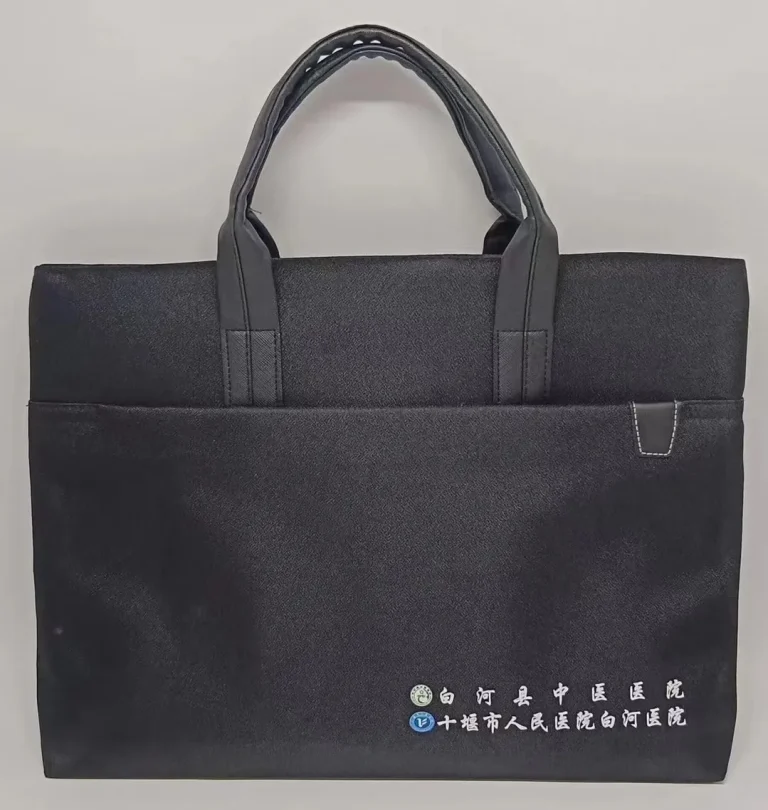
How to Choose the Right Business Briefcase for Corporate Use
A business briefcase ordered for a company is rarely just a bag. It may be an employee welcome item, a sales-team tool, a client gift or part of a branded meeting programme. Choosing the right format means looking beyond colour and price to consider what recipients actually carry, where they work and what the item communicates about the organisation.

This guide helps procurement teams select business briefcase options for corporate teams without treating every department or programme as if it has the same needs.
How to choose a business briefcase for corporate use: start with the recipient
The fastest way to choose poorly is to start with the first product image that looks professional. Start instead with the people who will use the briefcase. Their daily routine should determine the format, capacity and features.
A new employee who commutes with a laptop and charger needs a different briefcase from a conference attendee carrying A4 materials. A client receiving a thank-you gift may value a refined silhouette and restrained branding more than a large organiser section. A field sales representative may need rapid access pockets and a shoulder strap that remains comfortable between appointments.
Create a simple recipient brief before comparing models:
- Who will receive the bag?
- What must they carry on a normal day?
- How often will the bag be used?
- Is the programme primarily internal, client-facing or promotional?
- What should the logo communicate: visibility, discretion or premium quality?
These questions convert a vague request into a usable specification.
Choose the right format for each corporate programme
Employee onboarding and everyday office use
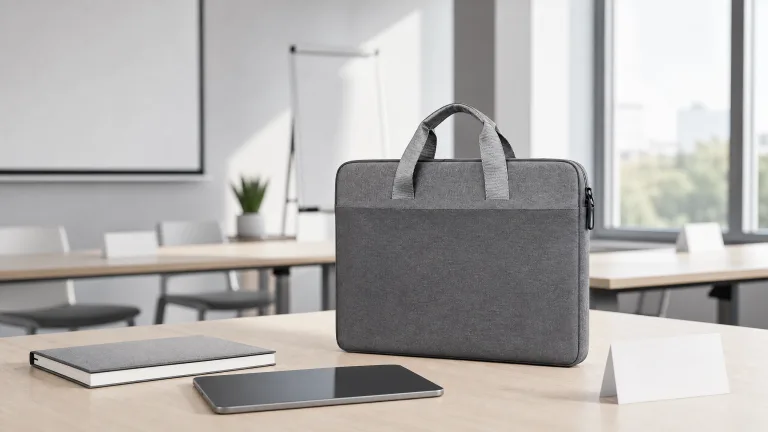
For employee kits, durability and useful organisation matter more than an extravagant finish. Look for a briefcase with enough space for documents, a laptop or tablet if required, a charger, stationery and personal essentials. A neutral colour and clean construction make the bag easier for a wide range of employees to use.
Practical features include a padded device area, a front pocket for fast-access items, handles that remain comfortable when loaded and an adjustable shoulder strap. A moderate-size style is often more useful than an oversized bag because employees are more likely to carry it regularly.
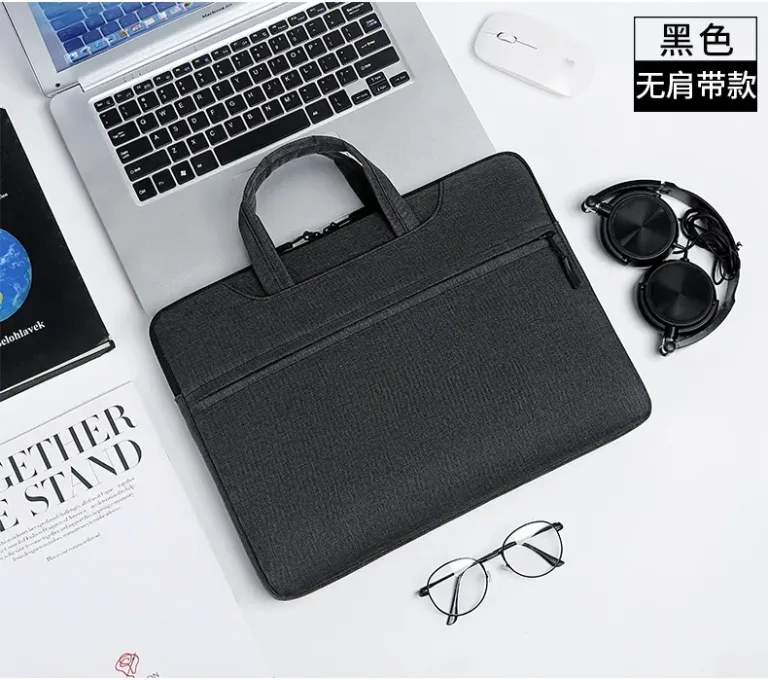
A compact but versatile option such as Business Briefcase Model 317 can provide a straightforward base for employee programmes when the project calls for logo customisation without an overly formal look.
Sales and field teams
Sales teams usually carry more variable items: documents, catalogues, samples, a device, chargers and sometimes personal travel items. Their briefcase should open easily, stay organised and look credible in front of clients.
Consider a structured model with dedicated document space, a laptop-ready section and a shoulder strap. The bag should remain balanced when carried for extended periods, and the front pocket should allow users to reach smaller essentials without opening the main compartment in a reception area or car park.
For this audience, a design such as Model 6046 can be useful as a starting point because it combines a professional Oxford exterior with functional business storage.
Client gifts and executive programmes
A briefcase selected as a client or executive gift must feel considered before it is even opened. The brand mark should be controlled rather than oversized, and details such as the material texture, zipper pull, handle shape and packaging influence the perceived value.
A more structured silhouette, a leather-like accent, a tonal patch or a small metal logo can make the item feel more personal and less promotional. For premium gifting, decide whether the recipient is likely to carry a laptop, documents or both. A gift that is beautiful but impractical will spend its life in a cupboard rather than in front of customers.
The DH75 high-end business briefcase is an example of a more formal direction for executive-facing projects. It should be specified with logo treatment and packaging that match the gift’s intended position.
Conferences, training and short-term programmes
For conferences and training programmes, the briefcase has to work on the distribution day first. It should be easy to pack, hand out and carry with manuals, notebooks, folders and event materials. A lightweight document-oriented design can be more appropriate than a heavy commuter briefcase.
In this situation, ask how the bags will be distributed. Will they be placed on chairs, carried through registration or shipped to several locations? The packing method, carton quantity and logo visibility may be as important as the internal structure.
Use capacity as a decision filter
Many buyers describe a requirement as “a business briefcase,” but capacity is what separates a useful choice from an attractive mistake. Create a list of the largest and smallest items that must fit. Include document format, device size, charger, notebook, pens, access card and any product materials.
| Intended contents | Appropriate design direction | Detail to verify |
|---|---|---|
| A4 documents, notebook and pens | Slim document briefcase | Main compartment depth and front organiser |
| Laptop, charger and papers | Laptop-ready briefcase | Padded section size and cable storage |
| Catalogues, folders and sales materials | Structured shoulder briefcase | Handle reinforcement and balanced carry |
| Event handouts and light stationery | Conference document bag | Carton packing and logo panel size |
Do not rely on exterior dimensions alone. Ask for internal measurements, particularly if a laptop or tablet must fit inside a dedicated compartment.
Decide on branding after choosing the format
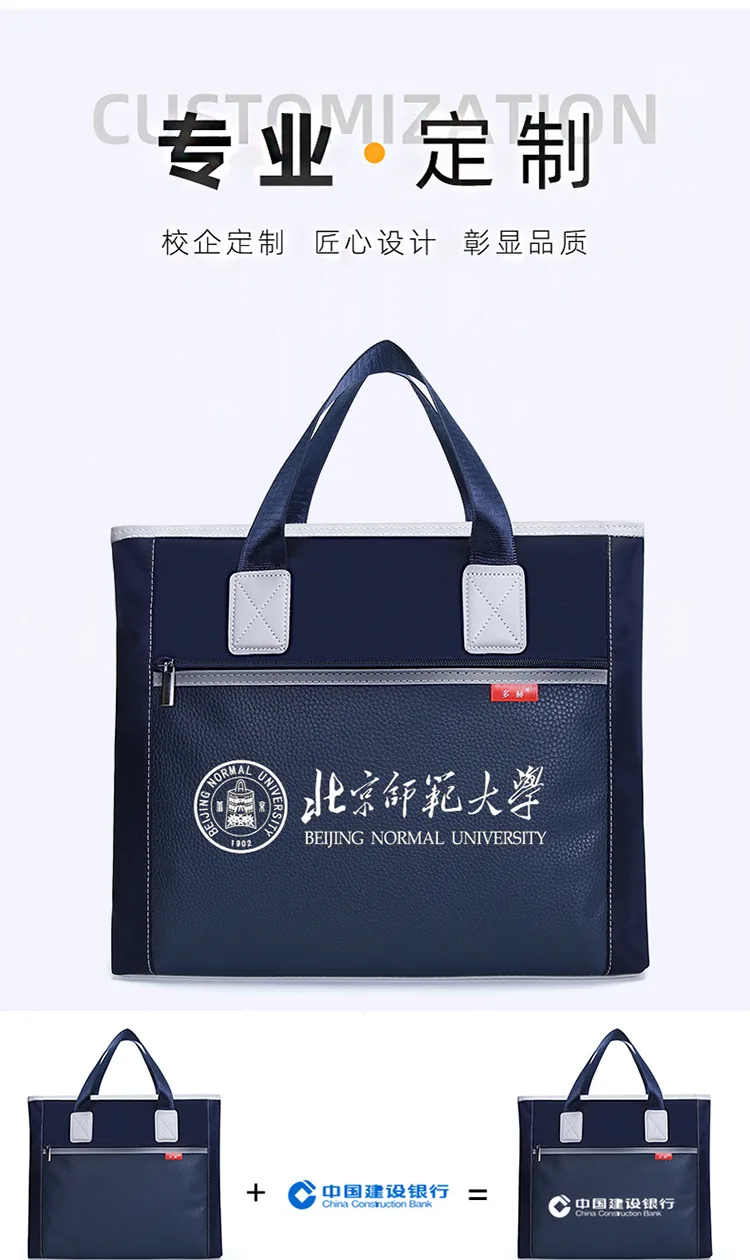
A company logo should support the bag’s purpose. Large high-contrast branding can be appropriate for an event or campaign where visibility is important. A client gift or executive briefcase may benefit from a smaller print, tonal label or subtle patch.
The material, panel location and artwork complexity all influence the recommended method. Share a vector logo, colour references and any placement rules at the beginning of the project. This makes it easier to receive an accurate rendering and avoids late changes after the sample stage.
Evaluate the full corporate programme, not just the unit price
A lower initial price can be attractive, but a corporate briefcase is often judged over months of use. If handles become uncomfortable, zippers feel unreliable or the fabric looks tired quickly, the item can create the wrong brand impression. A better approach is to protect the specifications that recipients will notice most: capacity, material, hardware, stitching, logo treatment and packing.
For repeat programmes, document the approved briefcase construction after the first order. Record the fabric, lining, hardware colour, logo method, placement, carton configuration and delivery requirements. This reduces ambiguity when another office, department or distributor requests the same item later.
Final selection checklist
Before approving a business briefcase for corporate use, confirm that it:
- Fits the recipient’s normal work items.
- Matches the intended frequency of use.
- Offers the right balance between device protection and document capacity.
- Has a logo treatment appropriate for the programme.
- Uses material and hardware that support the desired presentation.
- Can be packed and delivered realistically for the event or distribution plan.
- Has been reviewed through a digital mock-up or physical sample when the order is important.
Choosing the right corporate briefcase is ultimately about making the recipient’s working day easier while giving the brand a credible presence. When the bag is functional, proportionate and well branded, it becomes an item people are happy to keep using.
Recommended reading
- Business Briefcase Materials: Oxford, Nylon, PU and Leather Compared
- Business Briefcase Size Guide: Documents, Laptops and Daily Work Essentials
- Business Briefcase Styles for Corporate Buyers
Planning a team, client or onboarding project? Request a custom briefcase recommendation with your recipient profile, quantity, logo and required in-hand date.
Explore Production Models & Request a Quote
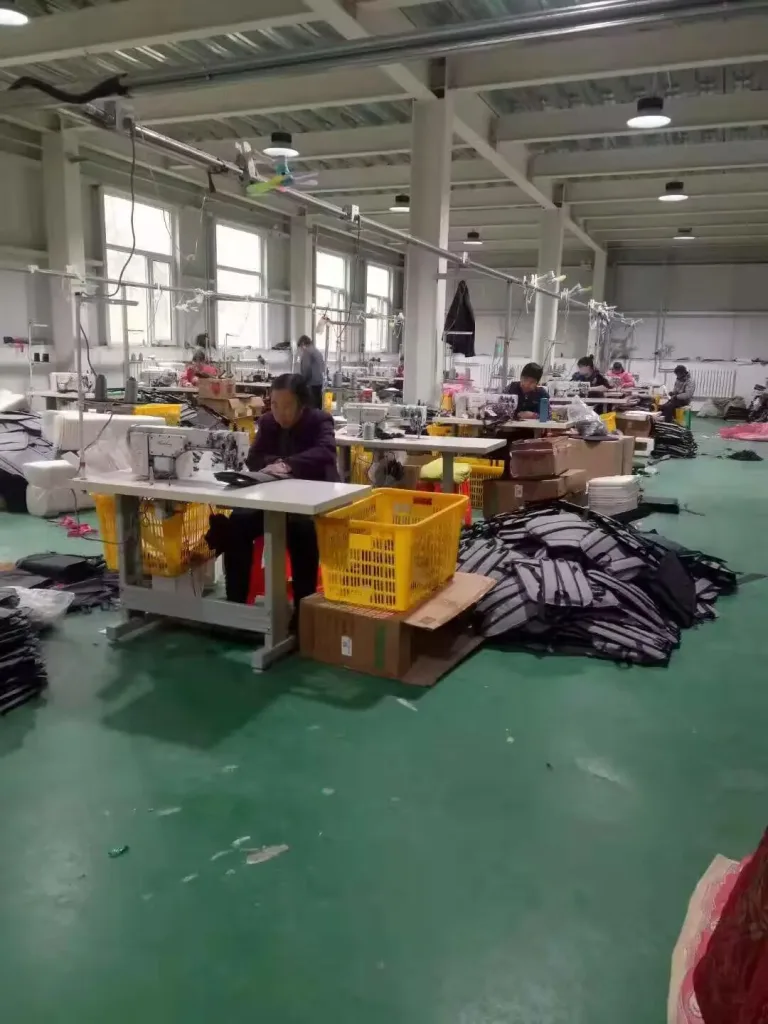
Ready to move from guidance to a real bulk program? Review our production references such as Model 202Model 6046 or visit the Business Briefcases manufacturer page for specifications, customization options and QC detail. When your spec is set, request a project quote and we will return a like-for-like quote for your order.