Business Briefcase Materials: Oxford, Nylon, PU and Leather Compared
A business briefcase is often selected for its appearance first, but the material choice determines how it performs long after a corporate event, onboarding programme or client handover is over. The right fabric affects the bag’s weight, structure, print result, cleaning needs, expected wear and unit cost. For a buyer planning custom business briefcases for corporate programmes, material is therefore a specification decision—not merely a colour choice.
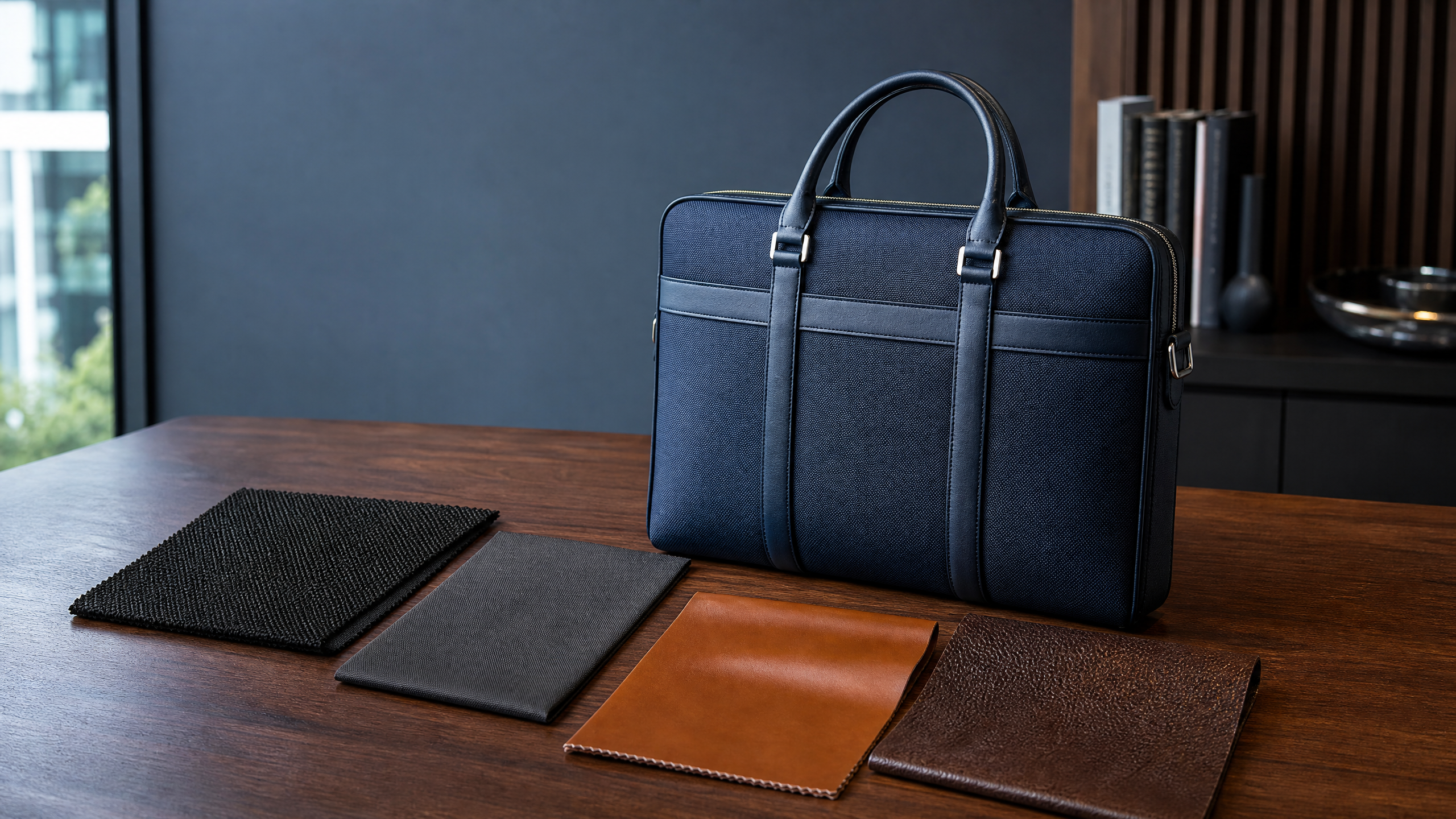
This guide compares Oxford fabric, nylon, PU and leather-like material directions for B2B briefcase projects. The goal is not to identify one material as “best” for every buyer. It is to help you choose a material that matches the recipient, use frequency, brand position and production budget.
Start with the job the briefcase must do
Before comparing swatches, define the real working conditions. A lightweight bag for a one-day training event has different requirements from a daily-carry briefcase for a sales team. Ask four practical questions:
- Will recipients carry a laptop, documents, chargers, or only event materials?
- Will the bag be used once, occasionally, or every workday?
- Does the brand need a large visible logo or a discreet premium mark?
- Is the project optimised for lowest unit cost, long-term use, or a high-end gift impression?
These answers make it much easier to select an appropriate construction. They also prevent a common procurement mistake: comparing two quotations that look similar on paper but use very different fabrics, linings and finishing levels.
Oxford fabric: the practical corporate workhorse
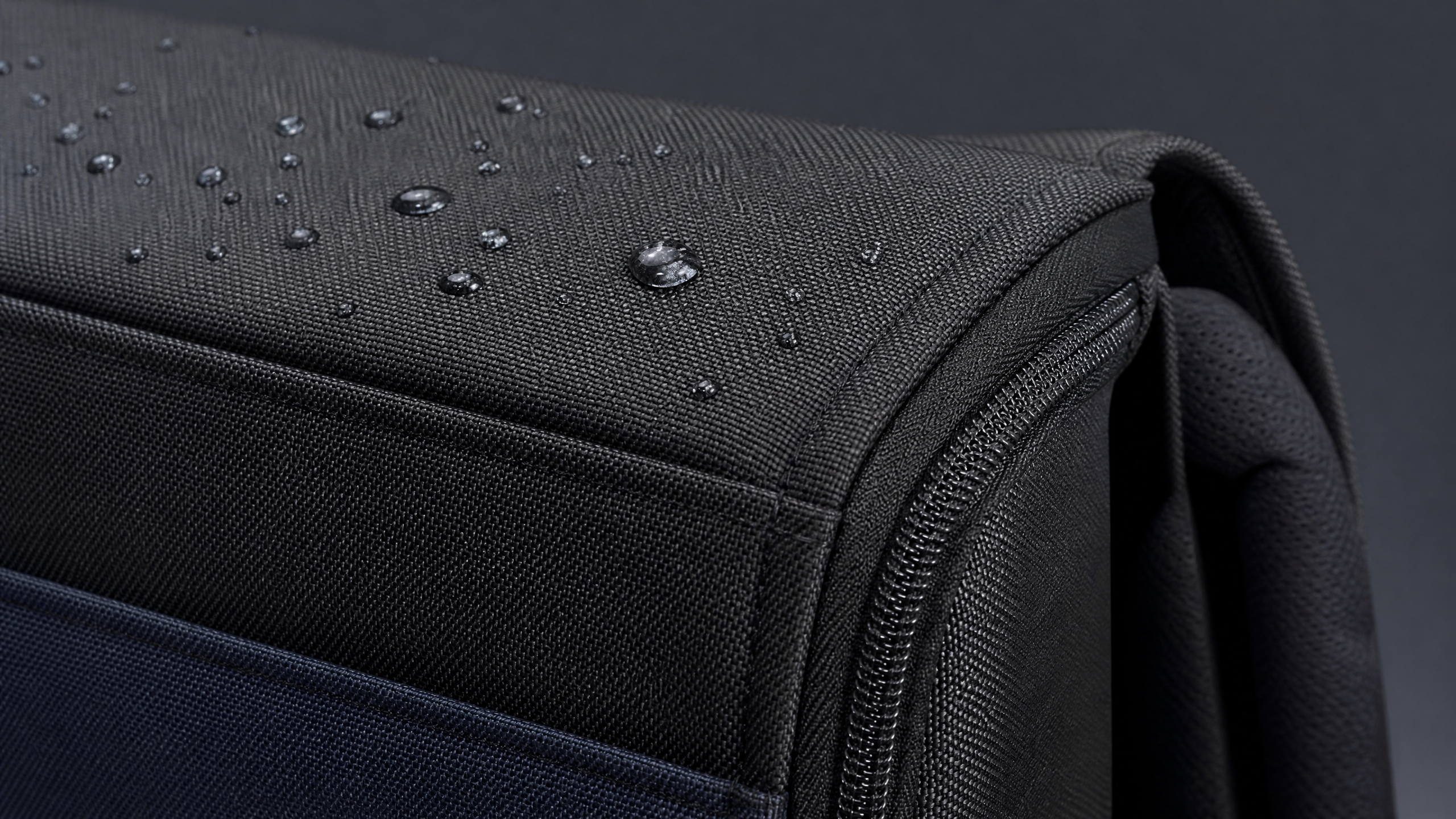
Oxford fabric is a strong choice for many business, conference and employee-kit projects because it can balance durability, manageable weight and cost control. The weave creates a recognisable texture that feels more structured than a thin promotional fabric while remaining suitable for efficient bulk production.
Where Oxford fabric works well
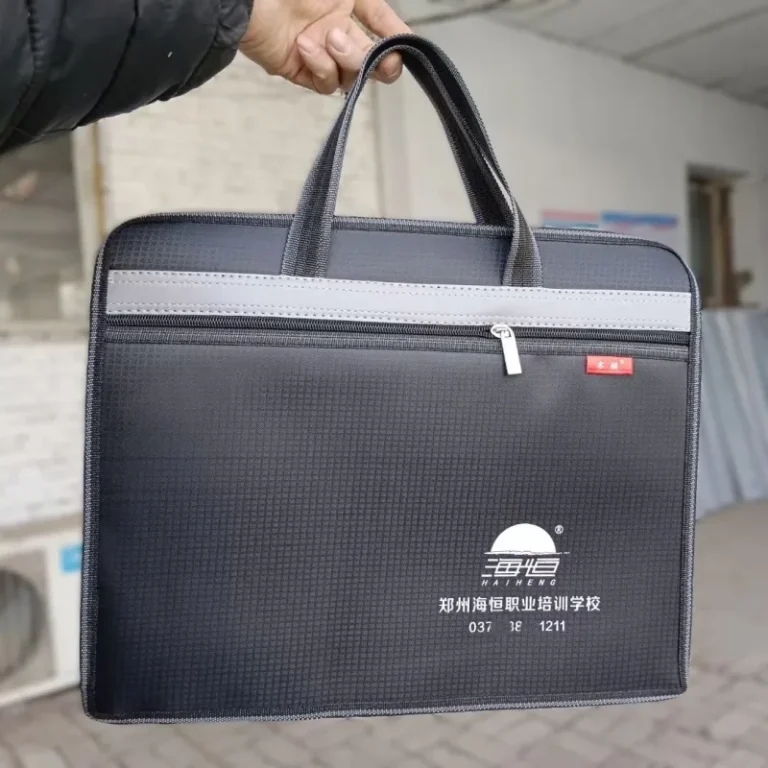
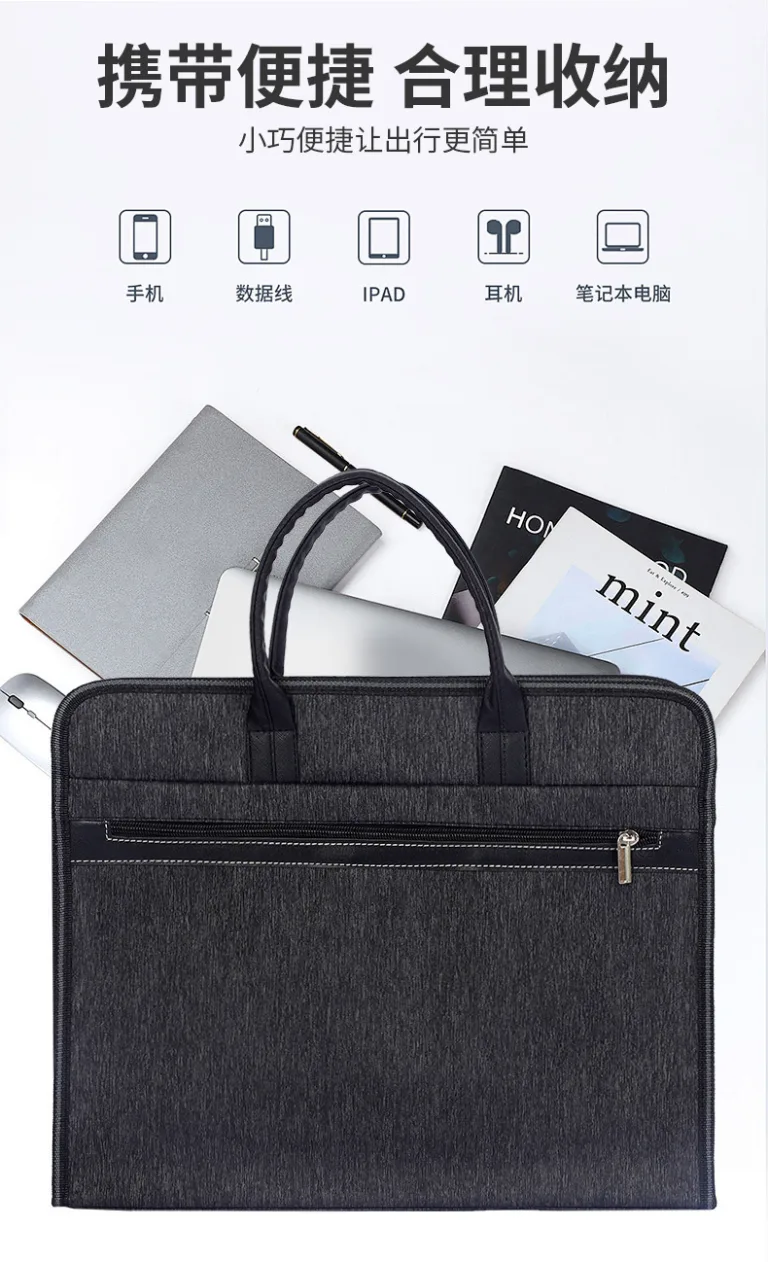
Oxford briefcases are especially practical when the project needs a lightweight, easy-to-brand bag for commuting, training, conferences or corporate distribution. It can support screen printing, heat transfer, woven labels and selected patches, depending on the coating and panel construction. A reinforced Oxford briefcase can also accommodate document sleeves, organiser pockets, laptop padding and shoulder straps without becoming excessively heavy.
The material is available in different density levels. A lighter grade can suit a large event order where price and easy distribution matter. A denser grade is more appropriate when users will carry the bag daily or when the briefcase must hold documents, a computer and accessories. The density number alone does not define quality; the backing, lining, webbing, stitching and hardware should also match the intended use.
For a versatile starting point, review a structured Oxford style such as the Custom Business Briefcase Model 6046. It shows how a lightweight business format can still provide a professional silhouette and practical storage.
Points to specify with Oxford
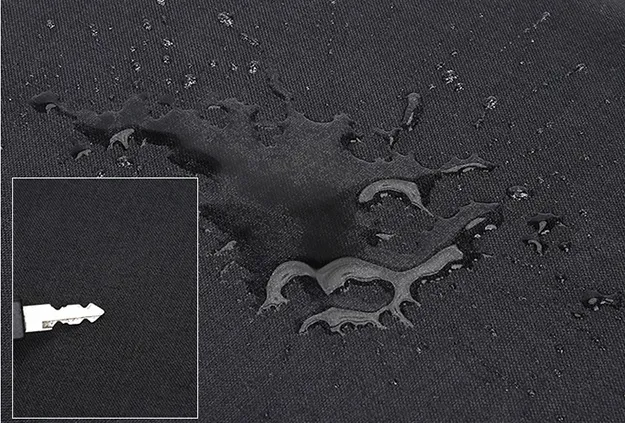
When requesting a quotation, ask for the fabric density, coating type, lining, handle webbing, zipper level and logo method. Specify whether the bag needs splash resistance, a padded device compartment or a reinforced base. These details are more useful than asking only for “waterproof Oxford,” because they give the supplier a measurable target.
Nylon: a clean, durable option for frequent use
Nylon is often chosen for projects that need a smooth, modern surface and consistent performance under regular carrying. It can create a refined look on laptop-ready and commuter-focused business bags, especially when paired with clean edge binding, quality zippers and a restrained logo treatment.
A nylon business briefcase can be a good fit for field teams, sales staff or professional users who move between transport, client sites and offices. It may also work well when the design needs a sleeker profile than a textured Oxford exterior.
The trade-off is that nylon specifications vary widely. A thin nylon shell with basic lining will not deliver the same user experience as a structured bag with reinforcement and padding. Buyers should therefore evaluate the full bill of materials rather than choosing nylon simply because it sounds premium.
PU: a structured presentation for client-facing projects
PU is usually selected when a corporate project needs a more formal or leather-like presentation without using genuine leather. It can provide a smooth, structured surface for executive gifts, boardroom programmes or client-facing teams. A small debossed mark, metal plate or tonal patch often works particularly well on PU-style panels.
However, PU requires sensible expectation-setting. It is not the same as leather, and its suitability depends on how the bag will be stored, transported and used. A full PU exterior can add weight and may not be the ideal choice for a high-volume event giveaway. Many practical corporate designs instead use PU as an accent panel with Oxford fabric, combining a more refined visual detail with the lighter weight and flexibility of textile construction.
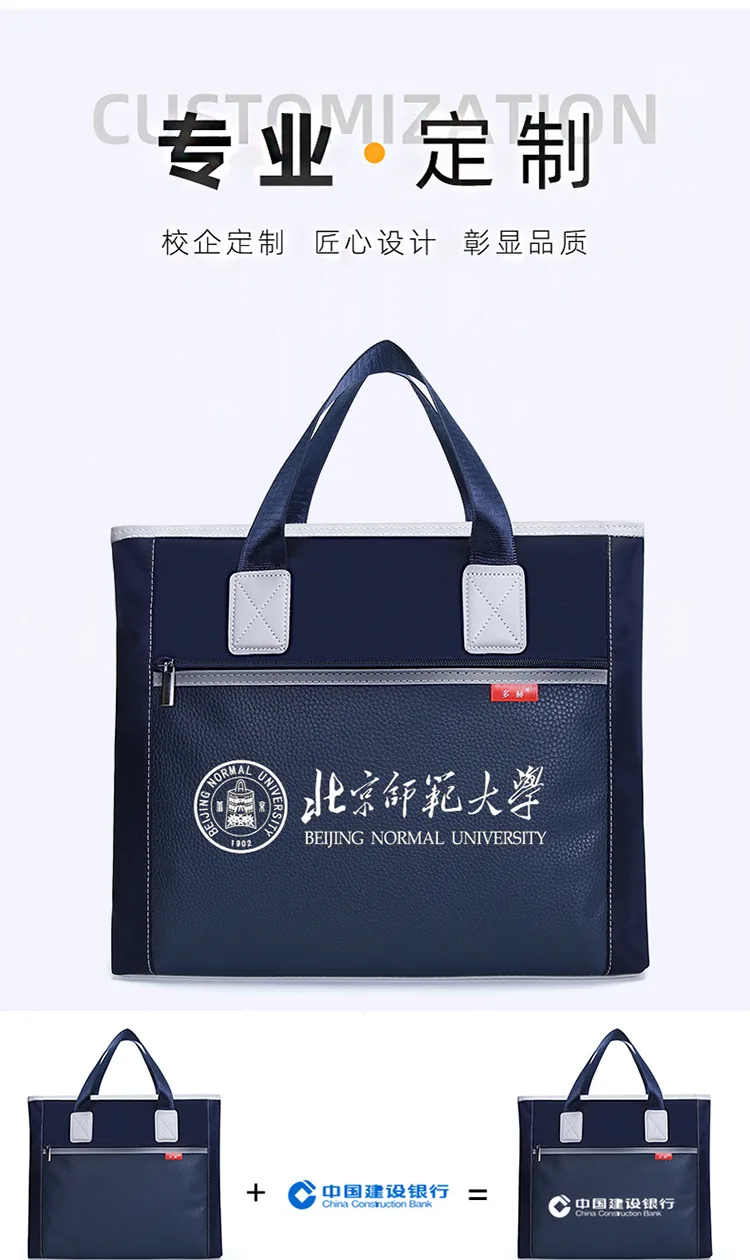
The Business Briefcase Model 202 is a useful reference point for this mixed-material direction. It combines a leather-like front presentation with an Oxford body, making it relevant for corporate meetings, training sessions and promotional gifts.
Leather is appropriate when the project is clearly positioned as a high-value executive gift or a long-term premium collection. It offers a distinctive hand-feel, ageing character and perceived value that cannot be replicated exactly by synthetic materials. It can also support discreet branding through embossing or carefully designed hardware.
The decision should include more than the appearance. Leather changes the project’s unit cost, lead-time expectations, maintenance needs and consistency requirements. Natural variation is part of the material, which can be appealing in a premium programme but may not suit buyers who expect every unit to look identical. For large promotional orders, leather is often unnecessary; for leadership gifts, it can be the right strategic choice.
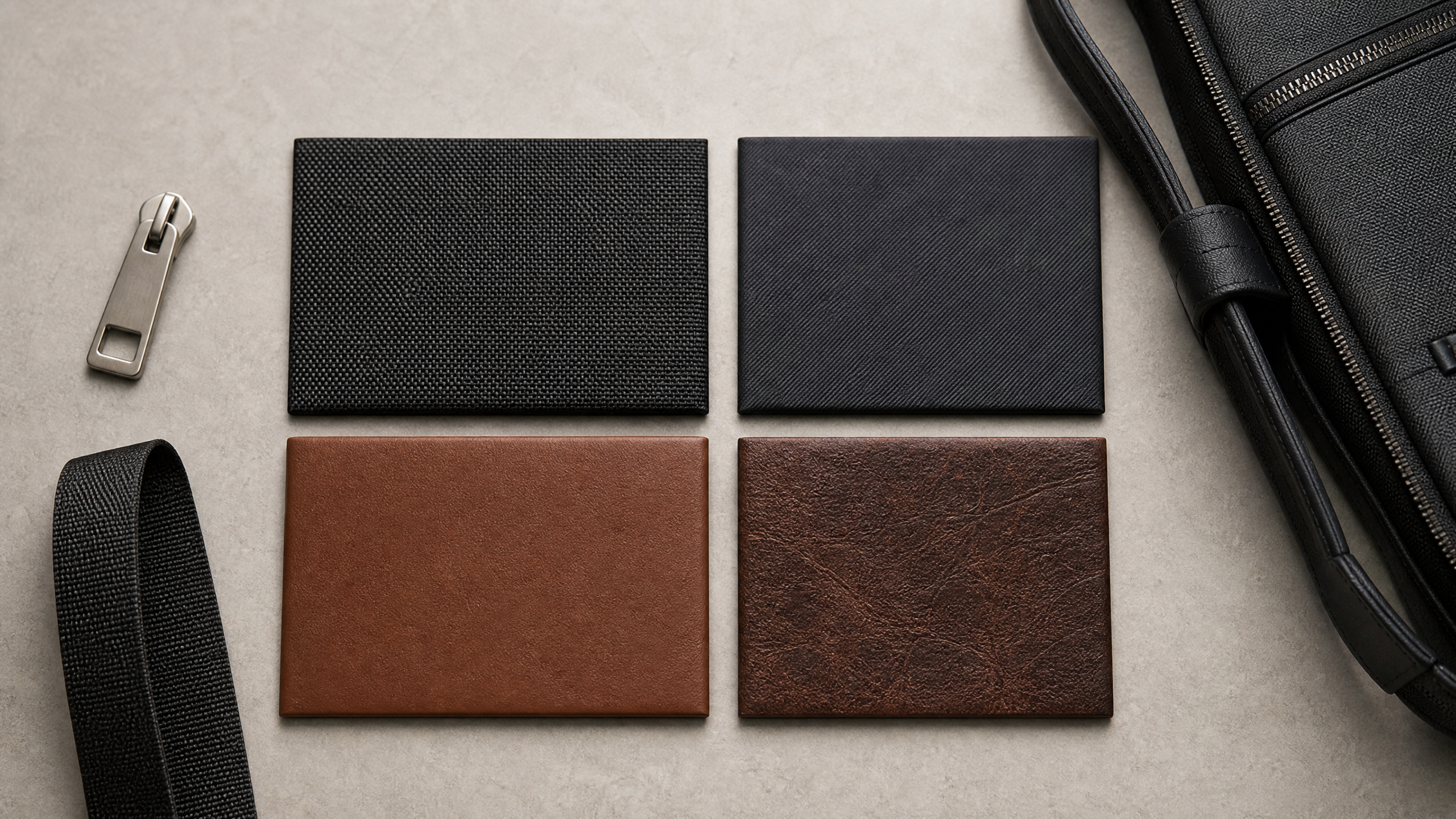
Material comparison for B2B buyers
| Material direction | Best for | Brand impression | Typical advantages | Consider before ordering |
|---|---|---|---|---|
| Oxford fabric | Employee kits, conferences, daily business carry | Practical and professional | Lightweight, versatile, logo-friendly, cost-efficient | Confirm density, coating, reinforcement and lining |
| Nylon | Sales teams, commuters, laptop-ready bags | Clean and modern | Smooth surface, durable feel, suitable for regular use | Compare full construction, not fabric name alone |
| PU | Corporate gifts, meetings, premium-looking programmes | Structured and refined | Leather-like appearance, good for subtle branding | Consider weight, storage conditions and intended lifespan |
| Leather | Executive gifts and premium collections | High-value and classic | Strong perceived value, distinctive feel | Higher cost, care needs and natural variation |
Match the logo method to the material
Material and branding should be selected together. A bold screen print may suit a flat Oxford panel, while a detailed heat transfer can work well where artwork contains several colours. Embroidery can add texture to selected textile constructions but should be positioned away from areas where it may affect the bag’s structure. On PU or leather, smaller debossed marks, metal plates or tonal patches can appear more deliberate than a large printed logo.
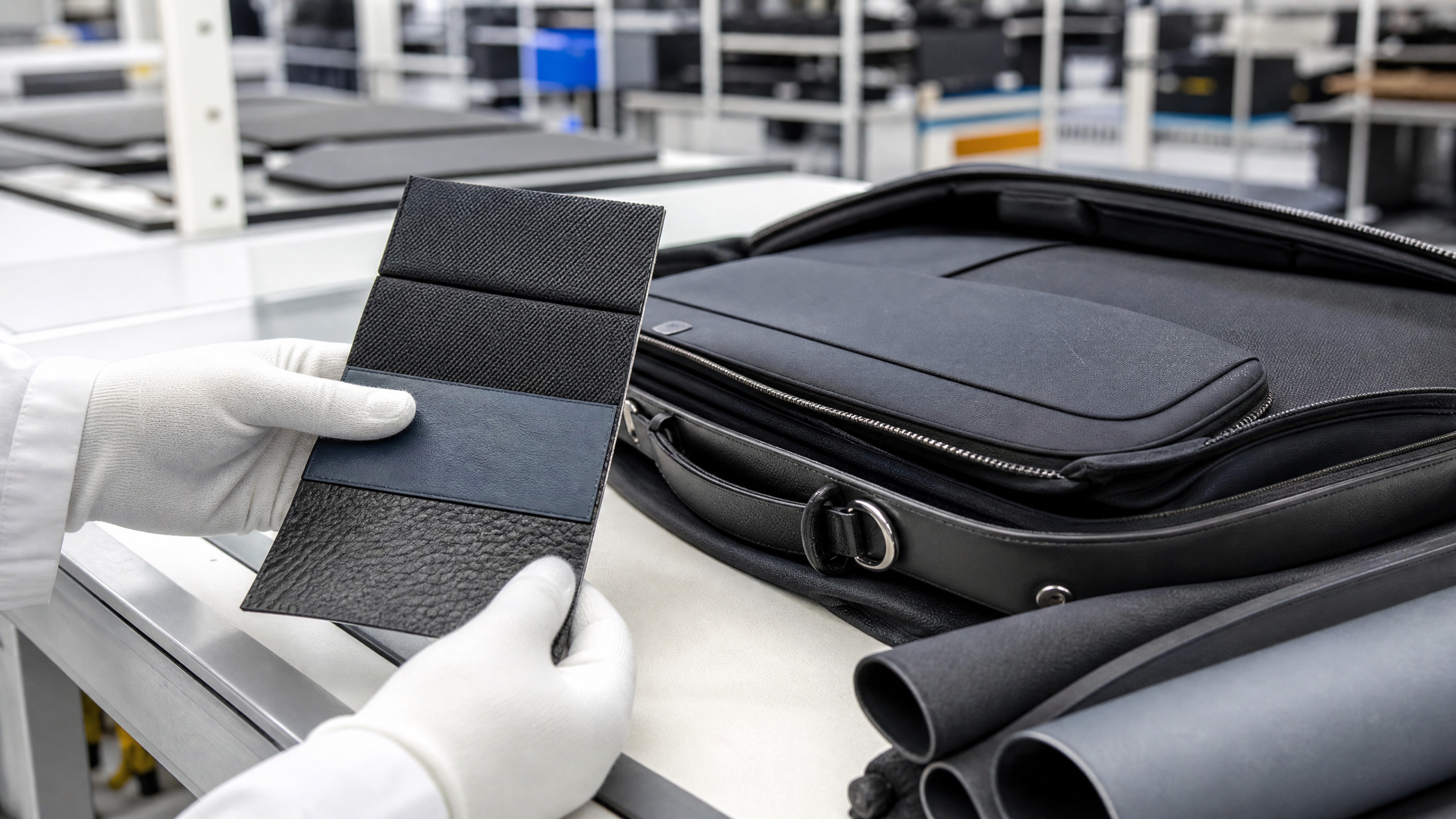
Before approving production, ask for a digital rendering and, when the programme is important, a physical sample. The sample should show the actual material, final logo method and position. A logo that looks attractive on a computer screen can appear too large, too glossy or too low-contrast on a finished briefcase.
Make a material decision that supports repeat orders
The best material is the one you can specify consistently when the next department, distributor or location places a repeat order. Record the approved fabric name, colour reference, lining, hardware finish, logo method and carton arrangement after the first project. This makes future quotations more accurate and helps maintain a stable brand presentation.
A business briefcase should feel appropriate in the hand, not only look convincing in a product image. By selecting material around the recipient’s working day, your team can deliver a briefcase that earns repeated use—and repeated brand exposure.
Recommended reading
- How to Choose the Right Business Briefcase for Corporate Use
- How to Customize Business Briefcases with Your Company Logo
- Business Briefcase Quality Checklist: 12 Bulk-Order Checks
Need help comparing material directions for a corporate project? Request a custom business briefcase quote with your quantity, delivery date, logo file and intended use.
Explore Production Models & Request a Quote
Ready to move from guidance to a real bulk program? Review our production references such as Model 202Model 6046 or visit the Business Briefcases manufacturer page for specifications, customization options and QC detail. When your spec is set, request a project quote and we will return a like-for-like quote for your order.