Business Briefcase Size Guide: Documents, Laptops and Daily Work Essentials
A business briefcase can look perfectly proportioned in a product photo and still fail the first time a user tries to fit a laptop, A4 folder, charger and notebook inside it. For corporate buyers, size planning is not a minor technical detail. It determines whether recipients use the bag every day or leave it in a cupboard after the first week.
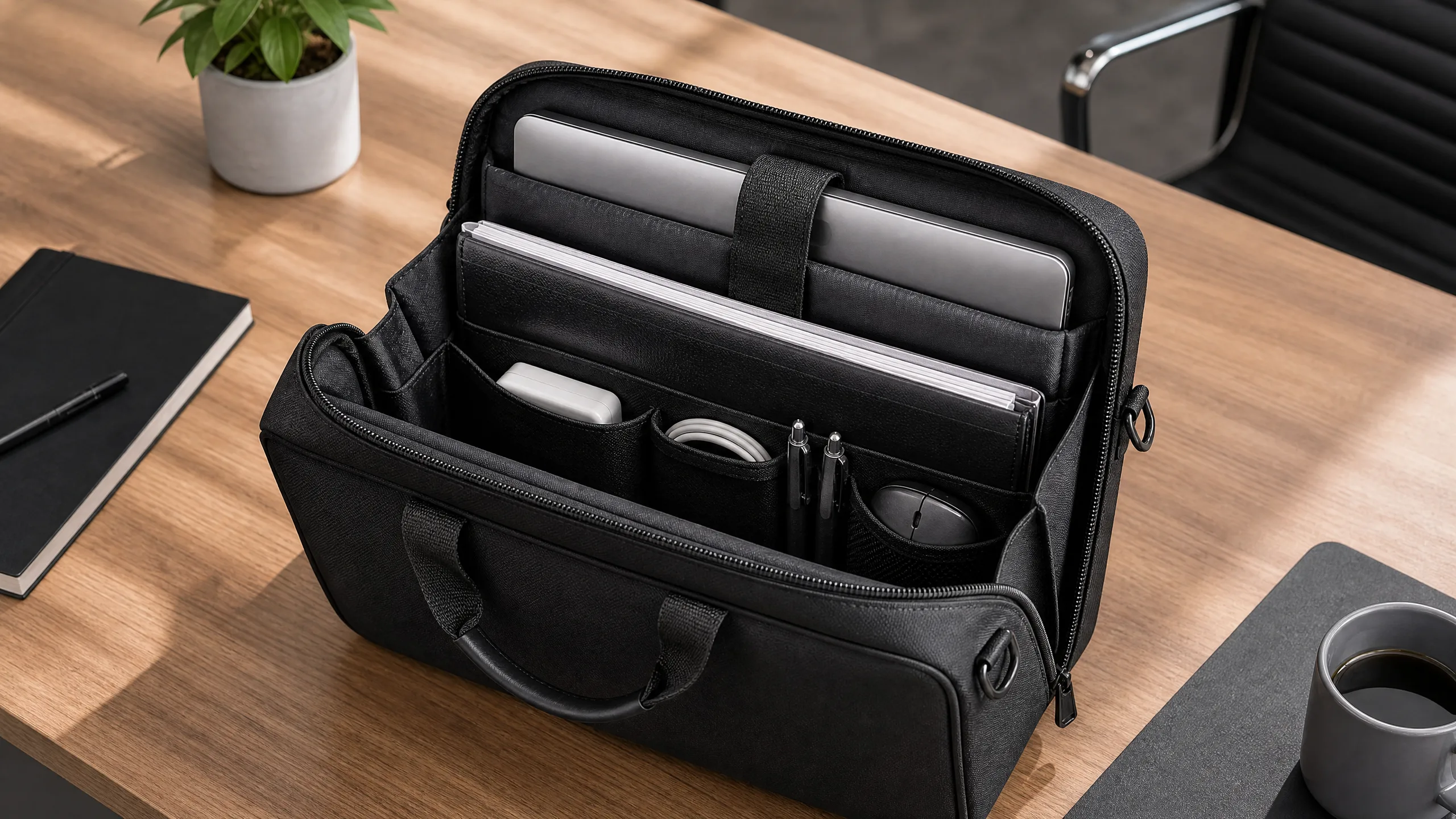
This business briefcase size guide explains how to plan capacity around real work items. It is designed for buyers who are specifying business briefcase specifications for your team rather than selecting a personal accessory from a retail shelf.
Business briefcase size guide: why exterior measurements are not enough
Exterior length, height and depth are useful, but internal dimensions decide whether the briefcase works. Padding, lining, seams, dividers and curved corners all reduce usable space. A bag may look wide enough for a laptop on the outside while the internal padded sleeve is too narrow for the intended device.
Begin by listing the largest items the user must carry. For most office and corporate programmes, that list may include:
- A4 or letter-size documents
- A 13-inch, 14-inch, 15.6-inch or 16-inch laptop
- A charger and cable set
- A notebook or planner
- Pens, access cards and business cards
- A tablet, mouse, headphones or power bank
- Printed catalogues or training materials
Once this list is clear, the bag can be designed from the inside out.
Size planning for documents and folders
A4 documents measure approximately 21 by 29.7 centimetres, but a briefcase needs extra clearance so papers can be removed easily and do not catch on the zipper or lining. If the project requires a lever-arch folder, thick presentation pack or multiple catalogues, depth matters just as much as width and height.
For document-focused corporate work, ask whether the briefcase must carry flat papers only or bulky files as well. A slim case can feel refined for meetings but may become inconvenient if the user also needs a notebook, charger and printed materials. A deeper structured briefcase is more appropriate for sales teams, training leaders and staff who carry materials between locations.
Laptop size: verify the actual device, not only the screen label
Laptop sizing can create confusion because the screen size is not the same as the full computer size. Two models with the same 15.6-inch screen can differ in width, depth and thickness. The safest approach is to request the actual device dimensions or select an internal compartment with enough clearance for the widest expected model.
| Device category | Common project need | What to confirm with the supplier |
|---|---|---|
| 13-inch laptop | Compact employee kits, light commuting | Internal sleeve width, padding and closure |
| 14-inch laptop | General office and hybrid-work programmes | Device dimensions plus charger storage |
| 15.6-inch laptop | Sales teams, training and larger workstations | Padded compartment size and carry balance when loaded |
| 16-inch laptop | Design, technical or executive use | Full device dimensions, zipper opening and reinforced padding |
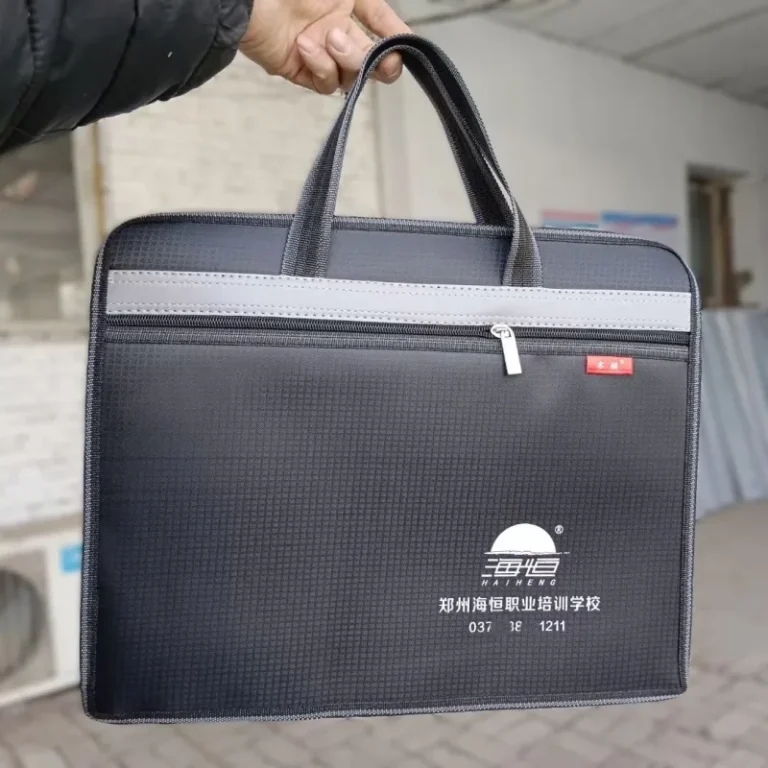
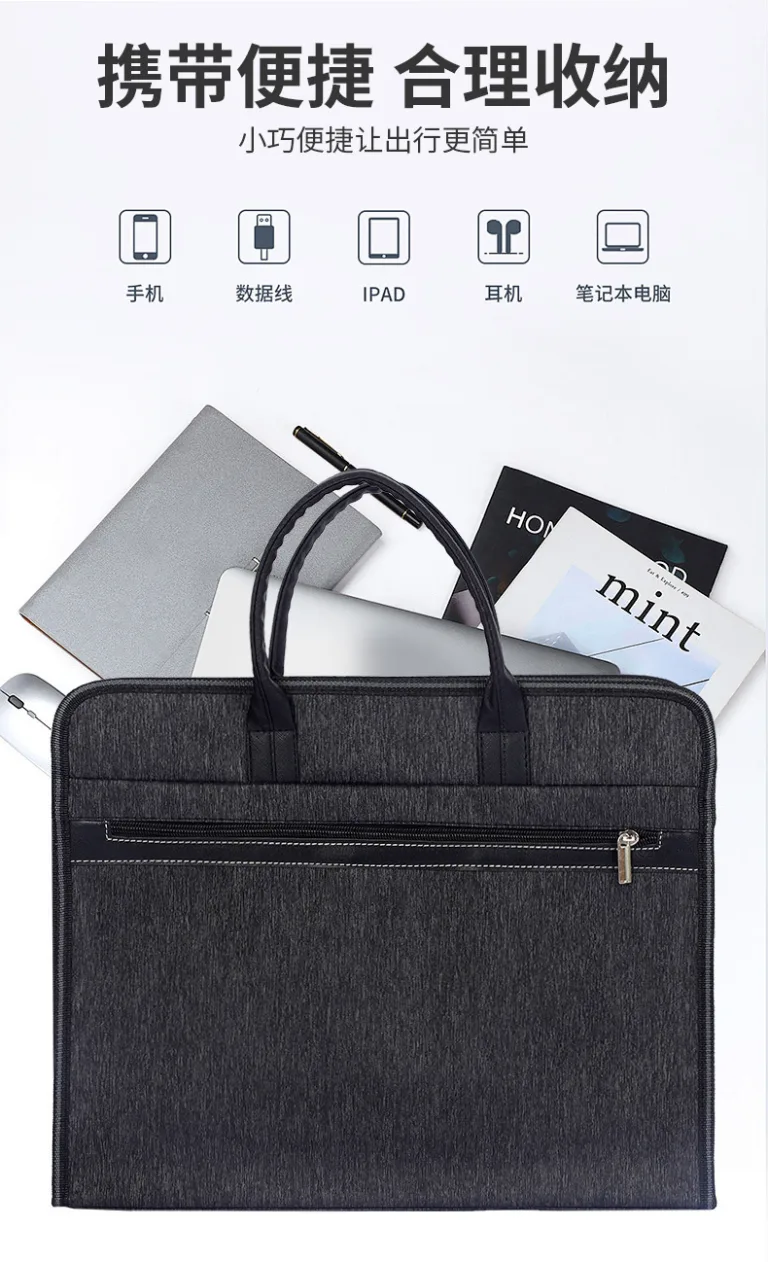
A laptop-ready briefcase such as Model 162 can provide a practical reference for a lighter business format. Before selecting it for a programme, verify the device size and whether users will carry paper files in addition to their computer.
Plan depth around the full daily load
Depth is often overlooked because it is less visible in photos. Yet it determines whether the briefcase stays slim and professional or becomes overfilled and distorted. A shallow bag may suit documents and a tablet. A deeper design may be necessary for a laptop, power adapter, notebook, folders and accessories.
Think about where the depth is used. A bag with one large compartment can technically hold many items but may feel disorganised. A better corporate design often divides capacity between a protected laptop section, a document area and a smaller organiser zone. This keeps the profile controlled and makes key items easier to find.
The Custom Oxford Briefcase Model 6046 is an example of a business-oriented structure worth reviewing when the project needs more than a thin document carrier.
Choose a shape that fits the programme
Capacity is not only a question of litres. The shape of the briefcase changes how it works in daily use.
Slim document cases
Slim cases work well for meetings, conferences, training packs and users who mainly carry paperwork. They are easy to distribute, simple to store and often provide a clean logo panel. Their limitation is that they are not designed for bulky chargers, thick folders or large device setups.
Standard business briefcases
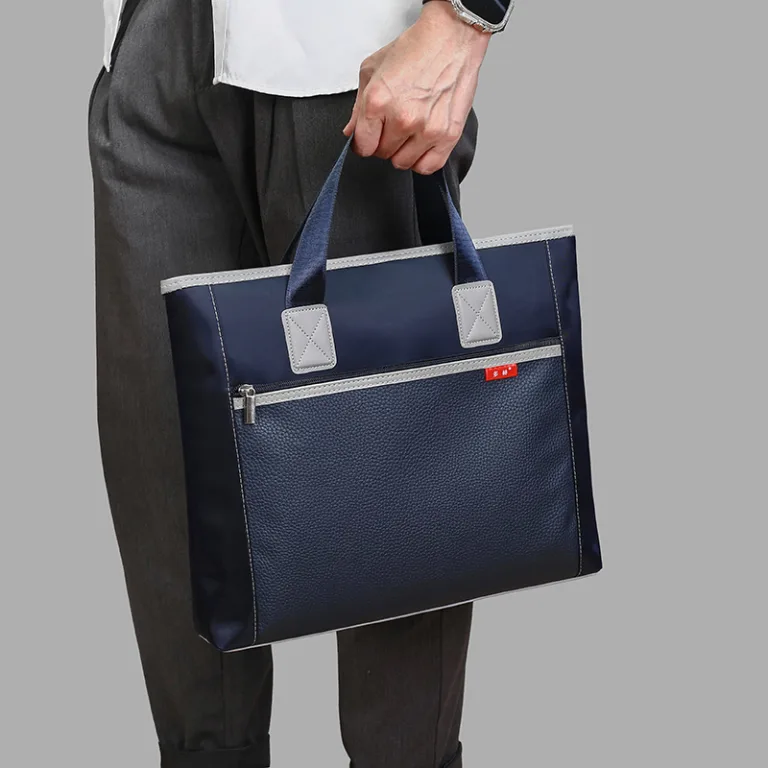
A standard business briefcase is often the most flexible format for employee gifts, client programmes and office teams. It can carry documents, a notebook, accessories and selected device protection while maintaining a professional appearance.
Larger shoulder briefcases
A larger shoulder briefcase is more suitable for sales staff, travelling teams and users who carry catalogues, samples or several work devices. In this category, comfort matters: the shoulder strap, handle reinforcement and weight distribution should be assessed with a real load in the sample.
Allow room for the logo and packaging plan
The intended size can also affect branding. A larger front panel may allow a company logo to be seen clearly from a distance, while a slim case may need a smaller, more carefully positioned mark. Do not enlarge a bag merely to create a bigger logo area; choose the bag around usefulness first, then select a logo treatment that suits the available panel.
For event and onboarding projects, packing is another size consideration. Ask how many finished bags fit safely in each carton, whether the bag needs paper stuffing to retain its shape and how the cartons will be handled at the destination. A briefcase that looks excellent but is difficult to distribute can create unnecessary work for the event team.
Test size with a physical packing exercise
Before approving mass production, perform a simple sample test. Put the actual laptop, A4 documents, charger, notebook and common accessories into the bag. Check whether:
- The zipper closes without pressure.
- Documents remain flat.
- The device is protected from hard accessories.
- The bag stands or keeps its intended shape when full.
- The handle and shoulder strap remain comfortable.
- The user can remove frequently used items without emptying the main compartment.
This exercise can reveal issues that a measurement table alone cannot show.
Build a repeatable size specification
For a repeat corporate programme, record the approved internal and exterior dimensions after the first order. Include laptop sleeve dimensions, document capacity, pocket sizes, padding requirements and acceptable tolerance. A clear size specification protects consistency when another department or country office reorders the same briefcase.
The right size is the size that feels natural on a real working day. By planning around documents, devices and the way recipients move through their routine, you can choose a briefcase that supports regular use rather than occasional display.
Recommended reading
- Business Briefcase Compartments and Organizer Design
- Business Briefcase vs Laptop Bag: Which Is Better for Your Team?
- How to Choose the Right Business Briefcase for Corporate Use
Need help matching a bag to your documents and device size? Send your required contents and quantity for a practical capacity recommendation.
Explore Production Models & Request a Quote
Ready to move from guidance to a real bulk program? Review our production references such as Model 202Model 6046 or visit the Business Briefcases manufacturer page for specifications, customization options and QC detail. When your spec is set, request a project quote and we will return a like-for-like quote for your order.