How to Approve a Custom Business Briefcase Sample Before Mass Production
A sample is the point where a business briefcase project becomes real. It turns a product idea, quotation and digital rendering into something your team can hold, load and review. For corporate orders, the sample is also the safest place to identify problems with capacity, material feel, logo placement or packing before hundreds of units move into production.
This guide explains how to use custom business briefcase sampling support to approve the right details before mass production.
Treat the sample as a decision document, not a display item
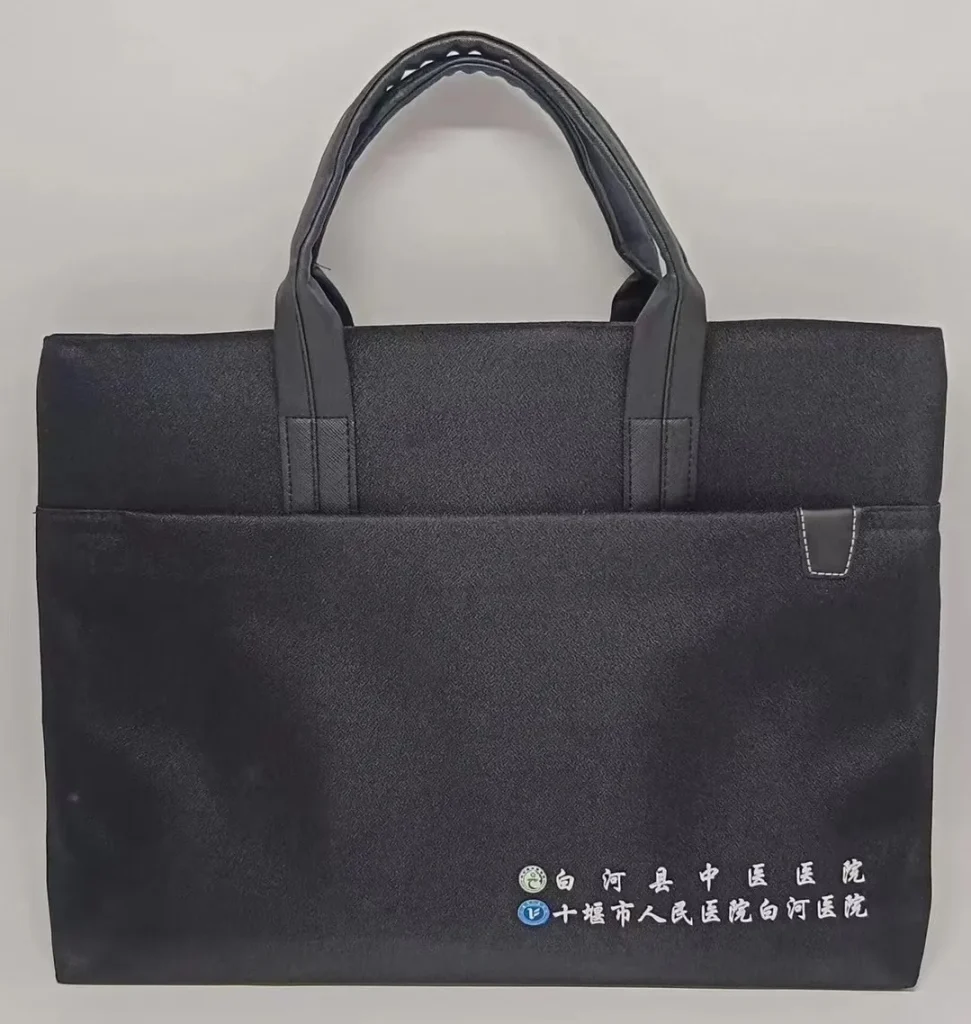
It is easy to approve a sample because it looks good in a photo. The more useful approach is to evaluate it as a working business item. Place it in the intended user’s routine: carry it into a meeting, pack a laptop and A4 documents, open the pockets while standing and assess the logo from a normal viewing distance.
The sample should answer three questions:
- Does the briefcase work for the people who will receive it?
- Does it match the agreed material, structure and branding specification?
- Can it serve as an unambiguous reference for bulk production?
If the answer to any of these questions is unclear, the sample needs another review before you approve mass production.
Confirm the specification before the sample arrives
A meaningful sample review starts before the sample is made. Create a concise specification that covers the project’s non-negotiable points. It does not need to be a complex technical pack, but it should include enough detail to prevent assumptions.
| Specification area | What to confirm |
|---|---|
| Intended user | Employee, sales representative, client gift recipient, conference attendee or distributor customer |
| Bag dimensions | Exterior size, main-compartment capacity and device section size if applicable |
| Material | Fabric type, colour, lining and any PU or leather-like accent panels |
| Construction | Handles, shoulder strap, pockets, dividers, padding and zipper type |
| Branding | Logo method, size, placement, artwork file and brand colours |
| Packing | Polybag, stuffing, dust bag, hangtag, carton count and labels |
| Delivery | Quantity, target destination and required in-hand date |
A well-defined brief allows the supplier to build a sample that can be reviewed fairly. It also prevents the buyer from asking whether the sample is correct after it arrives without a clear agreed standard.
Check the bag’s actual size and carrying capacity
Use a tape measure and compare the sample against the requested dimensions. Small tolerance is normal in soft goods, but the bag should still fit the intended contents comfortably. Load it with the actual items recipients will carry: A4 documents, laptop, charger, notebook, tablet, catalogue or training materials.
Do not test only whether everything fits. Check whether items can be removed easily and whether documents stay flat. A briefcase that closes tightly around a laptop and folder may become frustrating in daily use. A bag that has too much empty space may lose its professional shape.
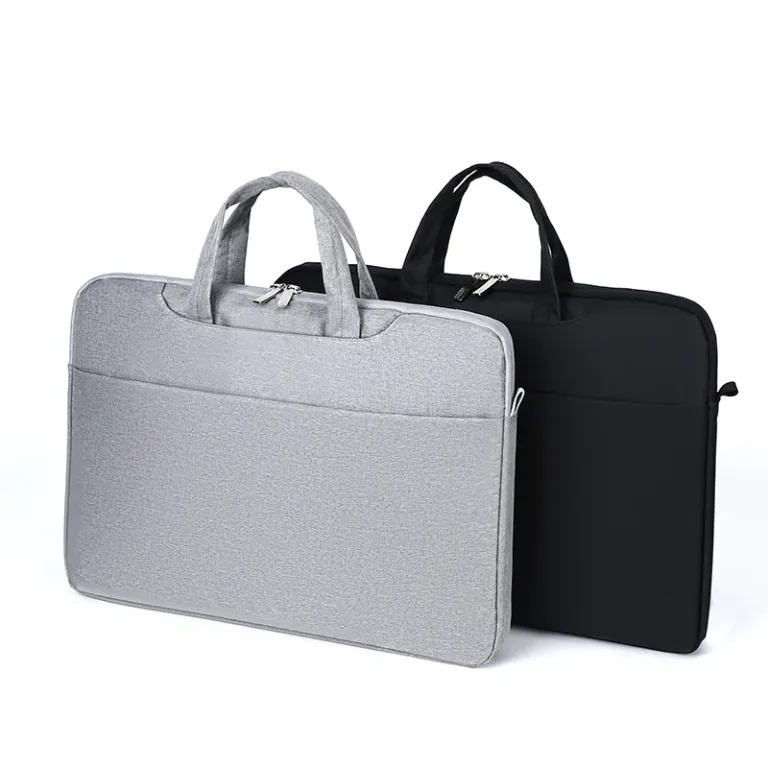
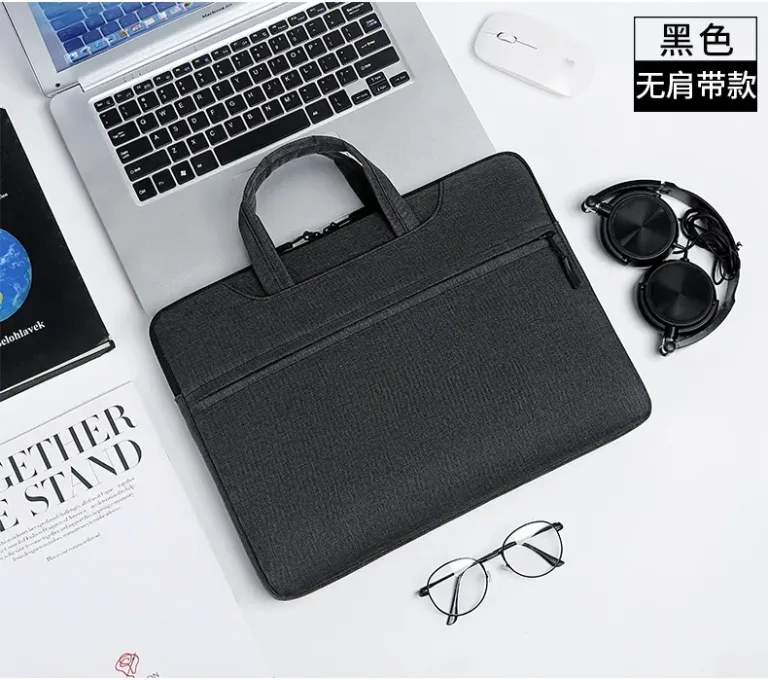
For an employee or sales-team project, compare the sample with a practical model direction such as Model 317. For a more traditional briefcase form, Model 2201 can be another useful reference point for discussing handle, shoulder strap and document-carry requirements.
Review material with your hands, not only your eyes
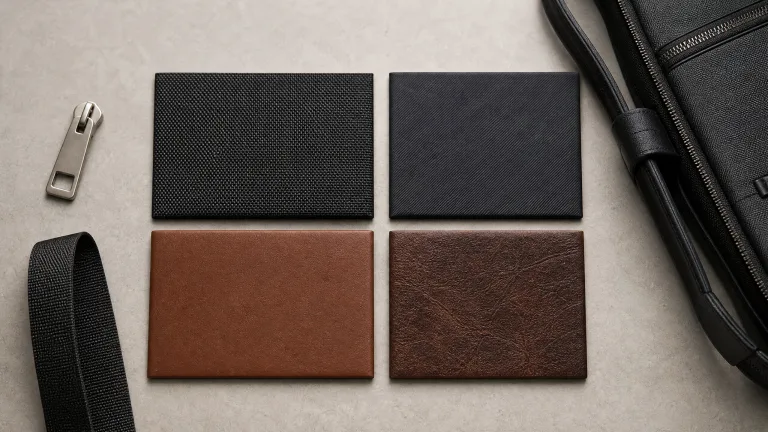
The material should be checked under normal light and in the way it will be used. Look at the fabric texture, coating, backing, lining and edge finish. Feel whether the exterior is appropriate for the desired brand position. Flex the bag gently to see whether it keeps its intended shape without feeling overly stiff.
If the project uses a mixed-material design, inspect the transition between panels. PU or leather-like accents should sit neatly and not create unwanted bulk. Oxford or nylon surfaces should be free from obvious marks, uneven coating or inconsistent colour.
If a colour is important to the brand, compare the sample with the approved reference under more than one light condition. A colour can appear different in a factory photo, office lighting and daylight.
Inspect the logo as part of the construction
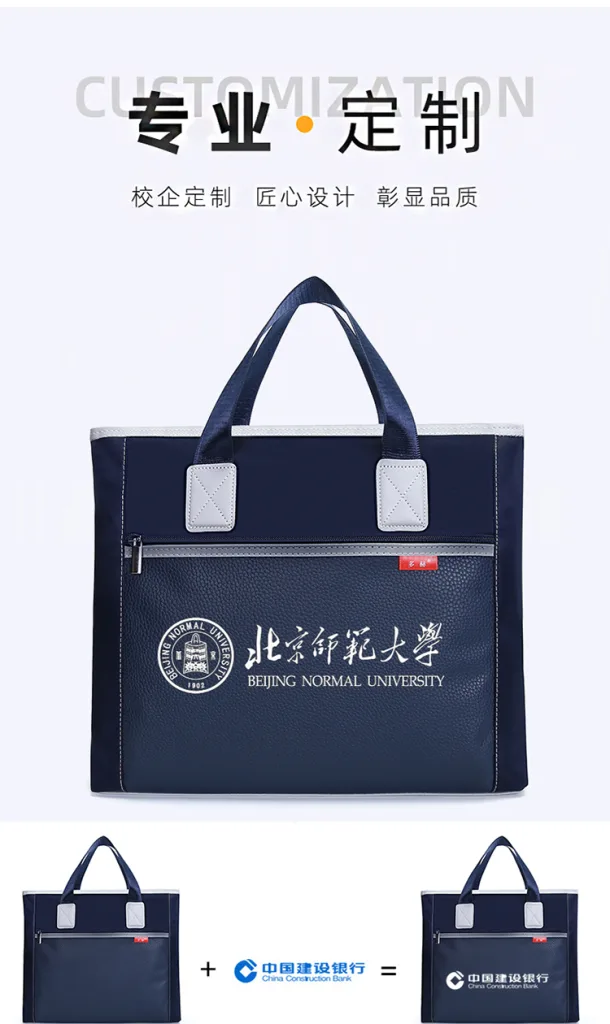
The logo should be evaluated in context. Check not just whether the artwork is accurate, but whether its location and scale work with the briefcase’s shape, pocket lines and handles.
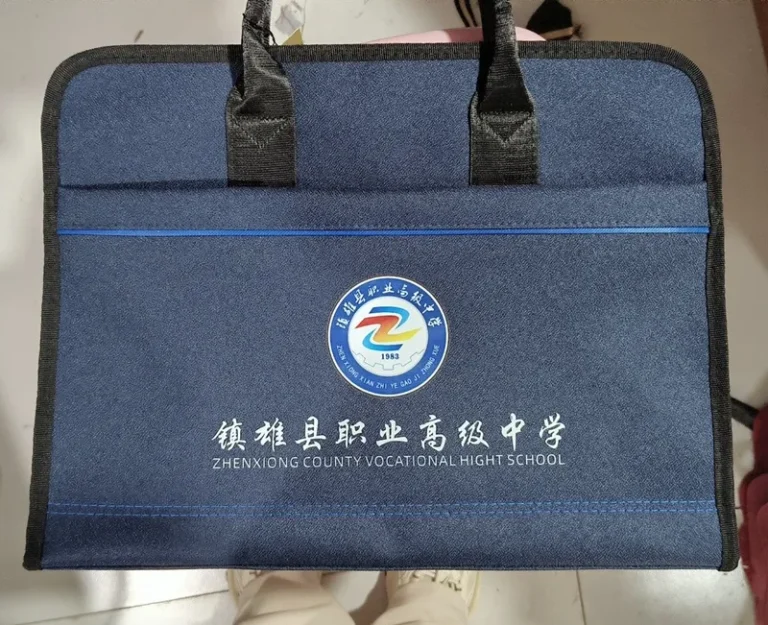
For printed logos, look for clean edges, solid coverage and correct placement. For heat transfer, check the bond and surface finish. For embroidery, assess whether the stitching creates puckering or affects the panel’s flexibility. For patches, labels and metal plates, check straightness and security.
A digital rendering may have been approved earlier, but the physical sample is the final opportunity to decide whether the logo feels suitably professional. If the briefcase is intended for client gifts, a smaller or more restrained mark may be preferable. If it is an event distribution item, visibility may take priority.
Test functional details under a realistic load
Function is often the reason a sample needs revision. Open and close every zipper several times. Test the front pocket, device section, interior dividers and cable pockets. Carry the bag by the handles and with the shoulder strap. Observe whether the bag remains balanced when a device and documents are packed.
Pay special attention to:
- Handle comfort and reinforcement.
- Strap anchors, clips and adjustment.
- Zipper smoothness and puller quality.
- Laptop sleeve padding and closure.
- Document divider position.
- Pocket access when the bag is full.
- Whether the bag stands or collapses when set down.
A sample is successful only if the intended user can use it without thinking about the construction.
Confirm packaging before production begins
Packaging is sometimes reviewed too late. It should be checked with the sample because it affects the condition in which recipients receive the bag. Confirm whether the bag needs paper stuffing to maintain its form, a polybag to protect the surface, a dust bag for gift presentation or special carton labelling for event distribution.
If the project will be shipped to several locations, carton count and labels should be planned early. A correct product can still create delivery problems if cartons are mixed or packed in a way that makes sorting difficult.
Create a written sample-approval record
Once the sample is accepted, record the approval. The record can include photos of the exterior, interior, logo and packing; the material and colour reference; final dimensions; the approved logo artwork; and a list of any agreed adjustments.
This becomes the “golden sample” reference for bulk production. It is particularly valuable when multiple people are involved in purchasing, or when the organisation expects to reorder later. It prevents the approved details from being lost between departments, locations or production stages.
What to do if the sample is not right
Do not approve a sample simply to protect the delivery schedule. Identify the issue, describe the requested correction and ask for confirmation of how it will be addressed. Some changes—such as a different logo size or pocket position—may be straightforward. Others, such as a new construction or material direction, may require a revised sample.
Prioritise the changes that affect real use and brand perception. A loose handle, incorrect device compartment or badly positioned logo deserves more attention than a minor issue that can be corrected in packing.
Final sample-approval checklist
Before signing off, confirm that the briefcase:
- Matches the approved dimensions and intended capacity.
- Uses the correct material, colour and lining.
- Fits the actual work items it was designed to carry.
- Has the agreed pockets, dividers and device protection.
- Uses the correct logo method, size and position.
- Opens, closes and carries comfortably under a real load.
- Uses acceptable hardware, stitching and panel alignment.
- Has an approved packing method and carton plan.
- Is documented with clear approval photos and notes.
A disciplined sample review is one of the most effective ways to protect a corporate briefcase order. It saves time later, supports consistent production and helps ensure that recipients receive a bag worthy of everyday use.
Recommended reading
- Business Briefcase Quality Checklist: 12 Bulk-Order Checks
- How to Customize Business Briefcases with Your Company Logo
- Business Briefcase Materials: Oxford, Nylon, PU and Leather Compared
Ready to turn your briefcase idea into an approval-ready sample? Send your product brief and logo artwork to start a custom project discussion.
Explore Production Models & Request a Quote
Ready to move from guidance to a real bulk program? Review our production references such as Model DH75Model 2201 or visit the Business Briefcases manufacturer page for specifications, customization options and QC detail. When your spec is set, request a project quote and we will return a like-for-like quote for your order.