Bulk Tote Bag Lead Time Planning: A Buyer’s Guide
Ordering tote bags in bulk involves more than confirming a product design and waiting for production to finish. Buyers must coordinate specifications, artwork, samples, materials, manufacturing, quality inspection, packing and transportation.
A custom bag supplier may provide a production lead time, but that figure does not necessarily represent the time required for the bags to arrive at your warehouse.
For importers, wholesalers, retailers and corporate purchasing teams, the important question is: When should you place your order to receive the finished tote bags by your required date?
This guide explains how to plan bulk tote bag lead time, identify the milestones that affect delivery, reduce avoidable delays and build a more reliable purchasing schedule.
1. What Does Bulk Tote Bag Lead Time Include?
Bulk tote bag lead time is the time required to move an order from an agreed starting point through manufacturing and delivery.
However, suppliers may calculate lead time differently. One quotation may refer only to factory production, while another may include material preparation, sampling or inspection. Before comparing quotations, establish exactly which stages are included.
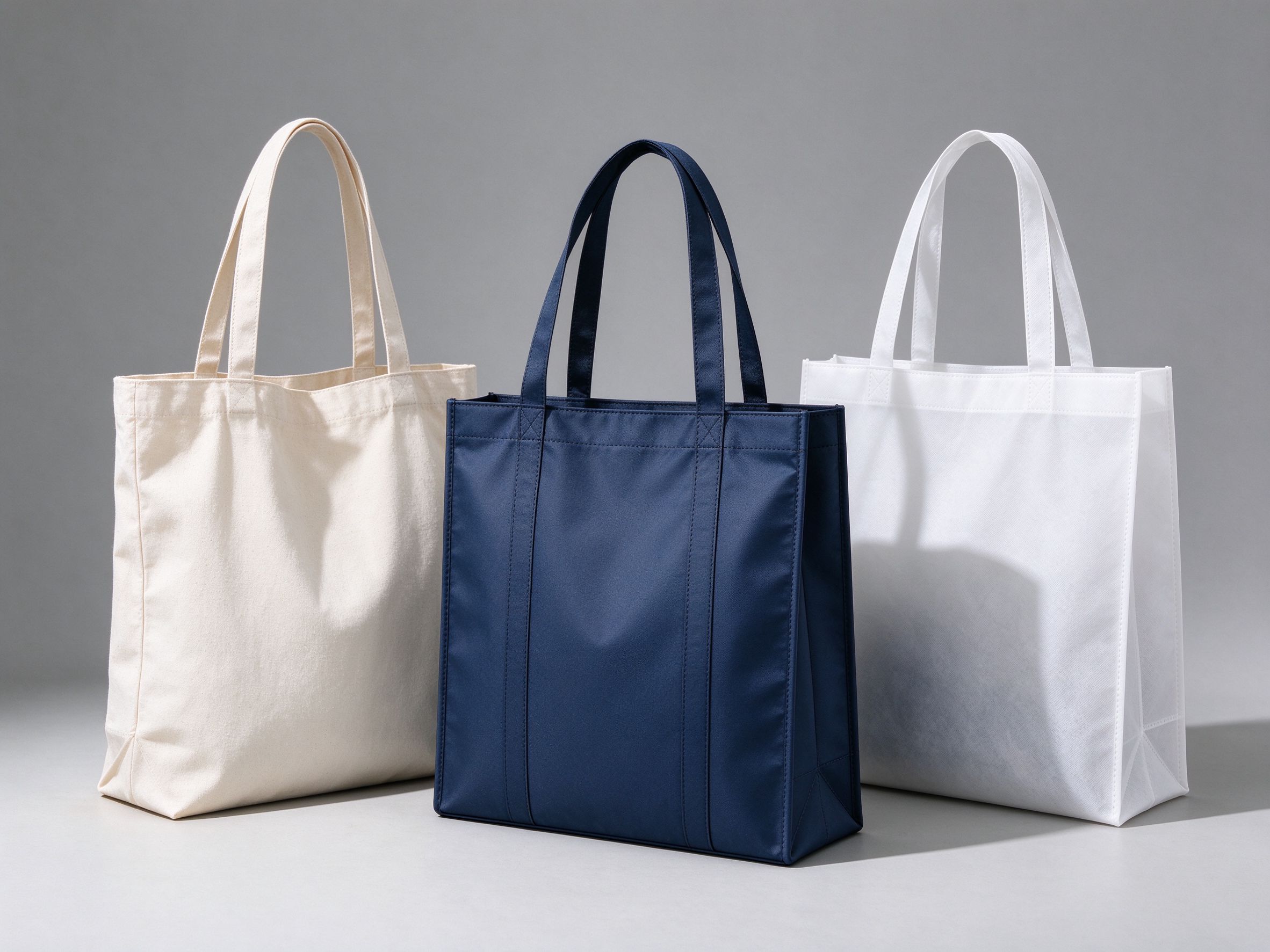
A typical custom tote bag order may involve the following stages:
| Stage | Main activities | What the buyer should confirm |
|---|---|---|
| Specification confirmation | Finalize dimensions, fabric, handles, colors and construction | Written product specification |
| Artwork approval | Confirm logo files, placement and printing requirements | Approved artwork proof |
| Sampling | Produce and evaluate a sample when required | Written sample approval |
| Material preparation | Arrange fabric, lining, webbing, hardware and other components | Material availability and readiness |
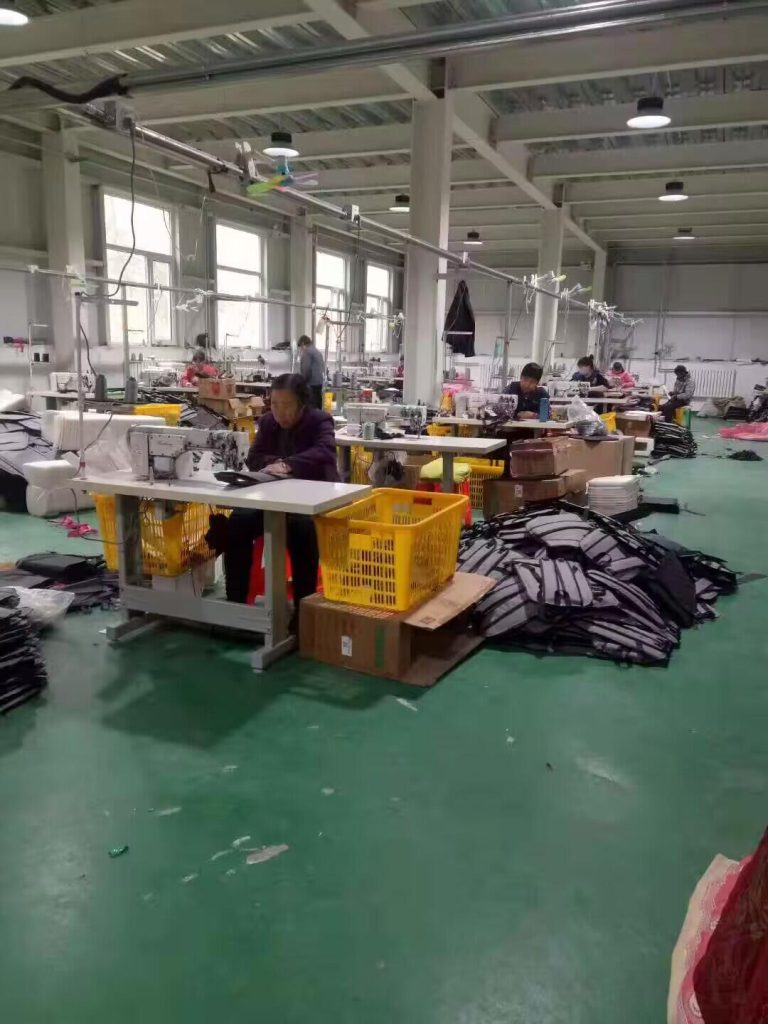
| Bulk production | Cutting, sewing, decoration and assembly | Confirmed production schedule |
| Quality inspection | Check appearance, dimensions, workmanship and agreed requirements | Inspection criteria and release decision |
| Packing | Apply labels, individual packaging and carton marks | Approved packing specification |
| Shipping and delivery | Arrange dispatch, transportation, customs procedures and final delivery | Shipping plan and delivery terms |
Not every order follows exactly the same sequence. Standard designs may require fewer development steps than new OEM products, and some activities may overlap. If you are sourcing ready-made basics, our guide to plain tote bags in bulk lists what to check before ordering.
Ask the supplier to identify which stages apply to your order rather than assuming that every project follows an identical schedule.
Production lead time versus total delivery time
These terms should not be treated as interchangeable. Production lead time generally refers to the period required to manufacture an order under the supplier’s stated conditions. Total delivery time covers the wider purchasing process, including any stages that occur before production and the time needed to transport the finished goods to the agreed destination.
For example, an order that requires a new sample, custom fabric preparation, individual retail packaging and international transportation has more scheduling dependencies than a straightforward repeat order using an already approved specification. Request separate estimates for the relevant stages. This makes it easier to identify where a delay occurs and whether the original delivery commitment remains realistic.
2. Seven Factors That Affect Bulk Tote Bag Lead Time
There is no single production schedule that applies to every tote bag order. The actual timeline depends on the product, the order requirements and the supplier’s confirmed production arrangements. The following factors deserve particular attention.
2.1 Product design and construction
A basic tote bag with a simple rectangular body and standard handles may require fewer production steps than a structured bag with several compartments, a zipper closure, lining and reinforced construction. Additional components can introduce more work and more opportunities for scheduling conflicts. Before requesting a delivery estimate, identify:
- Finished bag dimensions.
- Main fabric and lining requirements.
- Handle material, length and attachment method.
- Number and placement of pockets.
- Zippers, closures and other hardware.
- Required reinforcement and stitching details.
- Individual packaging and labeling requirements.
The more precisely these details are defined, the easier it is for a supplier to evaluate the proposed schedule. If the design is still being developed, request a preliminary schedule that identifies the assumptions on which the estimate depends.
2.2 Material availability
Material availability can influence when production is ready to begin. A design using a standard material and an available color may follow a different schedule from one requiring a specific fabric specification, custom color or special component. Potential dependencies include:
- Fabric stock and availability.
- Custom dyeing or color matching.
- Lining and webbing availability.
- Zippers, buckles and other hardware.
- Custom labels and packaging materials.
- Material testing or documentation required by the buyer.
Do not assume that a material is available simply because it appears in a supplier’s product catalog. Ask which components are already available, which must be purchased and which require additional preparation. For orders with several colors or designs, confirm whether each variant has a separate material schedule.
2.3 Logo printing and artwork approval
Branding can affect the schedule when artwork is incomplete or when the selected decoration method requires additional preparation. For example, a buyer may need to confirm the logo dimensions, print position, colors and method before the supplier can finalize the production specification. To reduce avoidable revisions:
- Submit the latest approved logo file.
- Provide brand color references where applicable.
- Confirm the intended print area and position.
- Review the digital proof carefully.
- Approve the final version in writing.
If a physical sample is required, confirm whether the sample will include the actual logo and production-representative materials. Changes after approval may require new artwork, additional sample work or replacement materials. Ask the supplier to explain how such changes would affect the agreed schedule.
2.4 Sample development and approval
Sampling is an important scheduling consideration for new custom designs. A sample gives the buyer an opportunity to evaluate dimensions, fabric, construction, logo appearance and functional details before committing to bulk production. However, the sampling stage can become a source of delay if the buyer and supplier have not agreed on the approval process. Before sampling begins, establish:
- Which specifications the sample must follow.
- Whether branding and packaging are included.
- Who reviews and approves the sample.
- How feedback should be documented.
- Whether corrections require another sample.
- Whether the bulk order can proceed only after written approval.
For a repeat order, an existing approved sample may provide a useful reference, provided the specifications and materials have not changed. For a new design, include enough time for evaluation and any necessary revisions. Do not assume that a sample can be approved immediately after it arrives.
2.5 Order quantity and production scheduling
The quantity of tote bags can affect production planning, but the relationship is not always a simple calculation. A larger order may require more cutting, sewing, printing, inspection and packing capacity. At the same time, the supplier’s production schedule, material readiness and ability to organize work into batches also matter. Ask the supplier to confirm:
- Whether the requested quantity can be scheduled as one production run.
- Whether the order contains multiple styles or color variants.
- Whether production will be divided into batches.
- Whether partial shipments are possible and commercially acceptable.
- Whether any components must be shared across different products.
Do not estimate the delivery date solely by multiplying a small order’s production time by the ratio between two quantities. Instead, request a schedule based on your actual specifications and order composition. For how minimum orders and unit pricing shape a bulk quote, see our breakdown of bulk tote bag MOQ and pricing factors.
2.6 Quality inspection and corrective work
Inspection should be planned as part of the production schedule rather than added after manufacturing is complete. The inspection may cover dimensions, fabric appearance, stitching, handle attachment, logo placement, closures and packaging, depending on the agreed specification. If defects are identified, the parties may need to evaluate the affected quantity, agree on corrective action and complete additional checks. Before production begins, confirm:
- The inspection method.
- The applicable acceptance criteria.
- Who performs the inspection.
- Whether a third-party inspection is required.
- When inspection results will be available.
- What happens if the goods do not meet the agreed requirements.
Allow time for the inspection and any necessary corrective work. A schedule that assumes every item will pass without further action may leave insufficient room for unexpected issues.
2.7 Shipping and destination requirements
Finished goods leaving the factory are not necessarily delivered goods. International shipments may involve transportation booking, export documentation, customs procedures, import clearance and delivery to the final address. The time required depends on the destination, shipping method, routing, seasonal conditions and the applicable commercial arrangements. Before accepting a delivery estimate, confirm:
- The agreed shipping method.
- The named delivery destination.
- Whether the estimate includes transportation.
- Which party handles export and import procedures.
- The documents required for the shipment.
- Whether the delivery date means factory dispatch, port arrival or warehouse receipt.
These distinctions are particularly important for trade shows, retail launches and other events with fixed dates.
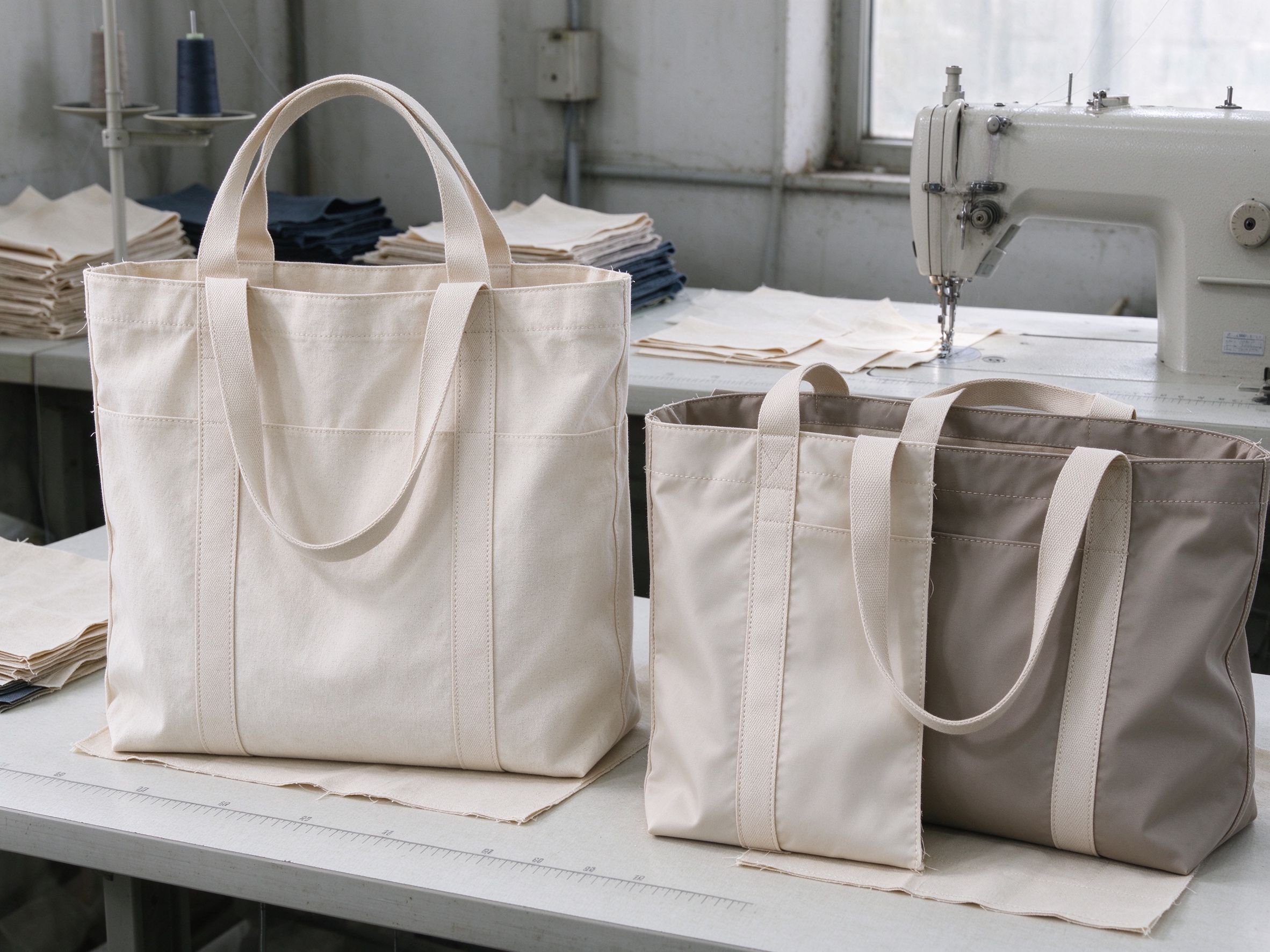
3. How to Build a Bulk Tote Bag Delivery Schedule
A useful delivery plan works backward from the date the goods must be available for use. Follow these steps before confirming your purchase order.
Step 1: Define the required arrival date
Start with the date the bags must be physically available at their destination. If the bags are intended for a trade show, distinguish the event opening date from the date the venue must receive the shipment. If the order is for retail distribution, consider the receiving process, labeling requirements and any time needed to distribute products to individual locations. Avoid using the supplier’s expected dispatch date as a substitute for your actual delivery deadline.
Step 2: Confirm the complete specification
Provide the supplier with the product details needed to evaluate the order. At a minimum, include:
- Product style or reference model.
- Required quantity and quantity by variant.
- Finished dimensions.
- Fabric and color requirements.
- Logo artwork and placement.
- Handle and closure specifications.
- Packaging and labeling requirements.
- Delivery destination and target arrival date.
If some details are not final, list them as open items and ask how each could affect the schedule.
Step 3: Request a milestone-based quotation
Ask the supplier to provide more than one estimated completion date. A useful schedule should identify the expected timing or target date for each applicable milestone:
- Final specification approval.
- Artwork approval.
- Sample completion and approval.
- Material readiness.
- Bulk production start.
- Production completion.
- Quality inspection.
- Packing and shipment release.
- Estimated delivery to the destination.
The supplier may combine some milestones or provide them in a different order. The objective is to make the sequence and dependencies clear.
Step 4: Identify approval deadlines
The buyer also has responsibilities. Late artwork submission, delayed sample feedback or unresolved packaging instructions can prevent the supplier from following the agreed schedule. For every approval stage, establish:
- The information required.
- The person responsible.
- The target response date.
- The method for recording approval.
- The consequence of a delayed decision.
If multiple departments must approve the design, coordinate their reviews before the supplier begins work.
Step 5: Add a contingency allowance
A delivery plan should account for uncertainty rather than assuming that every stage will finish exactly as estimated. Potential risks include material shortages, sample revisions, production congestion, inspection failures, shipping changes and customs delays. The appropriate contingency depends on the order and delivery route. There is no universal buffer that guarantees an on-time arrival. Ask the supplier to identify the stages with the greatest uncertainty, then establish an internal deadline that allows you to respond if those stages take longer than expected.
Step 6: Track milestones against actual progress
After the purchase order is confirmed, maintain a simple schedule that compares planned dates with actual progress.
| Milestone | Planned date | Actual status | Action if delayed |
|---|---|---|---|
| Specification approved | [Confirm with supplier] | Pending / Complete | Resolve open requirements |
| Artwork approved | [Confirm with supplier] | Pending / Complete | Submit final artwork |
| Sample approved | [If applicable] | Pending / Complete | Consolidate feedback |
| Materials ready | [Confirm with supplier] | Pending / Complete | Review material risks |
| Bulk production completed | [Confirm with supplier] | Pending / Complete | Obtain revised forecast |
| Inspection completed | [Confirm with supplier] | Pending / Complete | Agree on corrective action |
| Shipment released | [Confirm with supplier] | Pending / Complete | Confirm shipping documents |
| Goods received | Required date | Pending / Complete | Track delivery exceptions |
Use confirmed dates rather than assumptions. When a milestone changes, ask the supplier to explain the cause, the effect on subsequent stages and the proposed recovery plan.
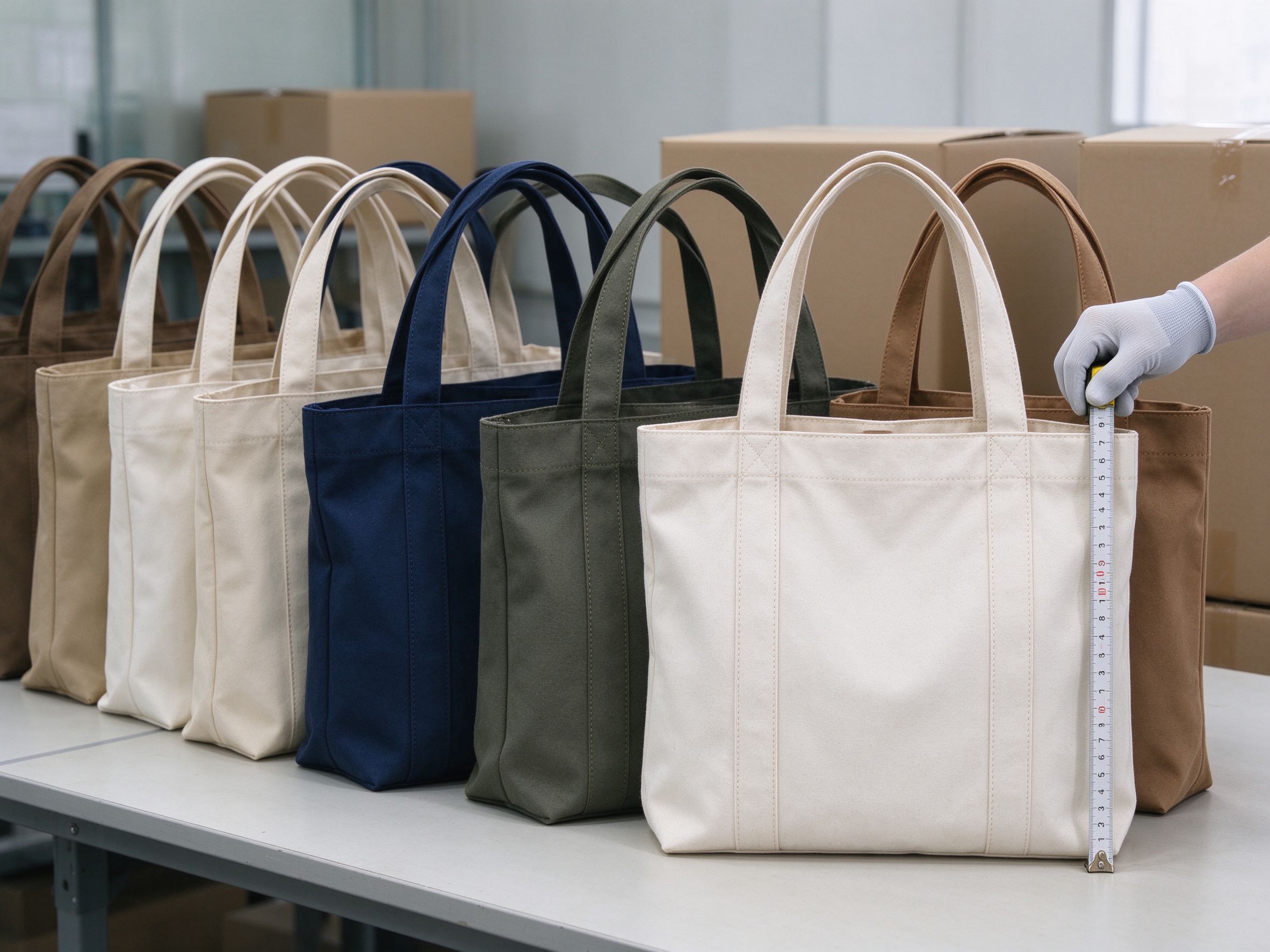
4. Common Causes of Tote Bag Delivery Delays
Many delays arise from unresolved requirements rather than manufacturing alone. The following checklist can help buyers reduce avoidable schedule changes.
Incomplete specifications
Different interpretations of size, material, logo placement or packaging may lead to rework. Confirm the specification before production.
Repeated artwork revisions
Changes to logo size, color or position after approval can affect printing preparation and sample requirements. Consolidate internal feedback before submitting revisions.
Unclear sample acceptance
If the buyer and supplier use different standards to evaluate a sample, approval may take longer. Document the required corrections and final acceptance criteria.
Unconfirmed material availability
A design may depend on a fabric color or component that is not immediately available. Ask the supplier to verify the availability and readiness of critical materials.
Late changes to quantity or variants
Adding colors, sizes or individual packaging requirements can change the production plan. Request a revised schedule whenever the scope changes.
Inspection problems
A quality issue may require corrective work or additional inspection. Agree on acceptance requirements before manufacturing begins.
Shipping assumptions
A quotation may exclude transportation or customs clearance. Confirm the scope of the delivery estimate and the party responsible for each stage. For buyers working toward a fixed event or launch date, the most effective approach is to identify these dependencies before confirming the order.
5. Questions to Ask Your Tote Bag Supplier About Lead Time
Use the following questions when comparing quotations from potential suppliers.
- What event starts the quoted lead time: deposit, specification approval, sample approval or another milestone?
- Does the estimate cover manufacturing only, or does it include shipping?
- Which materials and components are currently available?
- Is a physical sample required before bulk production?
- How will sample revisions affect the schedule?
- What is the planned production start and completion date?
- When will inspection take place?
- How much time is allowed for corrective work if necessary?
- What is the estimated shipping and delivery schedule?
- Which party is responsible for export documents and import clearance?
- How will progress updates be provided?
- What happens if an agreed milestone is missed?
The answers should be specific to your order. A supplier who provides a clear sequence of milestones gives your purchasing team a better basis for planning than a quotation containing only a single estimated number of days.
6. Bulk Tote Bag Lead Time Planning Checklist
Before issuing the purchase order, verify the following items.
Product and commercial requirements
- Product style and quantity are confirmed.
- Dimensions, materials and colors are documented.
- Logo method and placement are approved.
- Packaging and labeling requirements are specified.
- The quotation defines the scope of the order.
Sampling and production
- Sample requirements are agreed.
- Approval responsibilities are assigned.
- Material availability has been reviewed.
- Production milestones are documented.
- Inspection requirements are agreed.
- Corrective-action procedures are understood.
Shipping and delivery
- The final destination is confirmed.
- The shipping method is agreed.
- The delivery estimate covers the intended destination.
- Documentation responsibilities are assigned.
- The internal deadline includes a contingency allowance.
- A process for reporting delays is in place.
If important items remain unresolved, request clarification before treating the schedule as final.
7. Frequently Asked Questions
How long does bulk tote bag production take?
There is no single lead time for every bulk tote bag order. The schedule depends on the product design, quantity, material availability, customization, sample requirements, production planning and inspection arrangements. Request an estimate based on your actual specifications and ask the supplier to identify the assumptions behind it.
Is production lead time the same as delivery time?
No. Production lead time generally covers manufacturing under the supplier’s stated conditions. Delivery time also depends on the applicable pre-production activities and transportation arrangements. Always confirm whether the quoted estimate ends at factory completion, shipment dispatch or delivery to your specified destination.
Can I reduce lead time by choosing a standard tote bag design?
Potentially, but the result depends on material availability, customization requirements and the supplier’s current schedule. An existing design may reduce the need for new product development. However, custom printing, special colors, packaging and other requirements may still introduce additional steps. Ask the supplier to compare the proposed standard design with your customized alternative.
Should I approve a sample before placing a bulk order?
For a new custom design, a sample can help verify the product before bulk manufacturing. Whether it is necessary depends on the product, the order requirements and the risks associated with proceeding without one. If sampling is required, agree on the approval process and schedule before confirming the order.
What information should I provide to receive an accurate delivery estimate?
Provide the product reference or design, quantity, dimensions, material preferences, color requirements, logo artwork, packaging instructions, destination and required arrival date. Also indicate whether the order requires a new sample, special components or multiple product variants.
What should I do if my supplier reports a delay?
Ask for the cause, the affected milestone, the revised completion date and the impact on final delivery. Determine whether the delay can be addressed through a revised production sequence, an alternative approved material or another commercially acceptable arrangement. Any change to materials, quality requirements or shipment arrangements should be documented and approved by the relevant parties.
8. Request a Bulk Tote Bag Quote and Delivery Plan
Planning a bulk tote bag order for wholesale distribution, retail sales, corporate gifting or a promotional campaign? Send your requirements before the intended production start date so that the supplier can evaluate the product and prepare a realistic schedule. To support your quotation request, provide:
- Product: Existing model, reference image or custom design.
- Quantity: Total units and quantities by color or style.
- Specifications: Dimensions, materials, handles, pockets and closures.
- Branding: Logo file, decoration method and placement.
- Sampling: Whether a physical sample is required.
- Packaging: Individual packaging, labels, hang tags and carton requirements.
- Destination: Country, delivery location and preferred shipping arrangement.
- Deadline: The date the goods must be available at their destination.
If some details are not finalized, identify them clearly so that the supplier can explain their effect on the quotation and schedule.
For a broader overview of available products and customization options, visit our Custom Tote Bags manufacturing guide. For bulk purchasing requirements and product selection, see our Bulk Tote Bags wholesale guide.
Request a quotation with your product specifications, quantity and target delivery date to begin planning your bulk tote bag order.