Plain Tote Bags Bulk: What to Check
Plain tote bags are the workhorse of the wholesale bag market — unbranded, unprinted, and ready for whatever a buyer wants to do next, from retail resale to private-label branding. For most of the buyers we quote, buying plain tote bags bulk is the first step in a longer plan, and the plan usually includes adding their own logo later. That changes what you need to check before you commit to an order.
A single sample photo and a unit price tell you very little about what a thousand bags will actually look like. Fabric consistency, finished dimensions, handle attachment, stitch quality, surface compatibility for printing, and packing all decide whether a bulk order works for your use case. We see the same mistake in almost every inquiry: buyers approve a pretty sample, then discover halfway through production that the fabric weight differs from the specification, the handles sit asymmetrically, or the surface rejects the printing method they planned. None of that is visible in a product photo.
This guide lays out what to check when sourcing plain tote bags bulk, what to confirm with the supplier before production, and how to compare quotations fairly. It focuses on blank, unbranded bags only — if you are after printed or fully customized totes, our custom tote bags program, the bulk tote bags hub, or custom bags with logo cover those angles separately.
1. Understand What You Are Buying: Plain, Blank, or Customizable Tote Bags
The terms plain tote bags and blank tote bags are often used interchangeably, but the difference matters for your decoration plan. A plain tote bag usually means no visible branding, printing, or logo. A blank tote bag is the same thing, seen from the angle of what comes next: a base product for screen printing, heat transfer, embroidery, or label application.
The catch is that an unprinted bag is not automatically suitable for every decoration process. A smooth, tightly woven surface that works for a simple screen-printed logo may be wrong for detailed artwork or embroidery, which needs a more forgiving structure. Before requesting a quotation, be clear about:
- Is the bag completely unprinted, including any manufacturer’s label or tag?
- Is the material compatible with the printing or embroidery method you plan to use?
- Can the supplier hold consistent color across the whole order?
- Are custom dimensions or handle options available, or is this a fixed stock product?
- Is each bag individually packed, or do they ship loose in cartons?
These questions separate ready-made blank stock from tote bags manufactured to a buyer’s specification. If you will add your own logo after receiving the bags, ask the supplier to confirm in writing that the material and surface construction work with your decoration process before you order plain tote bags bulk quantities.
2. Check the Fabric Before Ordering Plain Tote Bags Bulk
Fabric is the single biggest factor in how a tote performs, and it is also where most specification gaps hide. Two bags with identical dimensions and nearly identical appearance can behave completely differently because of fiber, weight, weave, and finishing.
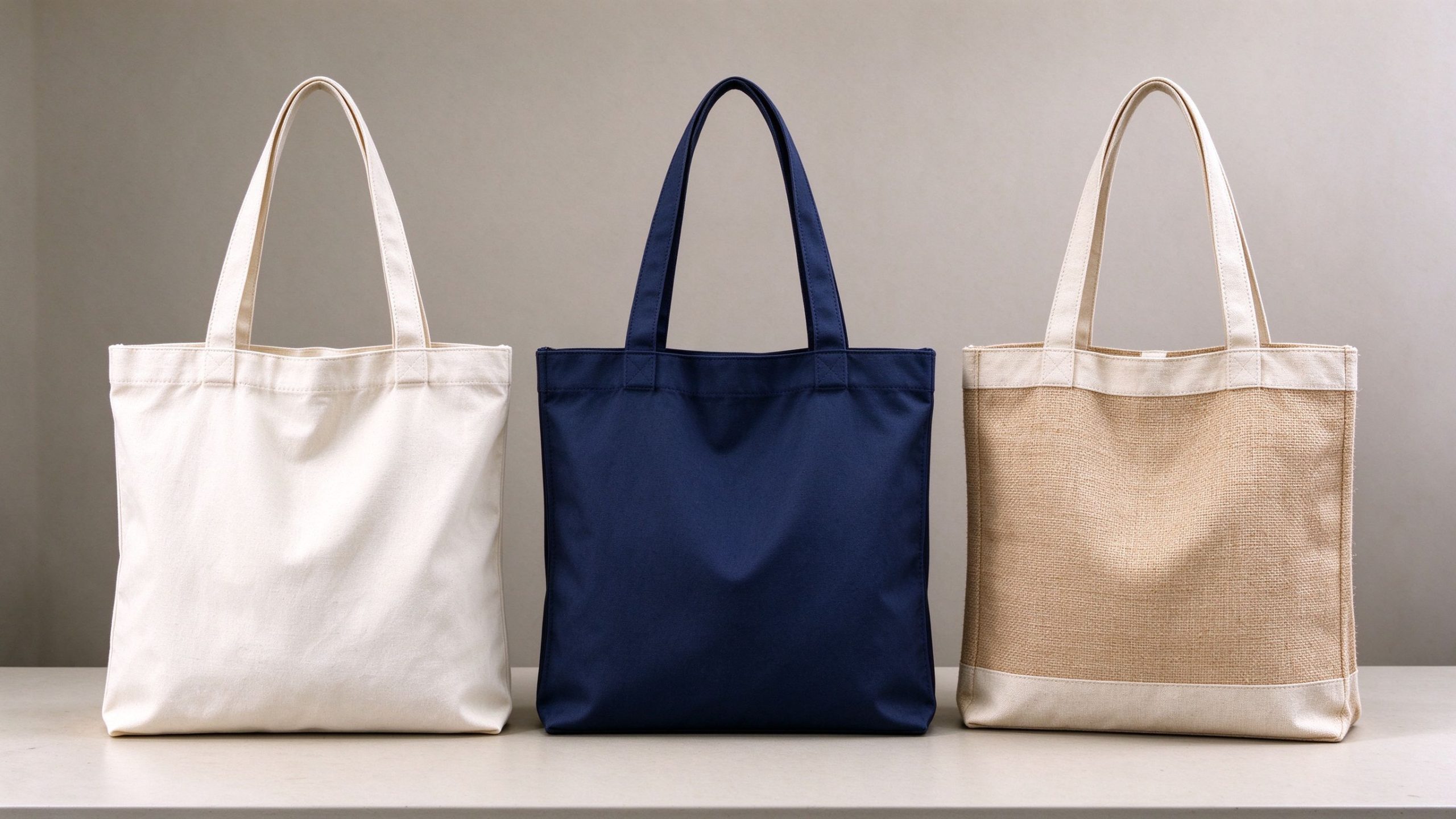
For plain canvas totes, the checks that matter are fabric weight (GSM or ounces per square yard), thickness and density, surface texture, weave consistency, color uniformity, and how the fabric behaves after washing or printing. Heavier is not automatically better — the right weight depends on the application, dimensions, and price point. A lightweight promo tote and a structured retail shopping bag need different fabric specs, and the same supplier may source both.
Polyester and Oxford fabrics need their own checks: composition, denier where applicable, surface texture, coating or backing details, color consistency, and compatibility with the planned printing method. Do not assume all Oxford fabric behaves the same — different constructions and coatings produce visibly different surfaces.
Some plain totes combine jute-style material with canvas panels or handles. These look distinctive for retail and gift packaging, but the woven material varies naturally, so define an acceptable range for weave consistency, panel alignment, and seam finishing before production.
| Inspection item | What buyers should check |
|---|---|
| Material composition | Confirm the actual fiber or fabric type, not a marketing name |
| Fabric weight | Match the approved specification (GSM or oz) |
| Surface texture | Check consistency and suitability for the intended decoration |
| Color | Compare against an approved physical reference |
| Weave | Look for visible defects or irregularities |
| Finishing | Check coating, backing, or surface treatment if specified |
| Printing compatibility | Confirm suitability for the selected decoration process |
Ask the supplier for the actual fabric specification instead of accepting words like premium, heavy-duty, or high quality. If chemical safety matters for your market, OEKO-TEX Standard 100 is a widely used benchmark for restricted substances in textiles — worth asking whether the fabric is certified before production.
3. Confirm Bag Dimensions and Construction
Dimensions decide whether the bag actually fits what your customers will put in it. Too small, and the intended merchandise does not fit; too large, and you pay for extra material, storage, and shipping volume that nobody uses.
Confirm the finished dimensions, not the cutting dimensions: width across the bag, height from bottom to top edge, and gusset depth where a bottom or side gusset is used. Flat totes may have no gusset at all; shopping and retail bags usually gain usable space from one.
Do not evaluate size from a product listing. If the bag must hold a specific product, give the supplier that product’s dimensions or its retail packaging, and test the contents in a physical sample. Also confirm whether the listed measurements are finished size or pre-sewing cutting size — this one detail prevents most approval-stage misunderstandings.
4. Inspect Handle Design and Attachment Construction
Handles shape both the look and the daily use of the bag. Plain totes typically carry self-fabric handles, cotton webbing, or polyester webbing, and the right choice depends on the bag design and what it will carry.
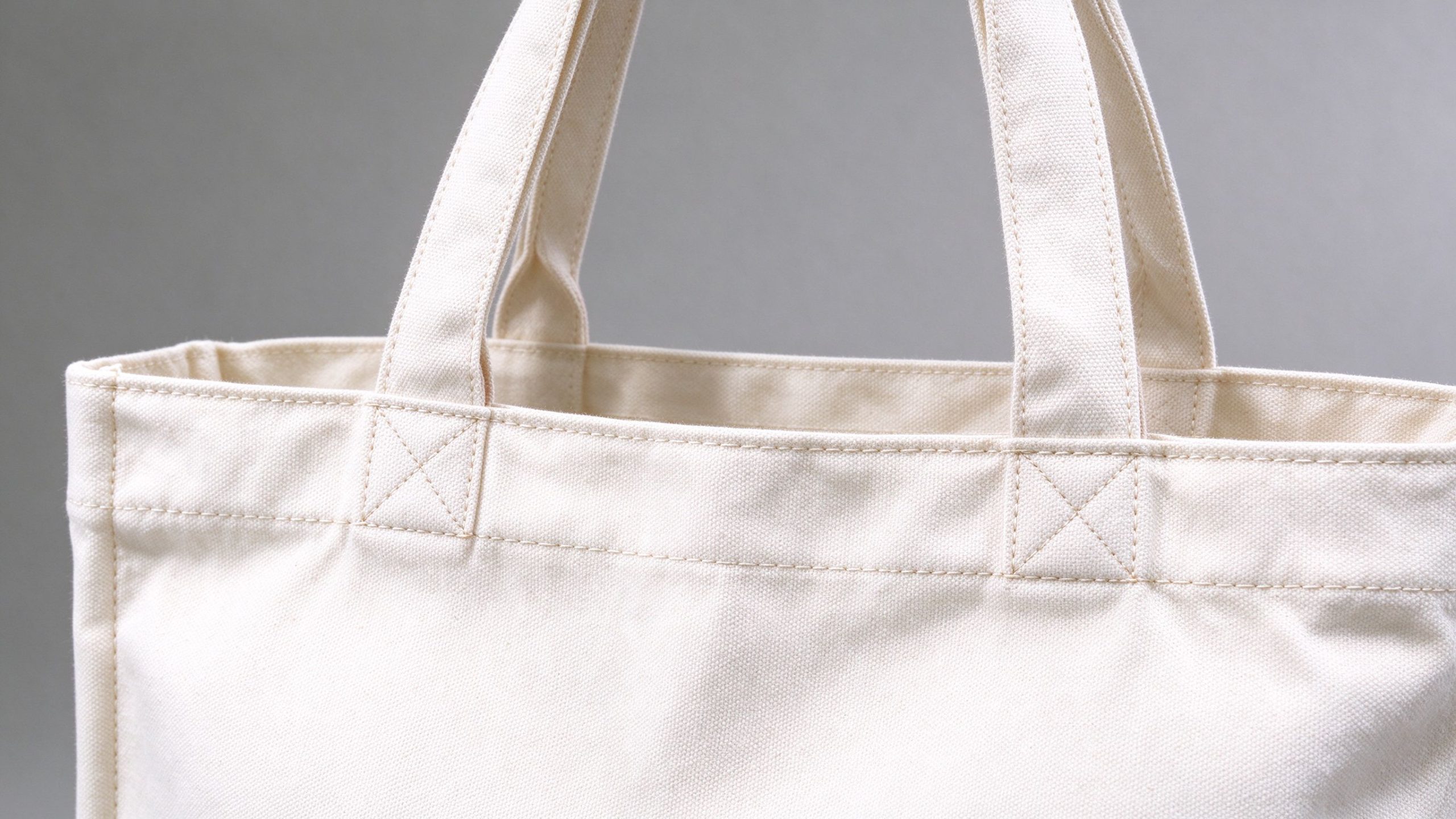
The details worth pinning down: handle material (same fabric as the body, or a separate webbing), handle length and drop (short for hand carrying, longer for shoulder carrying), width relative to the bag scale, symmetric attachment position, and reinforcement method. Ask how the handles are attached — reinforced stitching, folded attachment areas, or additional panels — because that is what survives daily abuse.
For bulk orders, handle attachment belongs in the agreed inspection criteria, not in subjective judgment. Check even stitching, no loose threads, no skipped stitches, and no visibly weak attachment points when the sample arrives.
5. Check Whether the Plain Tote Bag Is Logo-Ready
The most common reason buyers choose blank totes is to add their own branding later, and that makes surface compatibility a make-or-break check. Not every surface works with every technique, so decide the decoration method before finalizing the material.
Screen printing suits simple logos, solid graphics, and limited color counts — confirm surface suitability, available print area, color count, expected print appearance, and that the print position avoids seams and handles. Heat transfer works for selected detailed or multicolor artwork, but the result depends on the transfer material, fabric composition, surface treatment, and application process, so request a sample printed on the actual fabric before approving a large run. Embroidery adds a stitched decoration instead of a printed image and needs a fabric that holds the stitching without distortion; confirm size and position in advance.
If you buy the bags first and arrange printing later, do not assume compatibility. Test the decoration method on the real material before committing to the final order — or ask the supplier to confirm the surface works with your planned process.
6. Check Stitching, Seams, and Overall Workmanship
A bag’s appearance depends as much on the sewing as on the fabric. For bulk purchases, workmanship should be a checklist, not an impression. The main inspection points: side seams straight and consistently finished; bottom corners and seam alignment on gusseted bags; the top edge folded and stitched evenly; handle stitching matching the approved sample; thread quality free of loose threads, skipped stitches, or defects; and overall appearance free of stains, marks, uneven edges, or visible unit-to-unit differences.
The approved sample becomes the production reference. If minor variations are acceptable, define them in advance — vagueness here is what produces surprises in the final carton.
7. Evaluate Color Consistency Across the Bulk Order
Color consistency matters most for plain totes headed into retail or private label, where units sit next to each other on a shelf. A slight difference that is invisible in one photo becomes obvious when products are displayed together.
Confirm the approved fabric color, whether it is stock-dyed or custom-dyed, whether the order includes multiple colors, and whether different production batches can vary visibly. For custom colors, provide a physical reference or an agreed color specification — a digital image alone cannot represent final fabric color accurately because screens and lighting vary. If consistency is critical to your brand, ask the supplier to describe their color-control process.
8. Request and Approve a Sample Before Bulk Production
A photograph cannot replace a physical sample. Sample approval is the cheapest place to catch problems before they multiply across thousands of units.
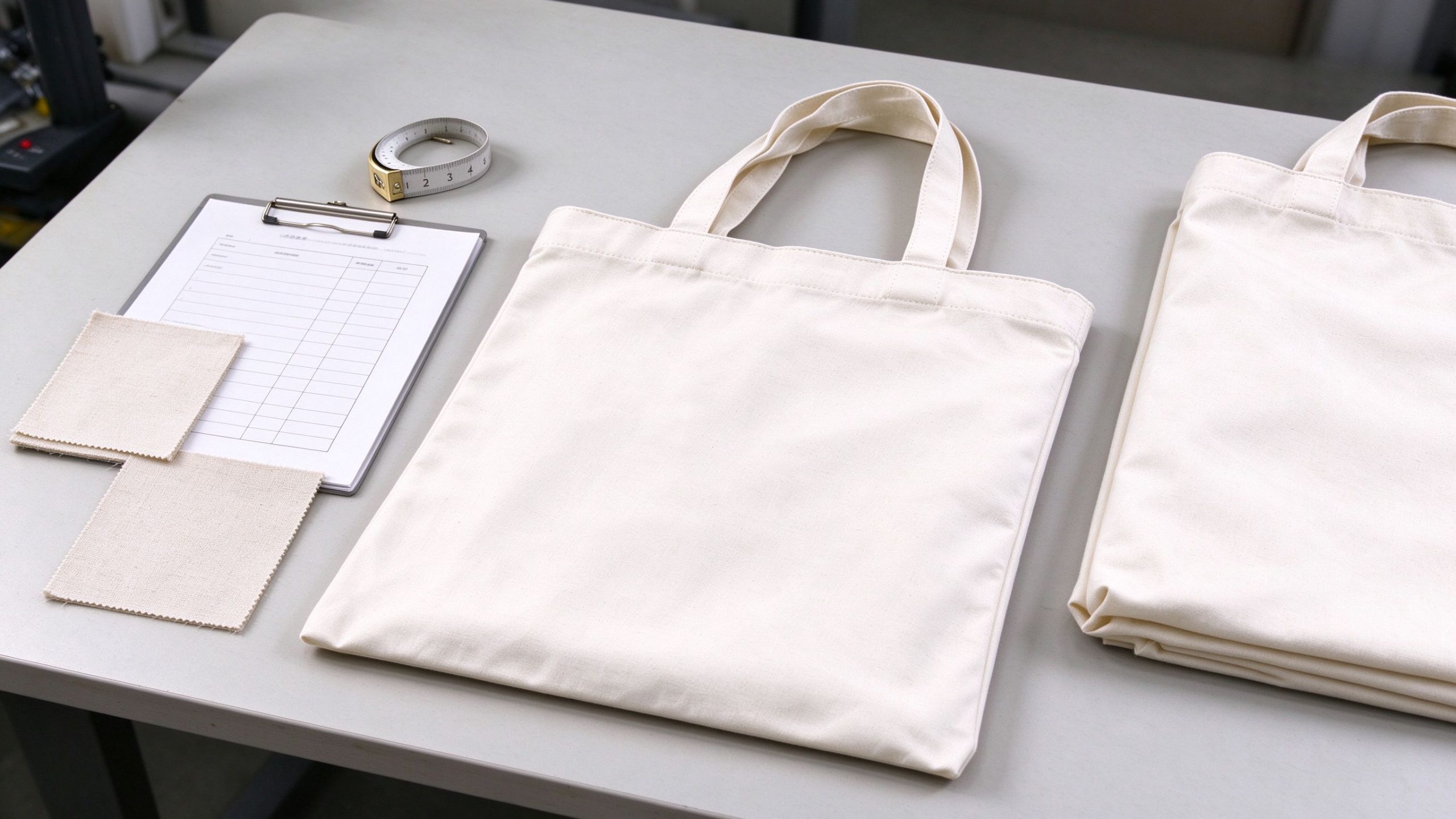
When the sample arrives, verify fabric composition, weight, texture, and color; finished width, height, and depth; handle material, length, width, and attachment; seam consistency and finishing; gusset construction and bottom shape; surface suitability for future decoration; overall symmetry and workmanship; and packaging format. Keep the approved sample as the reference for bulk production, and confirm the supplier treats it as the production specification.
| Sample item | What to verify |
|---|---|
| Fabric | Composition, weight, texture, color |
| Dimensions | Finished width, height, depth |
| Handles | Material, length, width, attachment |
| Stitching | Seam consistency and finishing |
| Bottom | Gusset construction and shape |
| Surface | Suitability for future decoration |
| Appearance | Overall symmetry and workmanship |
| Packaging | Individual or bulk packing requirements |
If anything changes after approval — fabric, handle width, or dimensions — document the change clearly and re-approve. Do not approve production on an outdated sample once the specification has moved.
9. Confirm Packaging and Shipping Requirements
Packaging decisions belong before the order, not at the warehouse door. Plain totes may go to wholesale resale, a printing shop, retail distribution, or further processing, and the packing method should match the next step in your supply chain.
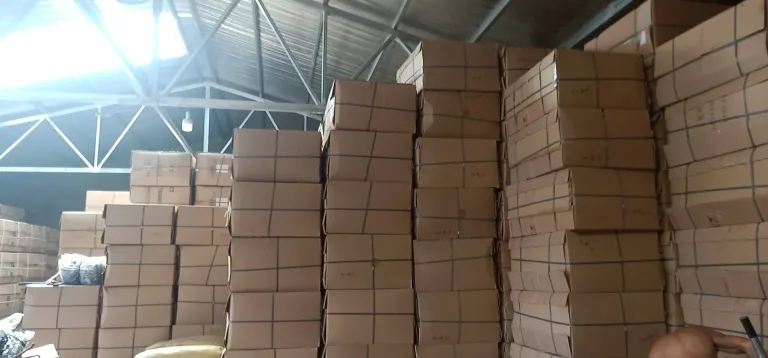
Decide between individual polybags, multiple bags packed together, tissue or protective wrapping, barcode labels, hang tags, retail-ready packaging, export cartons, and customized carton markings. If the bags move on to a printing company, ask whether individual packing is actually necessary. If they go straight to retail, confirm whether each unit needs a barcode or product label. Request proposed carton dimensions, packing quantity, and gross weight before arranging transport — importers and distributors need those numbers to plan warehouse space and freight.
10. Compare Suppliers Fairly on Plain Tote Bags Bulk
Comparing suppliers by unit price alone produces unreliable decisions, because two quotations rarely describe the same product. Material, dimensions, handles, and packaging all shift the number.
The fair way is to quote the same specification to every candidate and compare line by line: fabric composition clearly specified; fabric weight confirmed in GSM or an equivalent; finished dimensions stated; handle material, width, and length specified; seams and reinforcement confirmed; an approved color reference; decoration compatibility confirmed; a physical sample available for review; the applicable MOQ for the selected design; packaging and customization costs included; a production schedule for the confirmed spec; and clear quality criteria for inspection. Our bulk tote bag MOQ and pricing guide covers the cost side of that comparison in more detail.
When every supplier quotes against the same specification, a price difference becomes explainable — material, construction, customization, or packaging — and a transparent quotation should make those differences easy to read.
11. Final Checklist Before Placing a Bulk Order
Before confirming the order, walk through four groups. Product specification: exact tote style, fabric composition, fabric weight or thickness, finished dimensions, handle material and length, gusset presence, and completely unprinted confirmation. Quality requirements: approved fabric and color reference, stitching and handle attachment checked, workmanship standards agreed, a physical sample reviewed, and inspection requirements defined. Branding preparation: whether additional printing is required, compatibility with the planned decoration method, available logo placement areas, and a decoration sample if needed. Commercial and logistics: MOQ confirmed, quotation and included costs, packaging specification, production schedule, shipping arrangements, and written approval of the final specification.
Completing these checks before production reduces misunderstandings and keeps bulk purchasing manageable. For buyers sourcing blank bags repeatedly, the same checklist works for every reorder.
Frequently Asked Questions
1. What are plain tote bags?
Plain tote bags are unbranded, undecorated bags without a company logo or promotional design. Wholesalers, retailers, printing companies, and businesses that add their own branding buy them as a neutral starting point.
2. Are plain tote bags available in bulk?
Yes. Plain tote bags can be sourced for wholesale and bulk purchasing, with availability, minimum order quantities, material options, and customization depending on the selected style and supplier. Request a quotation based on your actual product specification.
3. Can I add my own logo to plain tote bags?
Yes, with the right method. Screen printing, heat transfer, embroidery, or other suitable techniques work on selected plain tote bags, but the appropriate method depends on the fabric, artwork, and required appearance. Confirm material compatibility before ordering.
4. Which material should I choose for plain tote bags?
Cotton canvas, polyester or Oxford fabric, and jute-and-canvas combinations are the common options. The best choice depends on the intended application, appearance, budget, and construction requirements. Ask the supplier for material specifications and a sample.
5. Should I request a sample before ordering plain tote bags in bulk?
Yes. A physical sample lets you check dimensions, fabric, handles, stitching, color, and finishing before approving bulk production. It matters most when product consistency or future logo printing is important.
6. What information should I provide when requesting a quotation?
Provide the preferred bag style, material, dimensions, handle requirements, quantity, color, printing requirements, and packaging details. If you have a reference product, photograph, or physical sample, include it with your inquiry.
7. Can plain tote bags be customized without changing their basic design?
Depending on the style, buyers can customize fabric color, dimensions, handles, labels, packaging, and other details. Confirm which changes are available for the specific product and whether they affect MOQ or production arrangements.
Request a Quote for Plain Tote Bags in Bulk
Looking for plain tote bags bulk quantities for wholesale distribution, retail sales, private-label products, or promotional projects? BriefcaseCustom supports B2B tote bag sourcing and OEM/ODM customization based on buyer specifications — whether you need unprinted canvas totes, practical fabric shopping bags, or another tote style, the first step is defining your material, dimensions, construction, and quantity.
To help us evaluate your project, provide: preferred tote bag material, required bag dimensions, fabric weight or material specification if available, handle type and length, required quantity, preferred fabric color, whether logo printing will be added later, packaging requirements, and delivery destination. Send your product specifications, reference images, or existing samples to request a bulk quotation, and we will come back with a price and lead time for review.