Bulk Tote Bag Sample Approval Checklist
A sample that looks right is not the same as a sample that is approved. The distinction sounds small until a 10,000-piece run arrives with the handle a centimetre shorter than the version you signed off, and nobody can point to a document that says which version was actually agreed. This bulk tote bag sample approval checklist is built to prevent that exact conversation.
A physical sample lets you judge the material, dimensions, stitching, logo and function of a tote bag before the factory cuts the full order. It is the cheapest insurance in the whole project — but only if the review is documented. A verbal “looks good, go ahead” leaves every later difference open to interpretation.
In our own workshop, most sample-stage disputes are not about the bag sitting in front of both sides. They are about a change someone agreed over a voice message and never wrote down, so the production line followed the earlier version while the buyer believed the new one was confirmed.
This guide walks through how to review a pre-production sample, record revisions, and identify the exact version the supplier should use before mass production. It sits alongside the broader range in our bulk tote bags hub; if you are still scoping the project itself rather than a specific sample, start with the custom tote bag project overview.
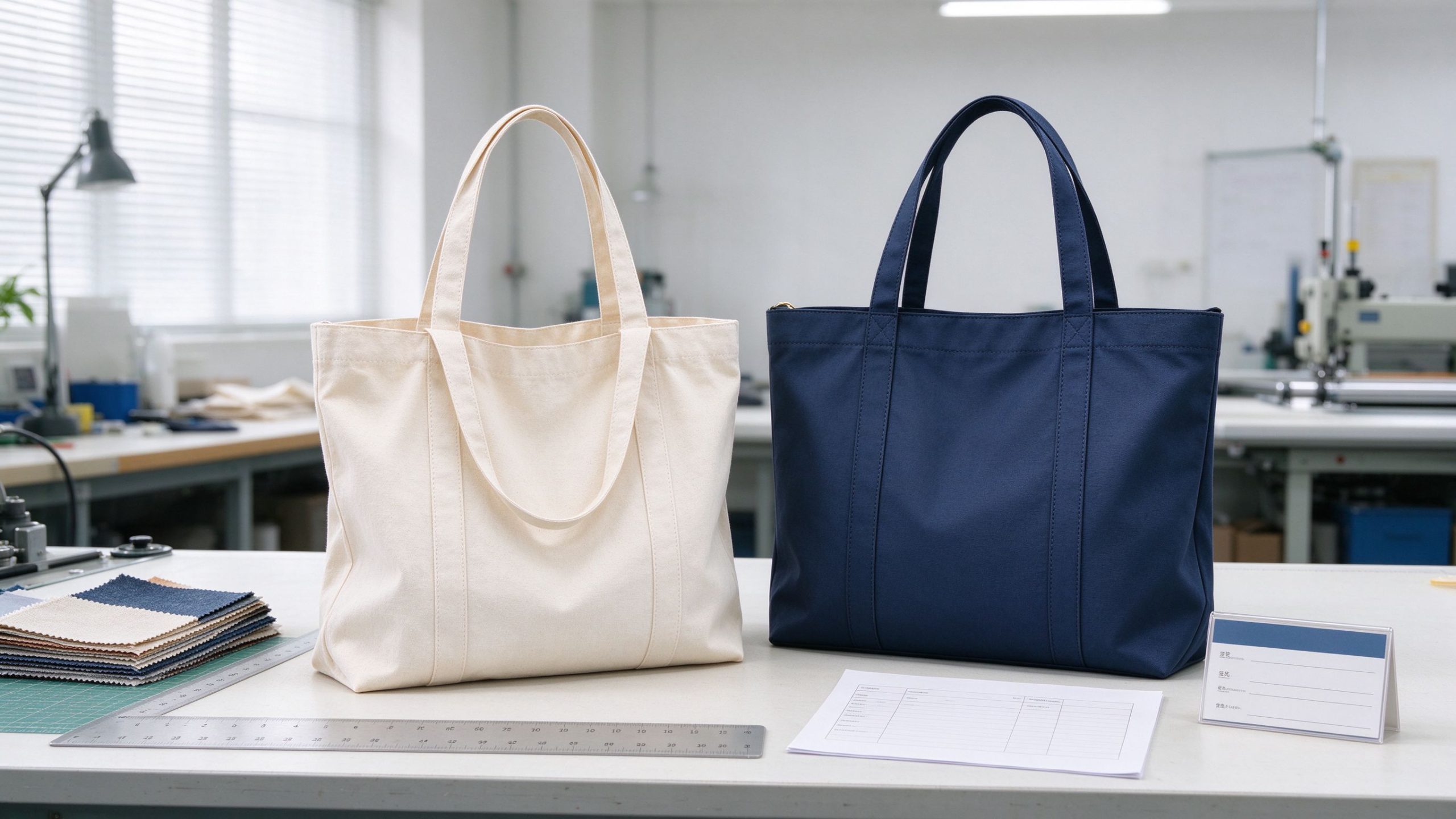
1. Confirm What Type of Sample You Are Approving
Before you review anything, clarify what the sample in your hands is supposed to prove. Suppliers use different names for sample stages, and treating a preliminary development piece as the final production standard is a common source of confusion.
The stages you will encounter usually break down as follows:
- Development sample — an initial piece used to evaluate a design, construction or material combination. It is a working draft, not a promise of the final product.
- Revised sample — a version that incorporates changes requested after an earlier review.
- Pre-production sample — the piece intended to represent the specifications agreed for mass production, made using the confirmed materials and decoration method.
- Production reference sample — a retained, labelled piece kept as the physical benchmark when finished goods are inspected later.
Not every order needs every stage. A simple unprinted tote may need only one sample if it matches the agreed spec; a design with custom printing, pockets, closures or several materials often needs a second round. Before you start, write down three things: what the current sample is meant to demonstrate, which requirements are already confirmed, and which details are still provisional. That stops a development piece being mistaken for the final standard. How a physical sample is developed in the first place is covered separately in our canvas tote bag sample process guide.
2. Prepare a Written Specification Before Reviewing the Sample
A sample should be judged against a document, not against a general impression. If the specification only exists in the buyer’s head, the review drifts into subjective comments that the factory cannot act on.
The written spec should cover the points below, with mandatory requirements separated from preferences:
| Area | What to define |
| Product design | Overall shape, structure and intended use |
| Material | Fabric type, composition where specified, texture and colour |
| Dimensions | Finished width, height, gusset and agreed tolerances |
| Handles | Material, length, width, attachment position and construction |
| Stitching | Seam construction, visible stitching and reinforcement |
| Pockets and closures | Positions, sizes and functional requirements |
| Logo and artwork | Artwork revision, dimensions, placement and print method |
| Colour | Approved fabric and decoration colour references |
| Packaging | Folding method, individual packaging, labels and carton requirements |
The distinction between mandatory and preferred matters. A logo may have to sit within a defined tolerance of the centre, while a minor shade variation on an uncoated natural fabric can be accepted in advance. If a requirement cannot be seen — a carrying-capacity figure, for example — define the test method and pass criteria in the spec. This document is the backbone of any reliable bulk tote bag sample approval; approving how a bag looks says nothing about how much it will hold.
3. Inspect the Sample’s Materials and Construction
3.1 Fabric and Material
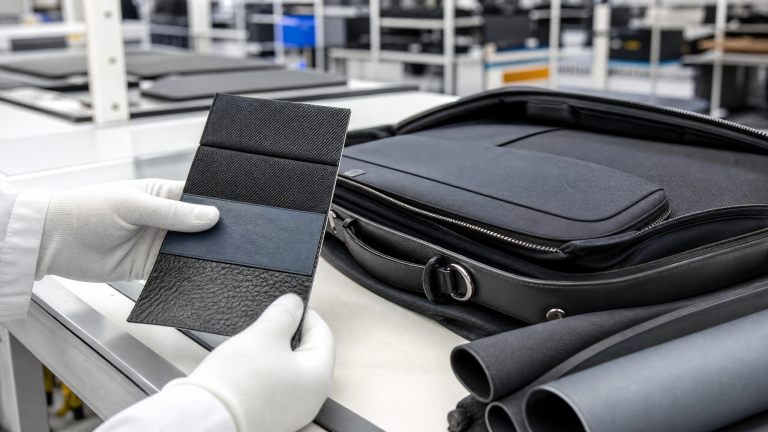
Check that the sample uses the intended material rather than something that merely resembles it. For canvas and Oxford fabric totes, examine the fabric type and any stated composition, surface texture and appearance, colour against the approved reference, thickness or weight where specified, and any defects, stains, holes or damage.
Appearance alone cannot verify fibre composition or fabric weight. If those characteristics matter for the order, ask the supplier for supporting specifications or test documentation. If the sample was made from a provisional or substitute fabric, record that limitation explicitly — a substitute-material sample is not evidence that the final material has been approved.
3.2 Dimensions and Shape
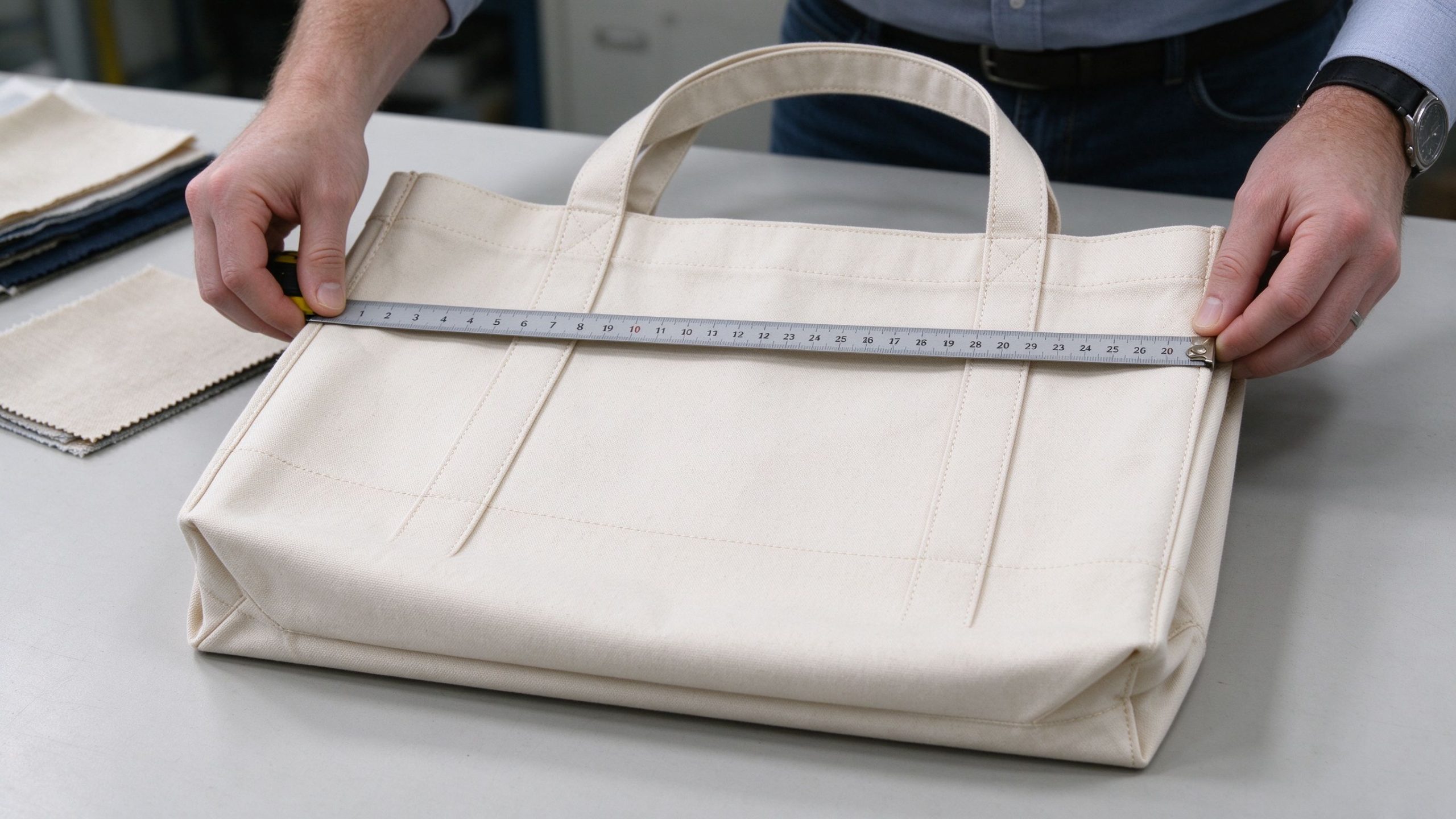
Measure using the same method agreed in the spec, and record the actual figures rather than a pass tick. Check overall width and height, bottom and side gusset depths, handle length and width, pocket dimensions and opening dimensions where relevant, then compare each against the agreed tolerances.
Look at the overall shape as well as the numbers: the bag should stand or fold as intended, the side panels should align, and the bottom construction should match the approved design. If the tote is built to carry a specific retail package, test the fit with the actual item or an agreed dimensional reference rather than assuming it will work.
3.3 Handles, Seams and Reinforcement
These are the structural points that decide whether a good-looking sample will survive real use. Inspect handle length and width, attachment positions, left-right symmetry, stitching consistency, seam finishing, bottom and corner construction, any reinforcement called out in the spec, and loose threads or incomplete stitching.
A sample can look attractive from the front and still need construction changes. A handle set too close to the edge will look wrong across an entire production run; a pocket seam can collide with the intended logo position. Document these findings with photographs and specific instructions — “fix the handle” is not an instruction a production line can execute.
4. Verify Logo Artwork and Colour
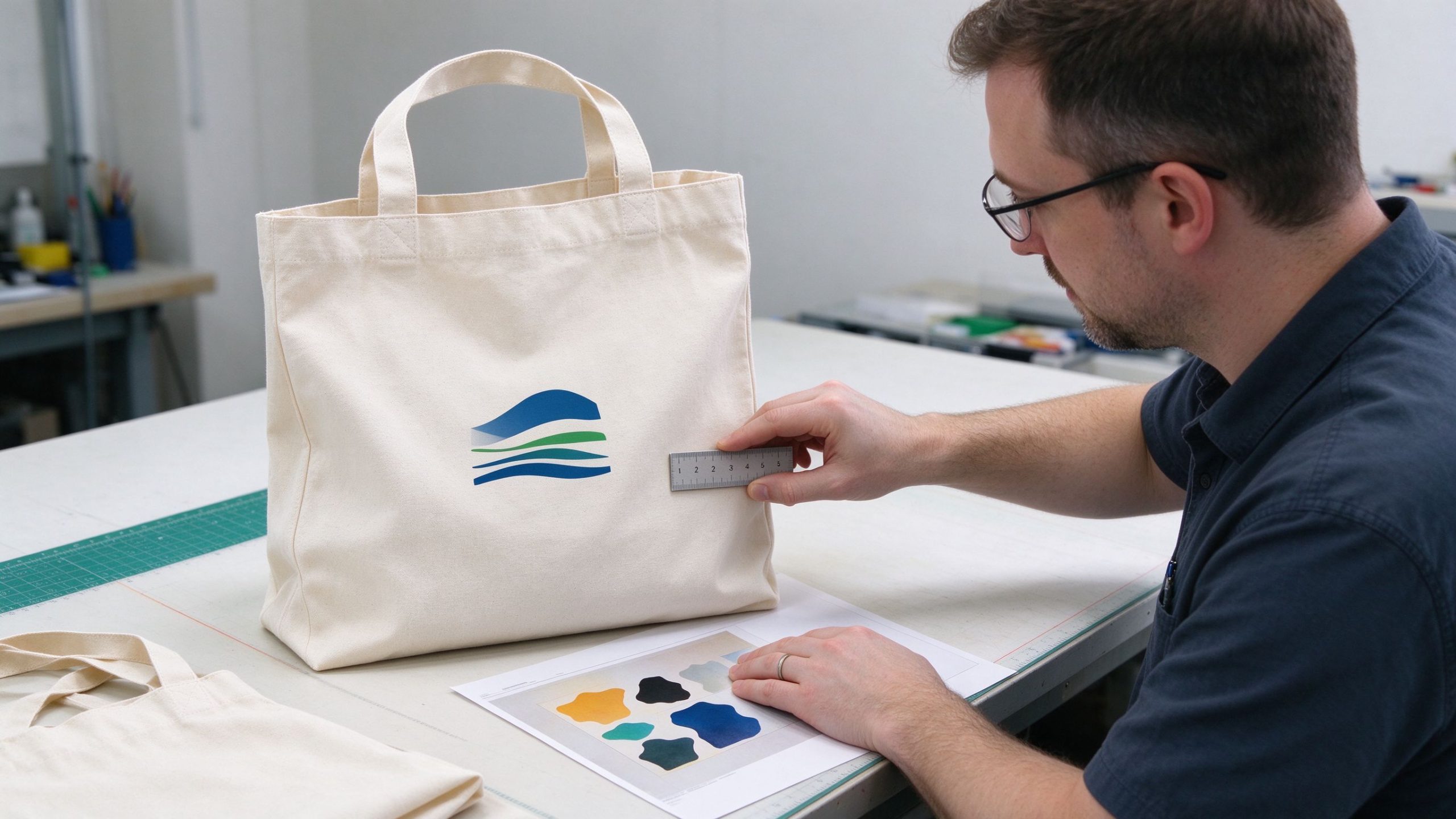
Branding deserves its own pass, checked against the latest approved artwork file or physical reference rather than a digital mock-up. Confirm the logo version, orientation, width and height, position relative to the bag edges, alignment with the centreline, colour, print clarity, edge definition and decoration method.
The print process changes how the result should be judged. Screen printing, heat transfer and embroidery each have their own edge characteristics and failure modes, so evaluate the sample against the agreed spec for that specific method rather than a generic idea of crispness. If the sample carries temporary artwork or an unconfirmed colour, mark it provisional — a recognisable logo is not the same as an approved one. For colour-critical retail or corporate projects, agree the colour reference and review method before production begins.
5. Check Functionality and Intended Use
A sample review should test the way the bag is actually expected to work. Depending on the design, check that the opening is easy to access, the intended contents fit, pockets sit in the right places, zips open and close smoothly, snaps and magnetic closures work, detachable parts fit, the bag folds and unfolds as required, and the handle length suits the intended carrying method.
Evaluate the bag in its real scenario. A tote for documents needs different dimensions and construction from one built for a retail product, and an employee welcome kit may be judged more on appearance than one destined for a shop floor. Where durability, water resistance or load performance is required, define the test before approval rather than inferring it from how the sample looks.
6. Review Packaging and Labelling Before Approval
Packaging is often left to the end of an order even though it affects presentation and can hold up a retail shipment. If packaging is part of the purchase spec, confirm it during the sample stage: individual protection, folding method, hang tags and labels, barcode placement and readability, product identification labels, carton packing quantities and any special retail presentation.
Where the final packaging cannot be supplied with the first sample, request a separate packaging proof or written confirmation, and keep approved and outstanding packaging clearly separated. Otherwise the bag itself can be signed off while labelling that would stop a retail delivery is still unresolved.
7. Record Revisions in a Structured Approval Sheet
Revisions are where bulk tote bag sample approval most often breaks down, because the supplier needs feedback precise enough to act on. Comments such as “make the logo better” or “the handle looks wrong” identify neither the problem nor the required correction. A revision sheet with one row per item solves this.
| Item | Current finding | Required action | Status |
| Logo | Position differs from approved layout | Move to the specified reference position | Revision required |
| Handle | Length differs from specification | Revise to the agreed dimension | Revision required |
| Fabric | Colour not yet confirmed | Submit agreed colour reference | Pending |
| Placement matches specification | No change required | Accepted | |
| Packaging | Final label not provided | Submit label proof before approval | Pending |
For each revision, record the sample or revision number, the date, the issue, the required correction, a supporting image, the responsible contact and the current status. A consolidated written record keeps earlier comments from disappearing into a long messaging thread, and it gives both sides a single source of truth.
8. Follow a Clear Sample Approval Process
A workable bulk tote bag sample approval process runs through six steps:
- Submit the specification — drawing or reference, dimensions, materials, construction details, logo artwork and packaging instructions.
- Review the initial sample against the spec and record every difference.
- Issue one consolidated feedback list with photographs, measurements and clear corrections.
- Review the revised sample and confirm each requested change; fixing one feature does not approve the whole bag.
- Confirm final approval in writing, naming the exact sample or revision and any remaining exceptions.
- Establish the production reference — the spec, artwork, material references and sample version the factory will follow.
If a material, design or construction change is proposed after approval, require it to be documented and accepted before it becomes the new production standard. This kind of documented change control is the same discipline used under formal quality management systems such as ISO 9001:2026 quality management, which treats document and change control as core requirements. The timing of the sample stage against the rest of the order should be built into your bulk tote bag lead time planning, so a revision round does not silently push out the shipment date.
9. Avoid Common Sample Approval Mistakes
A handful of preventable errors weaken most sample processes. Each one is simple to describe and surprisingly common in practice.
Approving from photographs alone. Photos help with details but cannot establish every physical characteristic. When dimensions, material properties, construction or function cannot be judged reliably from images, request a physical sample or an agreed additional verification method.
Approving an incomplete sample. A piece missing the final fabric, artwork, hardware or packaging is still useful for development, but its provisional status has to be recorded so unverified components are not treated as signed off.
Using outdated artwork. Confirm the file name or revision number under review to stop an obsolete logo version reaching production.
Sending scattered feedback. Multiple uncoordinated messages create conflicting instructions. Keep one current revision list and mark which earlier comments have been resolved.
Failing to retain the approval record. Keep the approved spec, sample photographs, correspondence and final confirmation with the purchase order. The paperwork exists to make the agreed standard clear to everyone producing and inspecting the goods — not for its own sake. When you later compare suppliers, weigh this discipline alongside bulk tote bag MOQ and pricing, because a low unit price paired with undocumented standards tends to generate costs later.
10. Final Bulk Tote Bag Sample Approval Checklist
Before authorizing mass production, run through this summary. If a critical item is unresolved, mark the sample pending rather than approving the whole piece.
- Product design and intended use confirmed
- Material requirements verified against references
- Dimensions measured against the specification and tolerances
- Handle construction and attachment positions reviewed
- Stitching, seams and reinforcement meet the agreed requirements
- Logo artwork, placement and decoration method approved
- Functional components checked in the real use scenario
- Packaging and labelling confirmed or documented as outstanding
- Required performance tests completed or scheduled
- All sample revisions addressed and marked resolved
- The approved sample or revision clearly identified
- Final specification and artwork versions recorded
- Written approval communicated to the supplier
- Production reference and change-control process established
Once production begins, the reference sample and approved spec become the benchmark against which finished goods are judged. That later stage is a different activity — checking the produced batch rather than confirming the standard — and is covered in our bulk tote bag quality inspection checklist.
Frequently Asked Questions
What should I check when approving a bulk tote bag sample?
Review the material, dimensions, construction, handles, stitching, logo, functionality and packaging against the written specification, and record actual measurements or test results rather than general impressions.
Is sample approval the same as a pre-shipment inspection?
No. Sample approval establishes the agreed product standard before mass production; a pre-shipment inspection evaluates finished goods against that standard after the batch is produced.
Do I need a new sample after every revision?
Not always. Minor changes can sometimes be confirmed through an agreed verification method, while changes affecting material, dimensions, construction, branding or function usually require a revised physical sample.
What is a production reference sample?
It is a retained, labelled sample used as the physical benchmark for the agreed product, so finished goods can be compared against a standard that matches the final written specification.
What if the supplier changes the material after sample approval?
Do not assume the original approval covers an unconfirmed substitution. Request details of the change, assess its impact and obtain written agreement before the revised material is used.
Should I approve the sample before the logo artwork is confirmed?
For a branded order, the artwork version, placement and decoration method should be confirmed before final approval. If branding is provisional, document that status rather than treating it as fully approved.
Can sample approval guarantee every bulk unit will be identical?
No. It establishes a reference standard, but production controls and finished-goods inspection are still needed to evaluate consistency across the batch.
Request a Custom Tote Bag Quotation
A smooth sample process starts with a complete brief. When requesting a quotation, prepare reference images or drawings, the estimated quantity, material and colour requirements, finished dimensions, handle and construction details, logo artwork and placement, pocket and closure requirements, packaging and labelling instructions, destination market and target delivery date, and any inspection or performance requirements you intend to enforce.
If you already hold a physical sample, provide photographs and a list of the features you want retained or changed. Complete specifications make the sample review faster, keep revisions traceable and give the production line a single unambiguous reference before the bulk order proceeds.
BriefcaseCustom works with B2B buyers on custom tote bag specifications and OEM/ODM projects. Send your requirements and reference materials to discuss a configuration and arrange the sample stage for your order.