Business Briefcase Quality Checklist: 12 Bulk-Order Checks Before Approval
A business briefcase should not be judged only by the first sample photo. For a bulk corporate order, small inconsistencies in fabric, stitching, logo application or packing can affect how every recipient experiences the brand. A clear inspection checklist helps procurement teams compare finished units with the approved specification before they are distributed, exported or sent to clients.
Use this guide as a practical reference for defining business briefcase quality requirements before bulk approval.
Why a written quality checklist matters
Quality expectations can become vague when they exist only in email conversations. Terms such as “good zipper,” “durable handles” or “professional logo” leave too much room for interpretation. A checklist converts those preferences into review points that a production team, buyer and third-party inspector can all understand.
The checklist should be based on the approved sample and bill of materials. It should confirm not only whether the bag looks correct but whether it performs as intended when loaded and carried.
The 12-point business briefcase quality checklist
1. Exterior material matches the approved specification
Check that the fabric, PU panel, leather-like accent or other exterior material matches the approved sample in texture, colour and overall weight. For Oxford fabric, compare the weave, backing and coating appearance. Material should not feel noticeably thinner, shinier or softer than the approved reference unless the change was agreed in writing.
2. Colour consistency is acceptable across the order
Review several units from different cartons. Minor variation can occur in textile and hardware production, but the overall colour should remain consistent enough for the order to look like one corporate programme. Pay special attention to black, navy, grey and brand-colour panels, where differences may become visible under different lighting.
3. Stitching is even and reinforced at stress points
Inspect the stitch lines around handles, shoulder-strap anchors, main zippers, corners and pocket joins. These are the points that carry the greatest load. Stitching should be straight, secure and free from loose ends, skipped sections or obvious tension changes.
For a structured option such as DH75, check that the exterior shape remains balanced and that the handle attachment points feel secure when the bag is loaded.
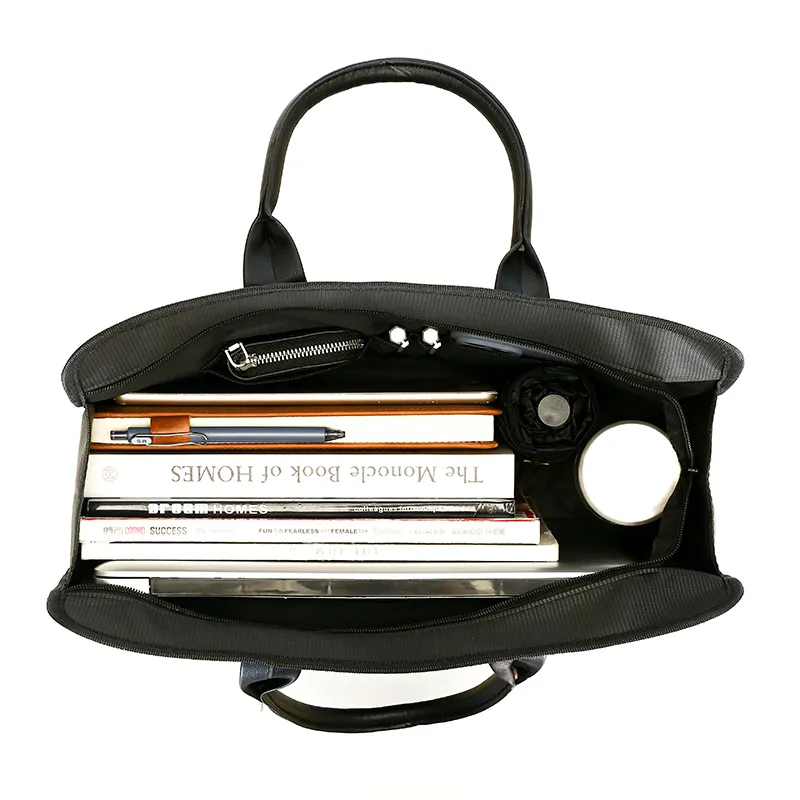
4. Zippers open smoothly and close cleanly
Run every zipper through its full path. The pull should move without catching on lining, fabric or pocket edges. Check that the zipper closes evenly, that the teeth align and that the puller is securely attached. A zipper issue may seem minor in inspection but becomes highly visible when a recipient uses the briefcase in a meeting or during travel.
5. Handles and shoulder straps are comfortable and stable
Lift the briefcase with the expected working load inside. Check whether the handles twist, the webbing slips or the bag feels unbalanced. For detachable shoulder straps, inspect hooks, adjusters and attachment points. The strap should adjust smoothly and the hardware should sit securely under normal use.
6. Internal compartments match the approved layout
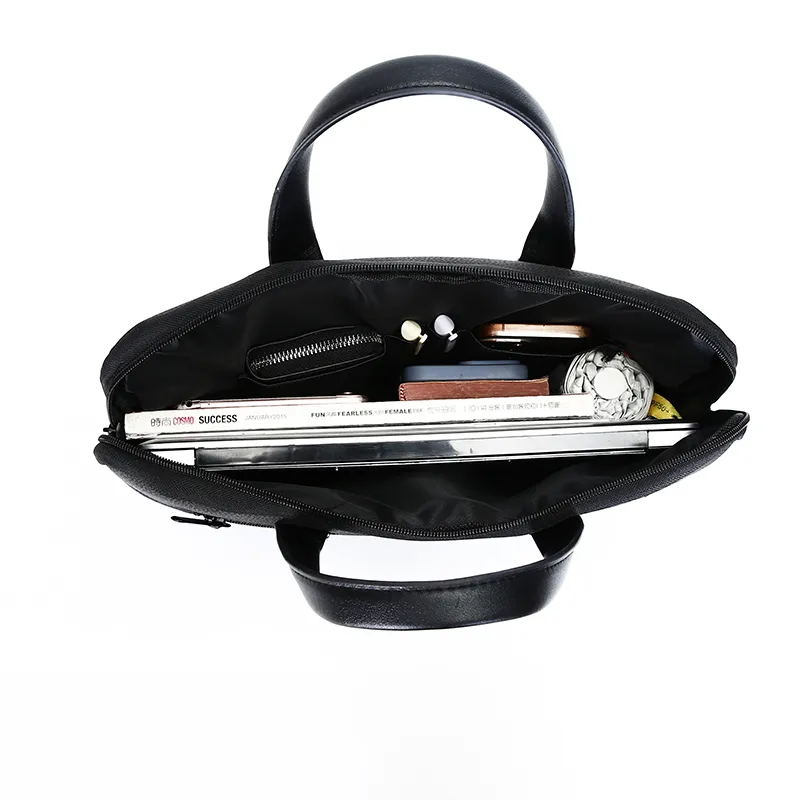
Confirm the number, location and size of dividers, laptop sleeves, organiser pockets and cable areas. Test the fit with the items specified for the project: A4 documents, laptop, charger, notebook or sales materials. A compartment that is slightly too narrow or too shallow can make the whole briefcase less useful.
7. Lining and interior finish are clean
The lining should be free from holes, stains, wrinkles that impede use or loose threads. Interior labels, pockets and divider edges should be properly attached. A clean interior matters because recipients interact with it every time they use the bag.
8. Logo quality matches the approved artwork
Compare the finished logo with the approved rendering or sample. Check position, size, colour, edge clarity and attachment. Screen prints should be clean and consistent. Heat-transfer graphics should be firmly bonded. Embroidery should not create excessive puckering. Labels, patches and metal plates should sit straight and remain secure.
9. Hardware is consistent and free from scratches
Inspect zipper pulls, buckles, D-rings, metal plates, feet and other hardware. The finish should be consistent across sampled units. Hardware should not have sharp edges, obvious scratches, peeling coating or loose attachment points.
10. Bag shape and panel alignment are correct
Place the briefcase on a flat surface and view it from the front, side and top. It should keep its intended silhouette without severe leaning, twisting or uneven panels. Check that exterior pockets are aligned and that seams follow the approved construction lines.
11. Packing protects the product and supports distribution
Open cartons and check how the briefcases are packed. If the project requires paper filling, dust bags, polybags, hangtags or carton labels, verify that these elements are present and applied correctly. Packing should protect the bag from creasing, scuffing and moisture during transport while still allowing practical handling at the destination.
12. Carton quantity and labelling match the shipping plan
Confirm the number of pieces per carton, carton marks, gross weight and destination labels. This step matters for warehouse receiving, event distribution and customs documentation. A correct product can still create operational problems if cartons are mixed, mislabelled or packed inconsistently.
A practical inspection table
| Inspection area | What to check | What to record |
|---|---|---|
| Material | Fabric, colour, thickness, surface finish | Sampled units, observations, photos |
| Construction | Stitching, panel alignment, reinforcement | Defect type and location |
| Function | Zippers, handles, straps, compartments | Pass/fail and test notes |
| Branding | Logo position, colour, method and clarity | Comparison with approved sample |
| Packing | Polybag, stuffing, labels, carton count | Carton number and packing condition |
Use the approved sample as the reference point
The sample is not merely a pre-production formality. It is the agreed visual and functional reference for the bulk order. Keep a labelled approved sample or detailed photo record. Attach material swatches, logo artwork and a packing specification if the project is complex.
If a change is requested after sample approval, document it clearly. Verbal updates can easily be lost between design, production, QC and shipping teams. A simple revised specification protects both the buyer and the supplier.
Decide what is critical versus cosmetic
Not every variation has the same impact. A tiny thread tail that can be trimmed is not equivalent to a loose handle, misaligned logo or defective zipper. Define critical, major and minor defects before inspection so the team knows which issues require rework, replacement or further review.
For high-visibility client gifts, cosmetic details such as logo alignment and surface cleanliness may be especially important. For employee or field-use programmes, function and reinforcement may carry greater weight. The inspection standard should reflect the programme’s purpose.
Connect quality review to bulk procurement
For buyers ordering large quantities, quality is part of the purchasing process—not a separate final event. The Wholesale Briefcases programme can help frame the wider specification questions around quantity, packing, repeat orders and delivery planning. The final inspection checklist then becomes the practical tool that protects the agreed brief.
Final advice
A strong quality review does not need to be complicated. It needs to be specific, documented and connected to the way the briefcase will be used. Check material, construction, function, branding and packing against the approved sample. Test real work items inside the bag. Record issues before cartons leave the factory.
When quality expectations are clear, bulk orders are easier to approve, recipients receive a more consistent product and the corporate brand is better protected.
Recommended reading
- How to Approve a Custom Business Briefcase Sample Before Mass Production
- Business Briefcase Materials: Oxford, Nylon, PU and Leather Compared
- Business Briefcase Compartments and Organizer Design
Need an inspection-ready specification for your project? Request a custom business briefcase quote and share your quantity, usage scenario and required delivery date.
Explore Production Models & Request a Quote
Ready to move from guidance to a real bulk program? Review our production references such as Model DH75Model 2201 or visit the Business Briefcases manufacturer page for specifications, customization options and QC detail. When your spec is set, request a project quote and we will return a like-for-like quote for your order.