Bulk Tote Bag Packaging and Shipping Preparation
Bulk tote bag packaging is usually the last item settled in an order and the first one to cause trouble at the warehouse. The bags pass inspection, the cartons arrive, and only then does someone notice that the label format does not match the receiving system, that the count per carton disagrees with the packing list, or that the retail hang tags were never printed.
None of those problems are expensive to prevent. They are expensive to discover after the container has been loaded, when the only options left are a re-packing job at destination or a credit note.
The workable sequence is simple: decide how the goods will be received, write the packing configuration down, protect the bags on the packing table, label the cartons to the receiver’s format, and reconcile the paperwork against the actual cartons before the truck arrives.
This guide walks through that sequence for wholesale tote bag orders — canvas, Oxford fabric and non-woven — with the details that tend to get skipped between production and shipment.
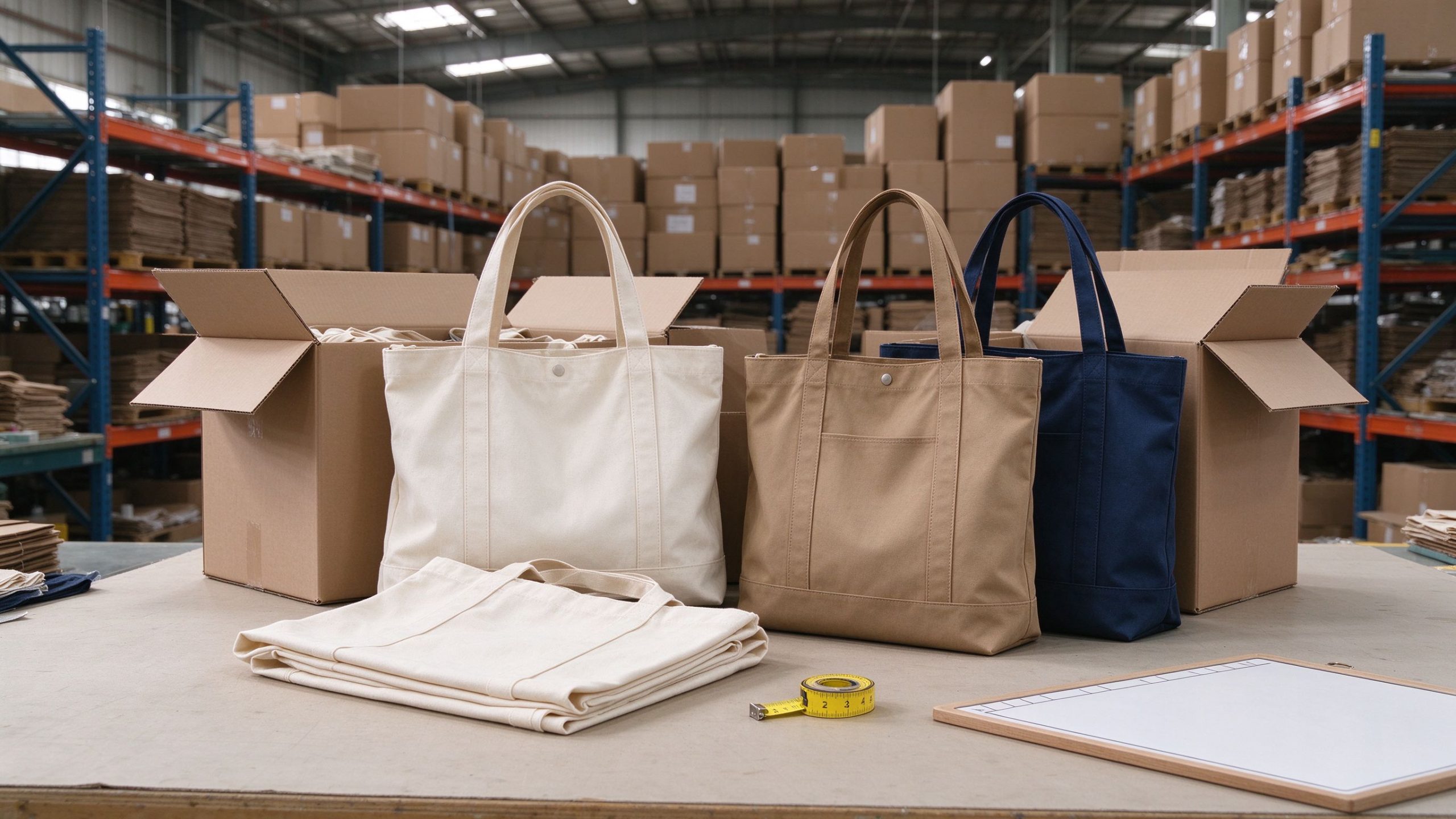
1. Decide How the Goods Will Be Received
Packing decisions belong to the receiving side, not the factory. A wholesaler feeding its own racking needs one carton layout; a third-party logistics warehouse feeding e-commerce orders needs another; a promotional distributor splitting 5,000 bags across forty offices needs a third.
Before the packing spec is written, establish these facts in writing:
Who physically receives the shipment, and whether the goods go straight into storage or are broken down and redistributed. Whether individual units carry a barcode or retail tag. Whether the warehouse or retailer has its own carton label format, pallet height limit or carton weight cap. Which forwarder is used, and whether that forwarder has separate requirements for marks, numbering or document copies. Which delivery term applies, because EXW, FOB, CIF and DAP place the booking, the clearance and the carton-data handover in different hands.
That last point causes more friction than buyers expect. The official definitions of the delivery terms are maintained by the ICC and are worth reading once, at the Incoterms 2020 rules, because the party that books the transport is usually the party that needs the carton data first, and that may not be you.
A retail distribution centre will often send a supplier manual with carton dimensions, weight limits, label placement and barcode symbology. Ask for it early. We have had buyers forward that document three days before the vessel cut-off, when the cartons were already printed and sealed.
2. Four Bulk Tote Bag Packaging Setups That Cover Most Orders
Almost every wholesale tote order lands in one of four configurations. Choosing between them is a question of where the bag goes next, not of how much protection sounds safest.
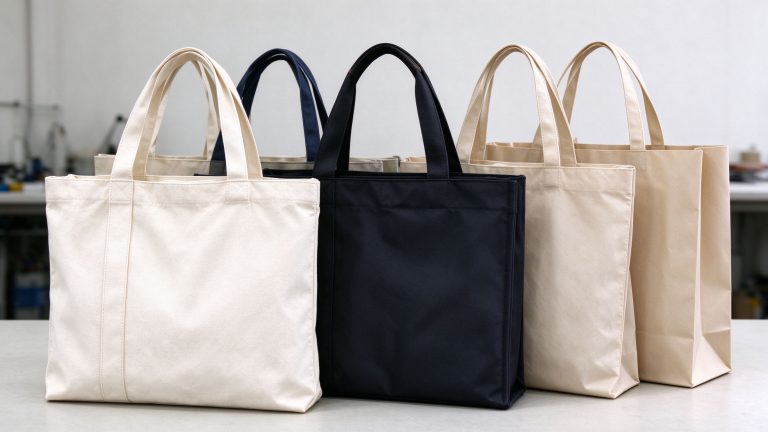
Bulk carton packing. Bags are folded to an agreed method and counted into the shipping carton without an inner retail bag. This suits importers and wholesalers who will warehouse or repack the goods, promotional companies moving inventory to an event, and buyers whose customers never see the bag as a standalone retail item. The specification still has to state the folding method, the count per carton and whether any inner layer — tissue, a poly sleeve, a divider — is required.
Individual protective packaging. Each bag sits in its own poly bag or agreed sleeve, which keeps units clean and lets them be distributed one at a time after arrival. It costs an extra step on the packing table and adds volume to every carton, so it is worth checking whether the bag will actually be handled as a single unit. If the poly bag needs a sticker, a barcode or a size marking, say so before the labels are ordered.
Retail-ready packaging. This is where the details multiply: hang tags, barcode labels, printed product cards, brand labels, tissue, and carton marks that match the retailer’s own system. Retail presentation is approved like artwork, not like packing, and tag proofs may need their own round of sign-off. If the retailer’s barcode data arrives late, the packing line stops — so treat the label file as a critical-path item alongside the logo artwork.
Gift and corporate set packaging. When a bag is packed with a notebook, a folder, a tumbler or a welcome card, the question is who assembles the set. Some buyers assume the factory inserts the extras; others ship the components separately and assemble in-house. Both are workable, but the packing spec has to name the sequence, the contents, the carton grouping and who supplies the inserts. Leave that open and the set gets assembled on the last day, usually with the wrong ratio of notebooks to bags.
Two setups in one order are fine, provided they are separated by SKU. Mixed setups in the same carton are not: receiving staff cannot count or shelve them, and any count dispute becomes impossible to settle. For retail-specific options such as hang tags, poly sleeves and printed headers, the detail sits in this guide to canvas tote bag packaging options; this article stays on the bulk side.
3. Nail Down the Packing Configuration Before the Line Runs
A bulk tote bag packaging specification is a one-page document, not a conversation on the packing floor. It states how many pieces go into a carton, how they are folded, what protects them, what the carton measures once sealed, and what it weighs. Everything downstream — freight quotes, pallet plans, warehouse slotting — is calculated from those figures.
The quantity per carton cannot be copied from another model. A flat 38×42 cm canvas tote and a structured tote with a reinforced base and gusset occupy different space at the same piece count, and a bag with a padded laptop sleeve occupies more again. Our packing team measures a trial carton for each new style before quoting a quantity, because the number that looks right on paper is often one or two pieces too optimistic.
| Field | What to write | Why it matters |
|---|---|---|
| Quantity per carton | Fixed number per SKU, measured from a trial carton | Drives carton count, freight volume and receiving counts |
| Folding method | Flat fold, half fold, or folded around a panel | Changes carton height and how the print survives transit |
| Carton outer dimensions | Length × width × height after sealing, in cm | Used for CBM, pallet build and warehouse slotting |
| Gross weight | Weighed, not calculated from bag weight alone | Air freight and manual handling limits depend on it |
| Carton grade | Single or double wall, with the buyer’s requirement if specified | Affects stacking strength and damage rate |
| Mixed-carton rule | One SKU per carton, or a stated mix with a breakdown | Prevents count disputes at receiving |
| Inner protection | None, tissue, poly sleeve, divider, hardware wrap | Determines packing time and per-unit cost |
| Carton numbering | Sequence format, e.g. 1 of 12, with the final count confirmed | Supports receiving and partial-shipment checks |
Mixed cartons deserve a separate line in the spec. If a carton contains 20 navy and 10 natural bags, the label has to say so, and the packing list has to break the quantity down the same way. Warehouse staff count cartons, not contents, so an unlabelled mixed carton is effectively an unknown.
Carton strength is usually decided by weight, stacking and distance rather than by habit. A 12 kg carton of canvas totes travelling by sea and stacked four high needs a sturdier box than a 7 kg carton moving by courier. Ask the supplier what grade they use for the actual packed weight, and confirm it rather than assuming one grade fits every order.
4. Protecting the Bags Between the Sewing Line and the Container
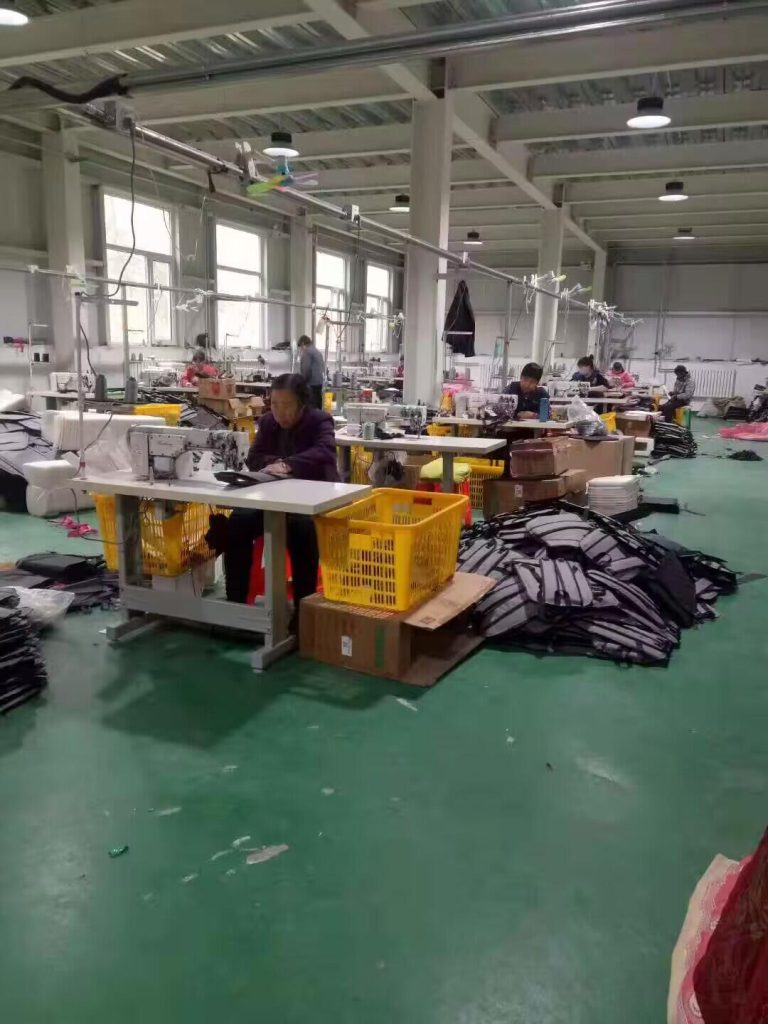
Damage in a tote order rarely comes from the fabric itself. It comes from handling: a scuff across a screen print, a crease in a laminated panel, a handle pressed flat under twenty bags, a carton dropped at the loading bay.

The first control is the folding instruction. Soft canvas totes fold flat without much trouble; structured totes with a padded base, a reinforced gusset or a rigid panel distort if folded the same way. Where shape matters, packing with internal support or a shallower fold costs a little volume and saves a lot of complaints.
Compression is the second. Tight packing feels efficient and looks tidy in a photo, but a heavily compressed carton creases coated prints, flattens piping and leaves handle straps with a permanent bend. We aim for cartons that close without needing weight on the lid; if the box has to be sat on to tape, there is too much inside.
The third is cleanliness. Clean, dry inner materials, hands off the printed area, and finished bags kept off the floor and away from dyed fabric or dusty shelving. A grey smudge on a natural canvas bag is not a defect you can argue about — it is a defect the buyer sees first.
Hardware and trim need their own treatment. Metal buckles, snaps, zip pulls and decorative studs should not sit directly against another bag’s surface; a soft wrap or a divider between layers prevents the marks that appear after a week in a container. If the bag carries a coated or foiled print, ask for that area to be checked specifically, since coating scuffs more readily than plain canvas.
Moisture protection is the claim to be careful with. Desiccant sachets, poly liners and sealed cartons all help, but none of them justify calling a carton waterproof. Only say moisture-resistant if the packing specification and a test actually support it, and confirm whether the destination market restricts desiccant materials.
At 500 pieces you may be filling fewer than a dozen cartons, and that changes the sampling logic: open and check a meaningful share of them rather than one token box. On the first sealed carton of each SKU we check the folding, the count, the protection and the label before the rest of the run is taped. A mistake caught there costs ten minutes; the same mistake caught in a warehouse costs a re-packing invoice. The approved sample from the bulk tote bag sample approval stage is the reference for what “correct” looks like on that table.
5. Carton Labels and Shipping Marks That Warehouse Staff Can Read
A carton label has one job: let someone who has never seen your order identify the box in three seconds without opening it. That rules out decorative labels, handwritten corrections and codes that only the factory understands.
| Label field | Purpose at receiving |
|---|---|
| Purchase order or buyer reference | Links the carton to the right order, especially with multiple open POs |
| Model or SKU | Identifies the product without opening the carton |
| Colour and size | Separates variants stored side by side |
| Quantity in the carton | Supports counting and stock entry |
| Carton number and total | Shows whether the shipment is complete |
| Gross weight | Handling decisions and logistics records |
| Carton dimensions | Freight planning and re-slotting |
| Destination or consignee mark | Prevents mixing shipments at a shared warehouse |
| Handling symbols | Communicates this-side-up, keep-dry, stack limits |
Print quality matters more than label design. Thermal transfer labels smudge when a carton sits in humid air for three weeks, and a smeared barcode is a rejected carton at any modern distribution centre. Direct print or laser labels hold up better; either way, scan every label format once with a real scanner before the full run is printed.
Numbering has to be done after the cartons are counted, not before. Printing “1 of 12” on fourteen boxes is a paperwork problem that looks like a short shipment. Where the receiver uses SSCC or a licence-plate barcode, the data comes from their system, not from the factory’s imagination — never print a placeholder barcode or an invented product code on production cartons, because a wrong code sends the goods to the wrong bay or the wrong country.

6. Packing List and Export Documents: One Set of Numbers
The packing list is the shipment’s own description of itself. If the carton count, quantities, weights or descriptions on that sheet disagree with the cartons on the floor, every downstream document inherits the error.
Before shipment, reconcile the packing list against the physical load: buyer and seller details, the order reference, product descriptions with fibre content and size, quantity per carton, total carton count, carton number range, net and gross weight, and dimensions where the forwarder needs them. When several styles ship in one container, the breakdown has to be readable by the receiving team, not just accurate in total.
Beyond the packing list, the document set depends on the transaction, the route and the destination. A commercial invoice and a transport document are the baseline; certificates of origin, inspection certificates or specific declarations are added only where the destination or the buyer’s letter of credit requires them. The list is not universal, and a document that is not required is still a document that can contradict the others.
Do not let anyone guess a customs classification to fill a field. Wrong HS codes create clearance delays that no amount of careful packing can fix, and an invented certificate of origin is worse than a late one. The responsible export team, the customs broker or the forwarder should confirm the requirements for your product and destination, and their answer should be written down before the documents are drafted.
One practical habit: keep a document pouch on carton number one and photograph the complete set before the container is sealed. When a customs broker asks for a copy three weeks later, the photo is faster than an email chain.
7. Handing Carton Data to the Freight Side
Freight is priced on measured cartons, not on estimates. Once packing is planned, pass the forwarder the data they will actually use: origin and destination, carton count, outer dimensions, gross weight and total volume, the cargo-ready date, the required delivery date, the agreed delivery term, and any appointment or unloading restriction at the receiving site.
The transport mode changes what matters. Sea freight is charged largely on volume, so carton dimensions drive the quote and a taller fold can move a shipment into a different break point. Air freight is charged on chargeable weight, where a light but bulky carton pays for space it does not use. Couriers care about both, plus piece limits per carton. None of these calculations work if the dimensions come from a template instead of from the sealed box.
Time buffers belong here too. Packing, pre-shipment inspection, label printing, document preparation and trucking to the port are sequential, and each one absorbs a delay differently. A shipment planned back-to-back from the production end date will miss its vessel the first time a label file is late. The sequencing logic is set out in this guide to bulk tote bag lead time planning, and it applies to packing exactly as it applies to sewing.
8. Pre-Shipment Release Checklist
This is the list we run before a container is released. Adapt the items to your order rather than treating them as universal.
Product and packing: finished bags match the approved specification; styles, colours and sizes are correct; folding follows the packing spec; individual packaging is present where required; printed and coated areas are protected; carton quantities match the plan; mixed cartons are labelled as mixed; cartons are closed, taped and marked.
Carton and shipping data: measured dimensions recorded; gross weights confirmed; carton count matches the records; labels and shipping marks legible and correctly placed; packing list reflects the packed goods; other required documents prepared; forwarder has the shipment data; delivery term and responsibilities confirmed.
Quality and release: the required inspection is complete — the bulk tote bag quality inspection checklist covers the product side in detail; open quality points are resolved or formally accepted in writing; re-packing corrections are finished; booking and handover are arranged; a named person has approved release.
The checklist is a control tool, not a legal opinion. Destination-specific rules on labelling, packaging materials, wood pallets or chemical restrictions remain the importer’s responsibility unless the contract says otherwise.
9. Frequently Asked Questions
What is the best packaging method for bulk tote bags?
There is no single best method. Bulk carton packing suits warehouse stock and repacking, individual poly bags suit unit-by-unit distribution, retail-ready packaging is needed when the bag goes onto a shelf, and gift sets need an assembly decision. Choose by where the bag goes next and what the receiver can handle.
How many tote bags fit in one carton?
It depends on the bag’s dimensions, folded thickness, material, inner protection and carton size. A flat canvas tote and a structured tote with a reinforced base will hold different quantities at the same carton size, so ask the supplier to measure a trial carton for your specific model instead of quoting a round number.
What should appear on a tote bag shipping carton?
At minimum the order reference, model or SKU, colour, quantity, carton number and total, gross weight, dimensions and a destination mark. Where the receiver uses barcodes or SSCC labels, follow their format exactly, and check that every printed barcode scans before the run is released.
Which documents are needed to ship bulk tote bags internationally?
Usually a commercial invoice, a packing list and a transport document, plus whatever the destination or the transaction requires — a certificate of origin, an inspection certificate or a specific declaration. The exact set should be confirmed by your export team or customs broker, not copied from another shipment.
Should packaging be agreed before mass production starts?
Yes. Packing method, carton quantities, label artwork and any retail presentation need lead time for materials and approval. Deciding them after the bags are finished is how orders end up re-packed on the last day, or shipped in whatever cartons the factory had on hand.
Who arranges freight and export clearance?
It depends on the agreed delivery term and the purchase contract. Under EXW the buyer handles most of it; under DAP the seller carries more. Confirm who books, who clears and who pays before production ends, since the answer decides who needs the carton data first.
How do I reduce bulk tote bag packaging errors?
Write the packing spec, measure a trial carton, keep one SKU per carton unless a mix is labelled, scan-test the labels, check the first sealed carton of every style, and reconcile the packing list against the physical count. Most errors come from verbal instructions, not from the packing team.
10. Request a Quote for Bulk Tote Bags
Packing and shipping belong in the quotation conversation, not in the week after the goods are finished. The choices affect cost, carton count, freight volume and delivery date, and they are easiest to change on paper.
When you send an inquiry, include: the style or a reference photo; quantity and colour breakdown, with our standard minimum order of 500 pieces per style; dimensions and material; logo artwork and decoration method; whether you need individual bags or retail presentation; label, barcode and carton marking instructions; destination country and delivery point; target delivery date; and any warehouse, freight or inspection requirement.
If your warehouse, retailer or forwarder already issues a packing specification, attach it. It saves a round of questions and prevents a carton format that has to be redone. The broader sourcing picture — materials, sizes and decoration options — sits in our bulk tote bags collection, and custom sizes and constructions are covered under custom tote bags.
Final carton quantities, weights, label formats and shipment arrangements are confirmed per order. We would rather settle them with you at quotation stage than explain a re-packing invoice later.