Canvas Tote Bag Packaging Options for Retail: A B2B Buyer’s Guide
Packaging is usually the last thing discussed on a custom canvas tote bag order, and it is where most retail projects quietly lose money. Buyers compare bag prices line by line, then accept whatever packing the factory proposes without checking whether it matches how the product will be displayed, stored, and shipped. In our workshop we see the result every season: paper bands that do not fit the folded bag, hang tags that cover the logo, or cartons that arrive with crushed corners because nobody confirmed the packed dimensions.
The right canvas tote bag packaging protects the product, carries the brand, and keeps handling costs predictable from the factory floor to the retail shelf. This guide covers the options available, how to match them to your channel, and exactly what to confirm with a supplier before approving a bulk order.
1. Why Packaging Matters in a Tote Bag Program
Packaging does more than wrap a product. It keeps the bag presentable between the sewing line and the point of sale. Canvas creases when folded, printed surfaces can be scuffed by friction, and stacked bags can pick up dust or marks during storage. A plain fold with no protection works fine for some bulk channels and fails completely for a branded retail display.
Packaging also carries information. A hang tag or printed band can hold the brand name, SKU, barcode, size details, and care notes that retailers require. And it affects the quotation: materials, printing, assembly, and carton configuration all change the unit cost and the production schedule. Start from the purpose of the packaging — protection, presentation, or identification — rather than picking an option because it looks attractive.
2. The Main Canvas Tote Bag Packaging Options
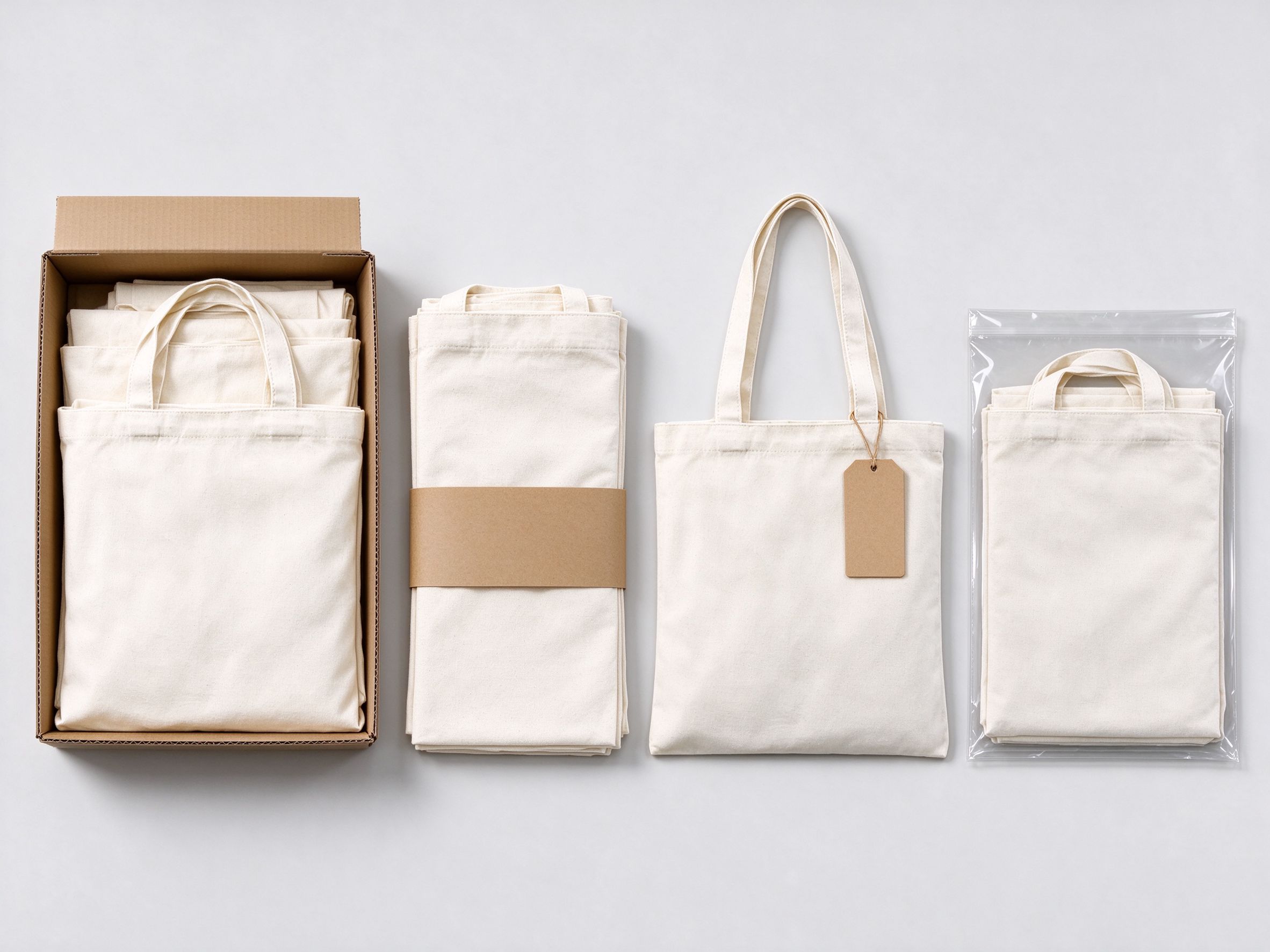
Retail channels differ, so the right solution is usually a combination rather than a single product. These are the options we quote most often for bulk tote bag wholesale orders.
Bulk carton packing
Bags are folded and packed into shipping cartons without individual retail packaging. This suits wholesalers, importers, warehouse stock, and plain or lightly branded orders. The main advantage is simplicity: fewer materials, fewer packing steps, lower unit cost. Bulk packing still needs a defined folding method, consistent count per carton, and reasonable inner protection to avoid compression or abrasion. Specify the fold, the pack count, whether sizes and colors are separated, carton dimensions, gross weight, and carton labeling before confirming the order.
Individual protective bags
Each tote goes into its own protective bag. This helps when bags must stay clean, when units are handled separately, or when the retailer receives them one at a time. Consider whether the bag will be sold directly from the protective package, whether a barcode or label must be visible, and whether the destination market has packaging requirements. Do not assume individual packing is always necessary — grouped packing is often enough for bulk distribution. If plastic is used, confirm the material specification with the supplier.
Paper bands and belly bands
A paper band wraps around the folded bag and holds it in a defined presentation. This is a strong option for retail collections, gift-shop products, and branded merchandise where the bag needs a clear identity without a full box. The band can carry the brand name, product name, dimensions, color information, barcode, and care notes. The critical detail is fit: the band must match the actual folded size, which depends on fabric thickness, handles, and gussets. Confirm the folding method first, then request a packaging mock-up with the real bag before mass production.
Hang tags add branding and product information and help retailers distinguish variants on the shelf. Specify the tag dimensions, material, printing, front and back artwork, hole position, attachment method, barcode placement, and required information. The attachment point matters — a tag fixed where it covers the printed logo or rubs against the fabric defeats the purpose. Evaluate the tag as part of the complete presentation: the tag, bag color, and logo treatment should read as one design.
Custom printed packaging
For private-label programs, printed packaging ties the whole presentation together — branded bands, printed protective bags, product cards, and labels that use the same logo files and color references. Confirm which components print, which artwork and colors to use, barcode requirements, and whether components are supplied separately or assembled at the factory. A digital mock-up is not enough; review a physical sample before confirming the order.
Retail boxes and gift packaging
Some tote bags are sold as premium gifts or bundled with other products. A retail box or gift package makes sense only when the product’s positioning and budget justify the extra materials and packing steps. Evaluate the packed product, not the box alone: internal and external dimensions, box material, printing and finishing, inserts or dividers, closure, and how the box is packed into the shipping carton. A fancier box is not automatically better for everyday retail — the decision should follow the selling price, customer expectations, and total landed cost.
3. How to Choose Retail Packaging by Channel
A practical starting point is how the finished bag reaches the end customer. Match the channel to a packaging direction, then refine it with the supplier’s confirmed capabilities.
| Channel | Packaging direction | Main consideration |
| Wholesale warehouse distribution | Bulk carton packing | Efficient handling, carton specs |
| General retail inventory | Individual protection or grouped packing | Cleanliness, receiving requirements |
| Branded retail collection | Paper band + hang tag | Brand presentation, identification |
| Private-label product range | Custom printed packaging | Consistent artwork and product info |
| Corporate gift set | Gift packaging or coordinated band | Fit with the complete gift presentation |
| Promotional merchandise | Bulk packing or simple individual packing | Distribution method, project budget |
These are directions, not rules. If the retailer has a packaging manual, get it before requesting a quotation — it prevents expensive changes after the product sample is approved.
4. Match the Packaging to the Bag Construction
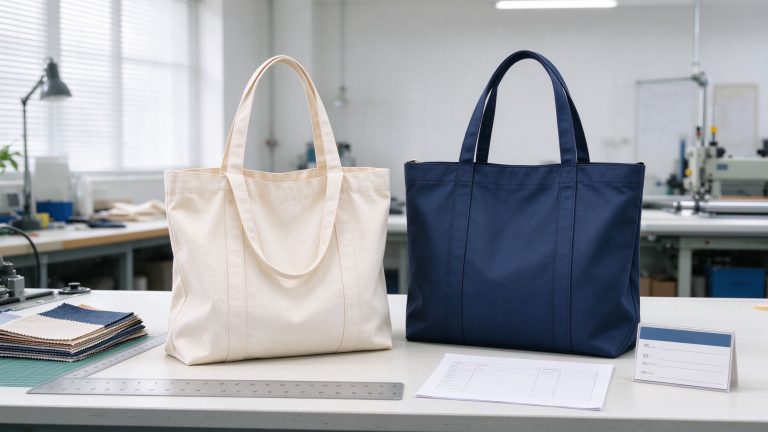
Packaging must be designed around the finished bag, not an assumed product shape. A flat tote folds differently from one with side gussets, a bottom gusset, reinforced handles, or pockets. Those differences change the folded dimensions and the space required for a band, bag, or box. Before finalizing the package, confirm the finished width, height, and depth — the same measurements covered in our custom canvas tote bag size guide; how gussets will be folded for packing; whether handles fold inward or behind the body; how printed areas are protected from rubbing; and whether zippers, metal fittings, or woven labels affect the folded profile. Ask the supplier to confirm the folded size using the actual packing method — this measurement decides whether a paper band or retail box fits at all.
5. How to Specify Branded Retail Packaging
A packaging brief that leaves room for the supplier to guess is a brief that will cost you time. Structure it in four blocks so every decision has an owner.
Product information: bag model, finished dimensions, fabric specification, color, handle and gusset construction, logo method and location.
Packaging requirements: packaging type, individual or bulk packing, packaging dimensions, material specification, printed or unprinted, components per bag, barcode or SKU, packing method, carton labeling.
Artwork requirements: approved logo file, packaging artwork, color references, required text, approval process, destination-market language requirements.
Logistics requirements: destination country, retail or warehouse distribution, carton information, maximum package dimensions, retailer-specific packing instructions.
Mark undecided items as pending instead of letting the supplier choose. For example, if the bag needs a branded paper band but the band dimensions are not yet approved, the quotation should flag that item as requiring confirmation rather than silently assuming a size.
6. Packaging Quality Checks Before Bulk Production
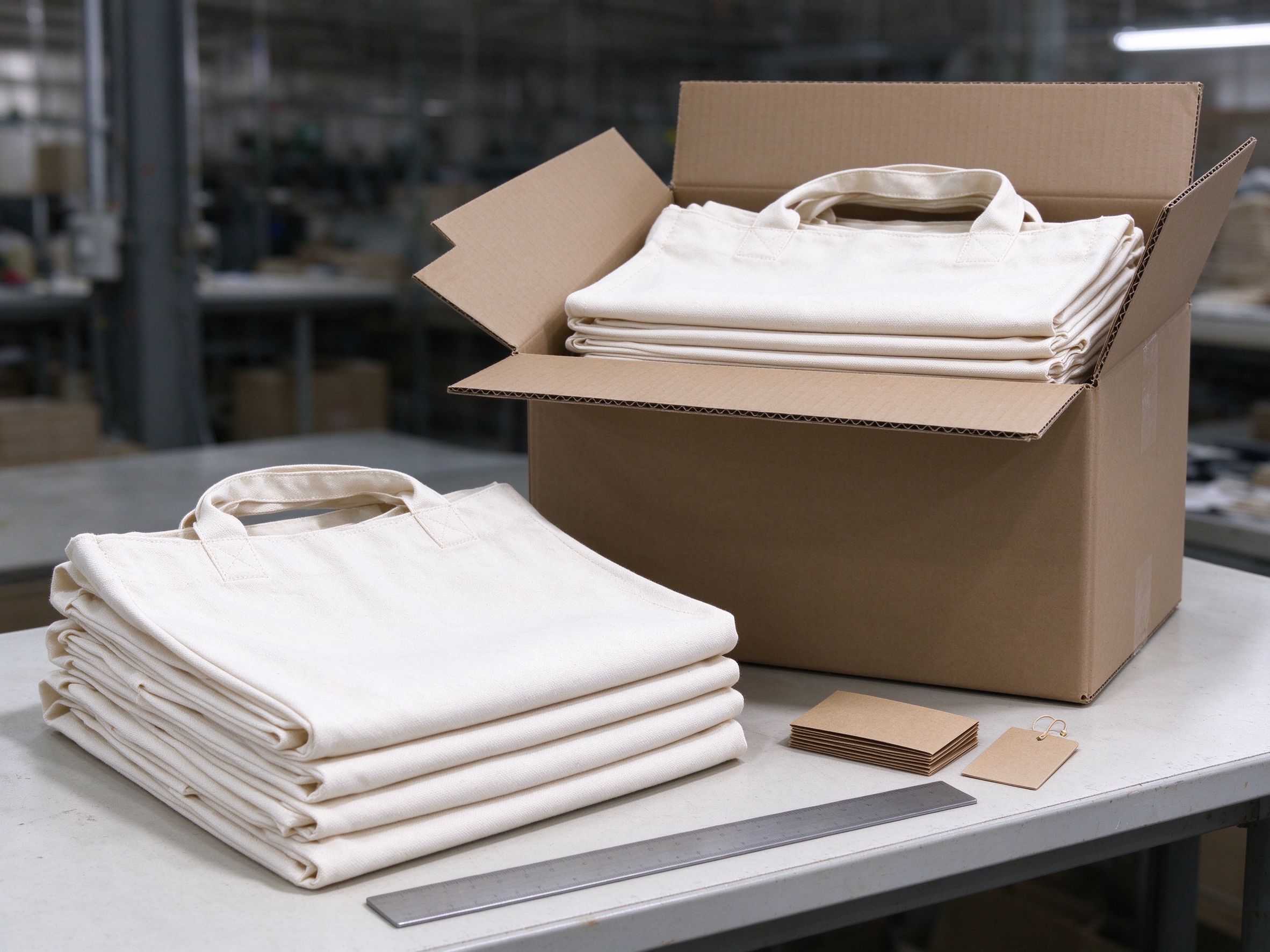
Treat packaging as part of the sample approval, not an afterthought. Review a packaging proof against the final specification and check the following: the package fits the folded bag without unwanted compression; the bag, tag, band, and label sit consistently; artwork, colors, and text are approved; SKU and barcode are correct; the packaging protects the bag through expected handling; assembly does not damage the product; the packed product fits the shipping carton with confirmed dimensions and gross weight; and the number of bags and components per carton is clear. If packaging is produced separately from the bags, confirm how the two will be matched and assembled. For multi-variant orders, plan a separate packaging specification for each size, color, or SKU.
7. Common Retail Packaging Mistakes We See
Most packaging problems on wholesale orders share one root cause: packaging was specified too late. The paper band does not fit because nobody confirmed the folded size. Every tote is treated as the same product even though gussets, handles, and accessories change the folded shape. Retailer requirements — barcode placement, labels, packing instructions — surface after artwork is approved. A hang tag, logo, and band each look fine alone and clash as a set. And environmental claims get made without documentation: paper or recycled content labels are not automatically valid for every market.
The fixes are straightforward: confirm the packing method and folded dimensions before designing the packaging, specify against the actual model, obtain the retailer’s requirements up front, review the complete packaged product as one presentation, and request the material specification and supporting documentation before using claims such as recyclable or compostable. Ignoring packaging in the quotation is the last common mistake — ask the supplier to identify which packaging components are included in the price and to quote optional upgrades separately.
Frequently Asked Questions
What is the best packaging for retail canvas tote bags? There is no single best option. Bulk cartons suit warehouse distribution; paper bands, hang tags, or individual protective bags work when presentation and identification matter. Match the packaging to your channel, bag construction, brand requirements, and budget.
Should canvas tote bags be individually packaged? Not always. Some buyers want individually protected units; others use grouped packing for wholesale distribution. Confirm the retailer’s requirements and the storage and handling process before deciding.
Can custom logos be added to tote bag packaging? Yes, where the supplier offers the required packaging and printing options. Branding can go on paper bands, hang tags, labels, and other components. Confirm artwork, printing method, dimensions, and the approval process before production.
What should a custom hang tag include? Content depends on the product, retailer, and destination market. Typical elements are the brand name, product name, SKU, barcode, dimensions, and other required information. Confirm mandatory content before preparing final artwork.
How can buyers prevent packaging from damaging tote bags? Choose a packing method suited to the bag’s construction and printed surfaces, and check folding, friction, pressure, and contact with accessories during packing and transport. Approve the packing method with the product sample and confirm protection requirements with the supplier.
Does custom packaging increase the order cost? It can. Materials, printing, assembly, and handling affect the quotation. Ask the supplier to list what is included and to quote optional packaging upgrades separately.
Can packaging requirements change after sample approval? Changes may be possible but can require revised artwork, new samples, extra materials, or schedule adjustments. Confirm the packaging specification before final approval.
What should I send when requesting a retail packaging quotation? The tote bag design, dimensions, material requirements, logo artwork, target quantity, intended retail channel, packaging preference, destination market, and any retailer-specific instructions. If you have packaging artwork or a packaging manual, include it.
Send a Complete Packaging Spec, Not a Guess
A clear packaging specification helps suppliers quote accurately and reduces the risk of expensive surprises. When you are ready, provide the tote bag dimensions and product specification, fabric and color requirements, logo artwork, preferred packaging type, packaging artwork if available, estimated quantity, individual or bulk packing requirements, barcode and labeling requirements, and the destination country. If you are not sure which option fits, explain how the bags will be sold, stored, and distributed — that gives the supplier a practical basis for discussion.
Every canvas tote bag packaging decision starts with the same questions: what does the bag carry, how is it displayed, and who handles it between the factory and the customer. Answer those three and the packaging choice stops being guesswork. Explore the custom canvas tote bags range, compare options across the custom tote bags hub, or request a quote with your packaging spec — we will confirm the details before sample approval.