Bulk Tote Bag Quality Inspection Checklist
A bulk tote bag quality checklist only earns its keep if it catches problems the sampling table hides. Every buyer approves a sample that looks right. The failures that cost money — a handle stitched 8 mm off centre, a zip that sticks after twenty pulls, a print that shifted 3 mm after the first 500 pieces — show up later, in the tenth carton of a 20,000-piece run.
For wholesalers, importers, promotional distributors and corporate buyers, the risk is rarely dramatic. It sits in ordinary gaps: one colour slightly off, one corner of the bottom gusset left unstitched, one carton marked with the wrong quantity. Each item looks small in isolation. Together they turn an approved sample into a disputed shipment at the loading dock.
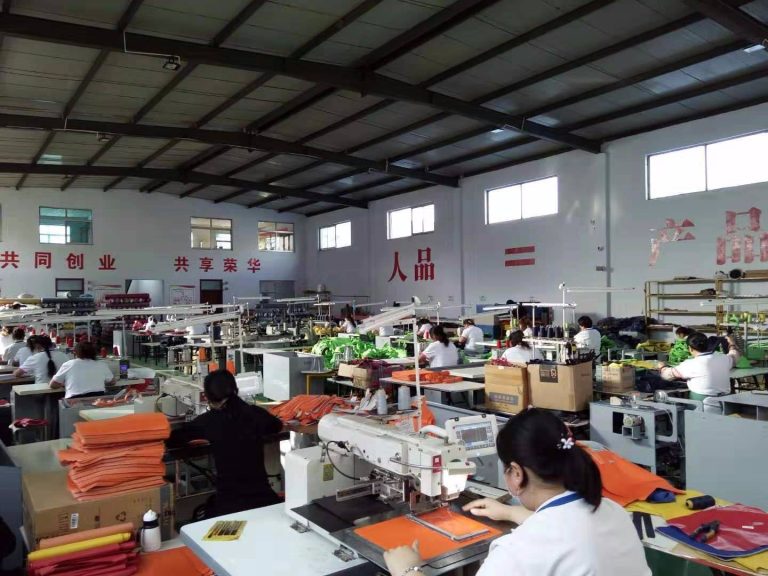
In our own workshop, the defects that send a tote lot back for rework are rarely visible from the front of the bag. Handle attachment and bottom-corner stitching account for most of them, and both only surface when you turn the bag inside out and pull on the handle.
This bulk tote bag quality checklist covers finished-product inspection: what to examine, how to draw samples, how to grade defects and what to do when a lot fails. It does not repeat fabric selection or pre-production sampling — those belong in fabric checks for canvas stock and the sample-approval stage. For the full product range behind these checks, see our bulk tote bags collection.
1. Establish the Inspection Standard Before Production
Inspection turns into an argument when the buyer and the supplier hold different ideas of “acceptable”. Settle it before the first cut, in writing.
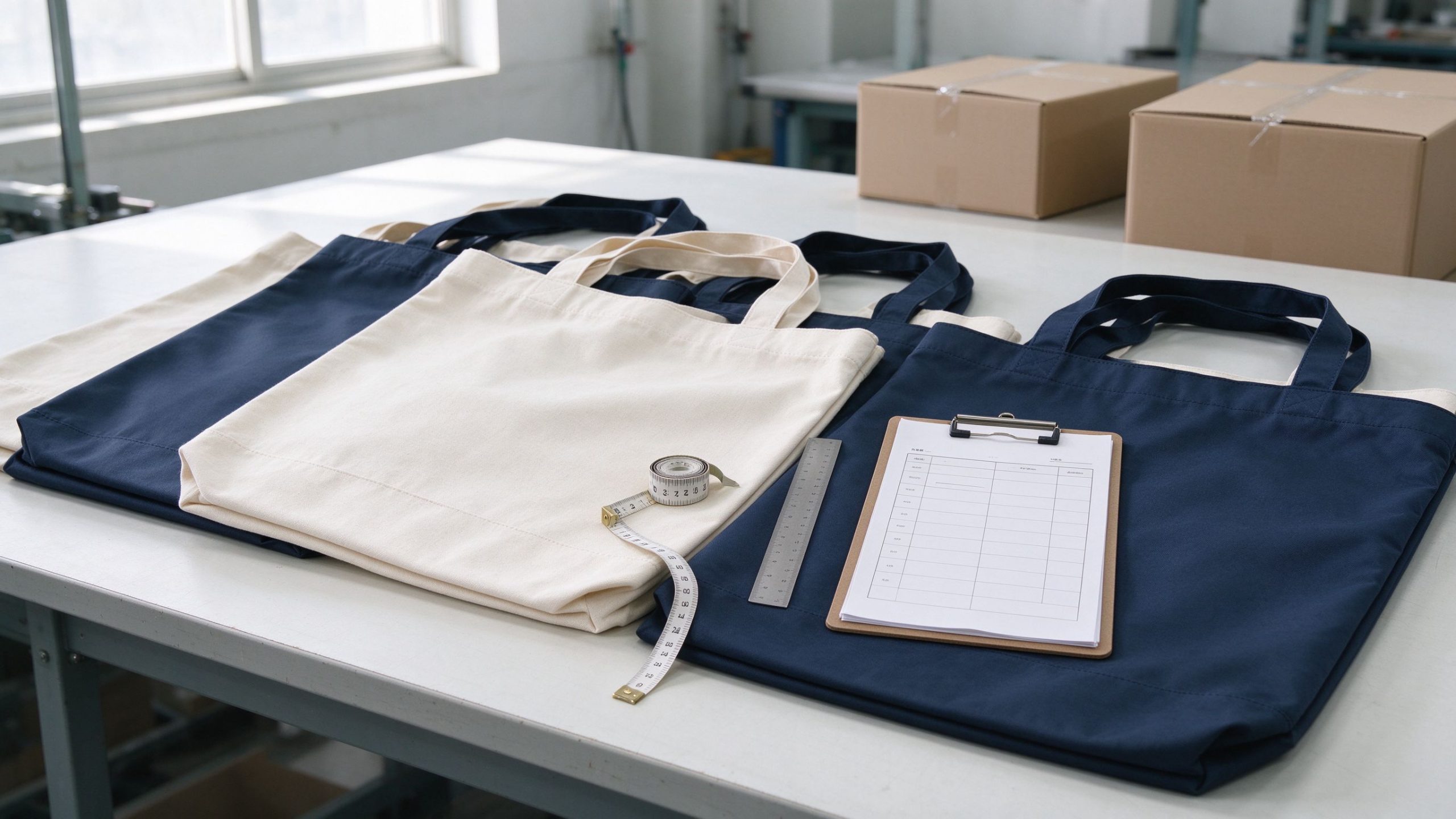
Fix the documents that will govern the inspection: the final specification or technical drawing, approved material and colour references, finished dimensions with tolerances, handle construction and attachment details, final logo artwork with placement proof, zipper and closure and pocket requirements, packaging and labelling specs, and the defect classification with acceptance limits. The approved sample is a physical reference — not the whole standard. A sample can look perfect while the written spec says nothing about tolerance, and a 3 mm difference then becomes a debate at the loading dock. If a specification changes after approval, mark the new revision and confirm both sides are working from the same version.
We once had a customer with a custom order approve the design before production. After receiving the goods, they noticed a typo in the customization details they had provided. They had also missed the error when reviewing the proof before production, so the entire batch had to be scrapped and remade. That’s why I’m reminding everyone to carefully double-check all customization requirements.
2. Identify the Production Lot and Select Inspection Samples
Before you examine a single bag, define exactly what you are inspecting. One lot may cover one design, several colours or several production batches, and the scope has to be written down: model or reference number, total order quantity, quantity by style and colour, carton count, production batch identification, quantity presented for inspection, and the inspection date and location.
Sampling from the top carton of one colour tells you nothing about the other seven. Pull samples across the relevant cartons and variants, and make sure the plan covers every colour and style group in the order. Never let the supplier hand-pick the display-quality pieces — the target is the production lot, not a staged sample. Where a formal acceptance plan is required, agree the method before production finishes; the timing of that stage against the production schedule is set out in our guide to bulk tote bag lead time planning.
3. Bulk Tote Bag Quality Checklist: What to Inspect on Finished Bags
The checks below cover the points that decide whether a finished tote bag is fit for release. Work through them in order, and record actual findings rather than pass/fail ticks.
3.1 Overall Appearance and Surface Condition
Start with a visual pass over the whole bag: holes, tears or damaged fabric; stains, oil marks or contamination; distorted panels; frayed edges; unacceptable creases; loose threads; and noticeable differences between units in the same order. Examine front, back, bottom, side panels and interior. A cosmetic variation that is acceptable for a promotional giveaway may be a rejection for a retail line — the decision follows the approved appearance standard, not personal preference. If you are buying unprinted stock, the selection criteria in plain tote bags in bulk overlap with this step.
3.2 Finished Dimensions and Shape
Measure with the same method agreed during specification approval. Record overall width, overall height, bottom gusset depth, side gusset depth where applicable, handle length and width, and pocket dimensions. Check that the bag holds its intended shape and that the left and right sides look reasonably symmetrical, and confirm the intended contents fit if the bag is built around a specific retail package. Do not compare a flat measurement with a filled measurement — the numbers will differ and the argument that follows wastes everyone’s time.
3.3 Stitching, Seams, and Construction
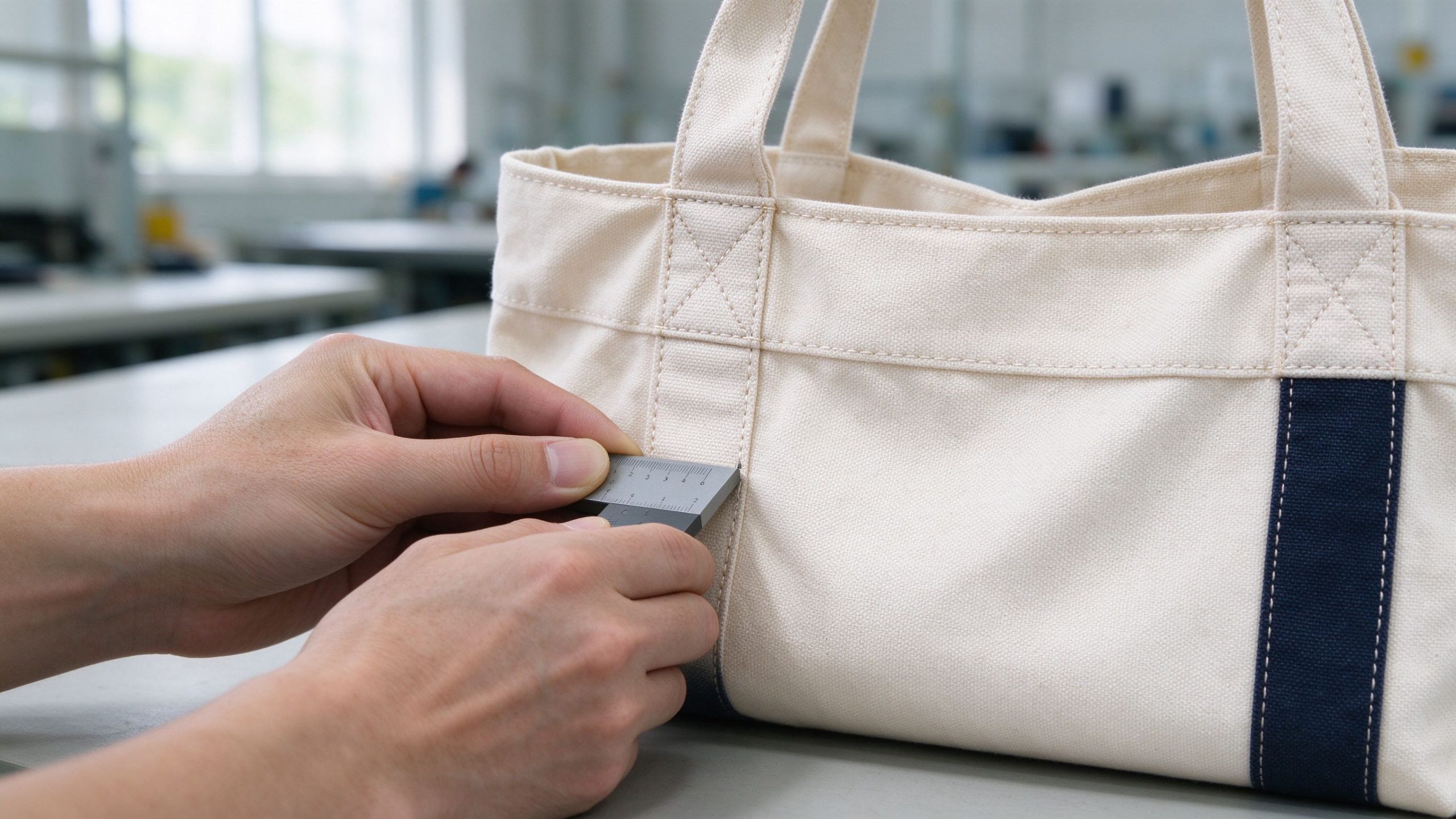
Construction defects affect function, not just looks. Inspect straightness and consistency of visible stitching, skipped stitches, broken or loose threads, open or incomplete seams, uneven seam allowances, poorly finished top edges, misaligned bottom corners, incorrect gusset construction and missing reinforcement. Pay particular attention to areas where several fabric layers meet: a bag can look clean from the front while the inside of the bottom corner is half stitched. Treat any defect that compromises seam integrity more seriously than a cosmetic irregularity.
3.4 Handles and Attachment Points
Handles are the most heavily loaded component on a tote bag. Check handle length and width, left–right positioning and symmetry, material consistency, attachment position, stitching around the attachment area, required reinforcement and any visible damage or incomplete stitching. If the order carries a specific load or durability requirement, define the test method before production: test load, duration, sample count and pass/fail criteria. A visual inspection alone does not prove carrying capacity.
3.5 Logo and Decoration Quality
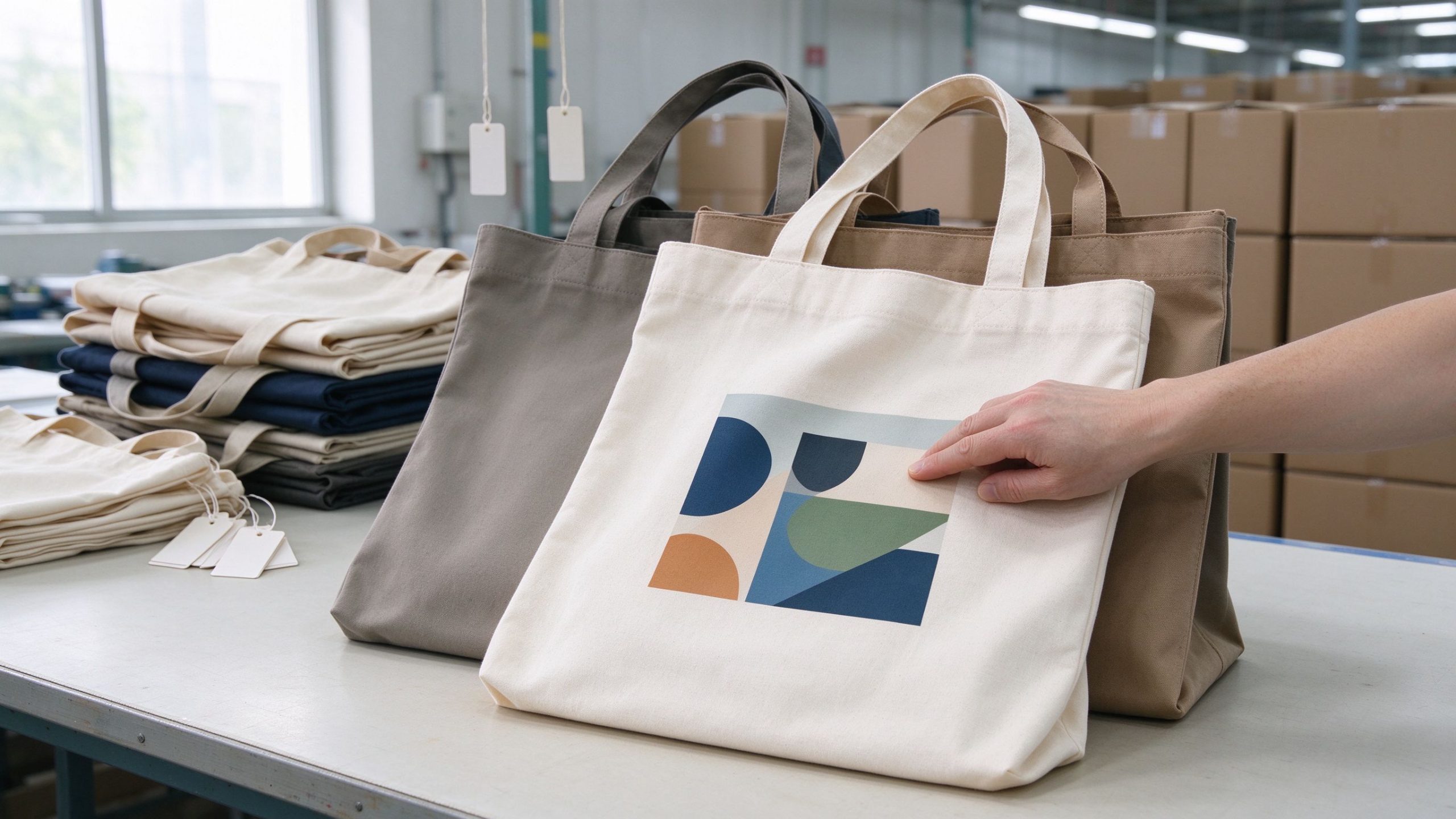
Compare inspected bags against the approved artwork proof or the physical reference, not a digital mock-up. Check logo position, size, alignment, colour, print clarity, edge definition, missing or partial printing, smudges and damage around the decorated area. For screen printing, look for gaps or uneven coverage; for heat transfer, check the edges for lifting or wrinkles; for embroidery, check stitch density, shape and placement. The acceptance standard should reflect the decoration method — a transfer that looks fine on paper can still fail on a textured canvas surface.
3.6 Zippers, Closures, Pockets, and Hardware
Test each functional component the specification calls for: zips open and close correctly, sliders move without obstruction, snap buttons fasten and release, magnetic closures align, pockets sit where they should and remain accessible, buckles and metal parts are installed properly, and straps or detachable parts fit as intended. Where a durability test is required, use the agreed procedure instead of inventing an operating-cycle number. A closure that prevents normal use is a functional defect, not a cosmetic one.
3.7 Packaging, Labels, and Carton Information
Packaging is part of the product, and it should be checked before shipment rather than treated as a warehouse afterthought. Verify individual packaging against the requirement, correct folding, hang tags and labels where specified, readable barcodes, carton quantities against the packing spec, correct carton markings, proper carton closure and protection, and a packing list consistent with the carton count. For retail orders, a missing or wrong label can stop a shipment even when the bags themselves are fine. For export orders, confirm shipping marks against the agreed packing documents.
4. Classify Defects Before Making an Acceptance Decision
Not every defect carries the same weight, and a written classification keeps both sides consistent when an inspector finds fifty issues across three colours. A practical framework uses three categories.
| Category | General meaning | Tote bag examples |
| Critical | Safety, legal or other serious unacceptable risk | Dangerous exposed component or a relevant contamination issue |
| Major | Significantly affects function, usability or an important specification | Open seam, handle attachment failure, unusable zipper |
| Minor | Limited cosmetic defect that does not materially affect intended use | Small appearance irregularity inside the agreed tolerance |
These examples are illustrative, not universal. The same issue can be treated differently depending on the product, market, contract and agreed criteria. An incorrect logo is a major defect for a branded corporate order because it defeats the purpose of the purchase; the same print variation on an unbranded promotional tote may pass. Define the categories and acceptance limits before inspection begins, then apply them without renegotiating after the results are in.
5. Understand AQL and Acceptance Sampling
For larger orders, buyers often work from an acceptance sampling plan instead of opening every bag. AQL — acceptance quality limit — is the parameter used in those schemes to set sample size and the accept/reject numbers for a lot. It is not a promise that a shipment contains no defects, and it does not automatically permit a fixed percentage of bad units in every lot.
If your purchase order uses an AQL-based plan, agree the following in advance: the sampling standard and its edition, the lot size, the inspection level, the AQL values assigned to each defect category, the sample size, the acceptance and rejection numbers, and the procedure when a lot does not pass. ISO 2859-1:2026 sets out sampling schemes indexed by AQL for lot-by-lot inspection; the ISO 2859-1:2026 standard page lists the scope and the current edition. Confirm the applicable plan and contract terms with your quality professional rather than copying a number from another order.
Some projects need extra checks on high-risk components, or full inspection of selected characteristics. The right method depends on the product, the order requirements, the commercial agreement and how much risk the buyer can absorb.
6. What to Do When a Bulk Tote Bag Lot Fails Inspection
A failed inspection should produce a documented decision, not a photo thread on a messaging app. The workable sequence is short and unglamorous: hold the affected goods, record the defects by product, carton, quantity and category, determine the scope, agree the corrective action, reinspect where needed, and record the final status.
The first step matters most. Do not authorize shipment release while the inspection result is still being reviewed. On scope, establish whether the problem touches a handful of units, one colour, one production batch or the whole order — the answer decides whether you are sorting five cartons or renegotiating a production run. Corrective options normally include repair, replacement, sorting, rework or a commercially agreed settlement. If rework happens, define which products must be checked again and against what criteria. Then document whether the lot was accepted, rejected, partially accepted or left pending further action, and make sure the purchase agreement states how failed inspections, rework costs and additional inspections are handled before the order ships.
7. Prepare a Final Tote Bag Inspection Report
A useful report lets someone who was not in the room understand what was checked and why the lot received its final status. Record the order and product reference, lot identification including quantity, styles, colours and carton numbers, the specification revision and approved reference used, the sampling method and inspected quantity, visual and construction findings, function and branding results, packaging findings, defect records with category and photographs, and the final result.
Keep inspection records with the purchase order and production documentation. On repeat orders they become the fastest way to spot a problem that keeps coming back — the same handle failure in three consecutive batches usually points to a construction spec that needs changing, not a careless operator. Buyers comparing suppliers on cost should weigh these records alongside bulk tote bag MOQ and pricing, because a low unit price that includes a 4% rework rate is not a low price.
Frequently Asked Questions
How do I inspect bulk tote bags before shipment?
Start from the approved specification and sample, then inspect representative units for appearance, dimensions, construction, handles, logos, functional parts and packaging. Record defects against the agreed acceptance criteria before deciding whether to release the lot.
Do I need a bulk tote bag quality checklist for every order?
A full inspection is not necessary for every repeat order, but a written checklist should exist for every product. On repeat business, sampling can be reduced once the process has proven stable — the checklist still defines what “stable” means.
What are the most important checks on finished tote bags?
Appearance, finished dimensions, stitching, handle attachment, logo quality, closures and packaging. Which one matters most depends on the product: for a branded corporate order, the logo is often the deciding check; for a retail line, dimensions and labelling carry more weight.
What does AQL mean in tote bag inspection?
AQL is the acceptance quality limit used in sampling schemes to set sample size and accept/reject thresholds. It is agreed before inspection and should never be read as a guarantee that every unit is defect-free.
What should I do if a bulk tote bag order fails inspection?
Hold the goods, document the defects, establish how much of the lot is affected, and agree corrective action. Reinspect the corrected units before shipment release.
Should I use a third-party inspection company?
A third-party inspector gives an independent assessment when the buyer cannot attend. Provide the approved specification, sample reference, sampling plan, defect definitions and acceptance criteria before the visit — an inspector without those documents will grade to their own standard.
When should the final inspection take place?
Agree the stage before production. Buyers need results early enough to review defects and arrange corrective work without delaying the shipment, and the release procedure should be written into the purchase agreement.
Request a Bulk Tote Bag Quotation
A wholesale tote bag order goes more smoothly when the quality expectations are in the first email, not the last. Before asking for a quotation, prepare the product style or reference image, estimated quantity, material and colour requirements, finished dimensions, handle and construction details, logo artwork and placement, pocket and zipper requirements, packaging and labelling specs, destination country and target delivery date, and any inspection or performance requirement you intend to enforce.
If your order needs specific checks, write them into the inquiry. Adding them after the goods are ready turns a straightforward release into a negotiation. Use this bulk tote bag quality checklist as the base for that document, and keep the revision with the purchase order so both sides inspect against the same paper.
BriefcaseCustom works with B2B buyers on custom tote bag specifications and OEM/ODM projects. Send your requirements and reference materials to discuss a configuration; the broader process is described in our custom tote bag manufacturing guide.