Private Label Messenger Bags for Promotional Distributors: An OEM Buying Guide
For a promotional product distributor, a messenger bag is not simply a conference giveaway. It is a business item with a useful carrying purpose, a large branding area, and enough perceived value to support a corporate program. When it is specified well, a private label messenger bag can carry a client logo to offices, training sessions, trade shows, and customer meetings.
That flexibility also makes sourcing more involved. One client may need a simple document bag for a sales conference. Another may need a padded 15.6-inch laptop messenger for a professional-services team. A distributor needs to translate the end client’s idea into a clear OEM specification that can be quoted and approved without assumptions.
This guide is for promotional distributors and sourcing teams working with B2B buyers in English-language markets, including the United States, United Kingdom, Australia, and Canada. It explains how to choose the right construction, define private-label elements, compare logo options, and ask for an OEM quotation.
Why messenger bags fit promotional business programs
Searches such as “custom messenger bags with logo,” “promotional messenger bags,” and “wholesale messenger bags” signal commercial intent: buyers are looking for branded business bags in quantity rather than a single retail accessory. The messenger format sits between a tote and a formal briefcase. It can hold documents and everyday technology while giving a logo a natural position on the flap or front panel.
- Employee and client programs: practical carry bags for sales teams, field staff, and new-hire kits.
- Conferences and training: space for folders, agendas, chargers, notebooks, and sponsor materials.
- Partner incentives: business-oriented gifts for dealer meetings and account rewards.
- Private-label collections: consistent colors, labels, and packaging for a distributor or brand-owner range.
The important step is matching the bag to its actual use. A lightweight flap document bag can work for event distribution. A laptop-ready messenger should be designed around a specific device size, padding, and strap comfort. Treating these as the same product often produces an unhelpful quote.
Start with the program, not a catalog image
Before selecting a silhouette, ask: Who receives the bag? What must fit inside? Where will it be used? How should the logo be seen? Those answers guide construction and decoration more reliably than a catalog photo.
Conference and event bags
For a large meeting, prioritize a flat logo area, document capacity, and packing efficiency. A front organizer pocket can help attendees keep badges, pens, and small accessories accessible. Event bags do not necessarily need heavy padding if they are not intended to carry laptops.
Training and corporate issue
Training providers often need room for A4 or letter-size workbooks, notebooks, and a tablet. Employee programs may require a padded laptop sleeve, a charger pocket, a reinforced base, a top handle, and a shoulder pad. Specify the largest device to be carried, including a protective case if one is normally used.
Private-label distributor programs
A repeat product line benefits from a more stable specification: body color, lining, trim, label, zipper puller, hangtag, and packaging. Decide which details create recognizable brand value rather than changing every component. This makes repeat orders easier to control.
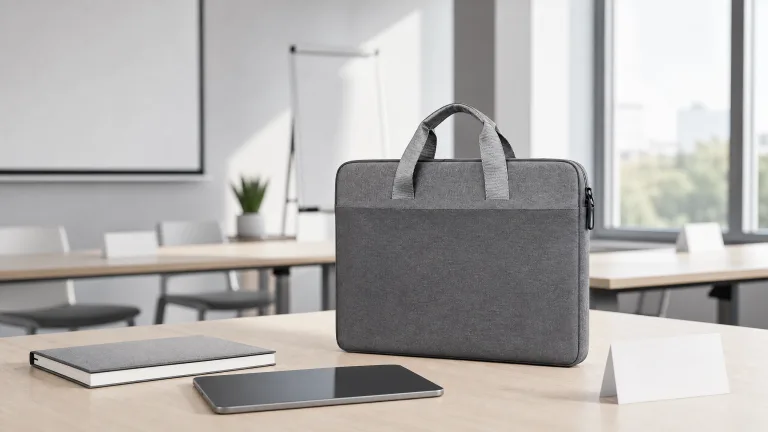
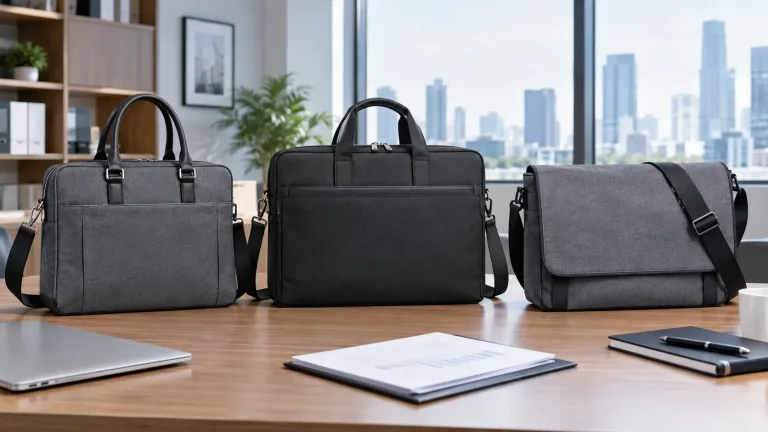
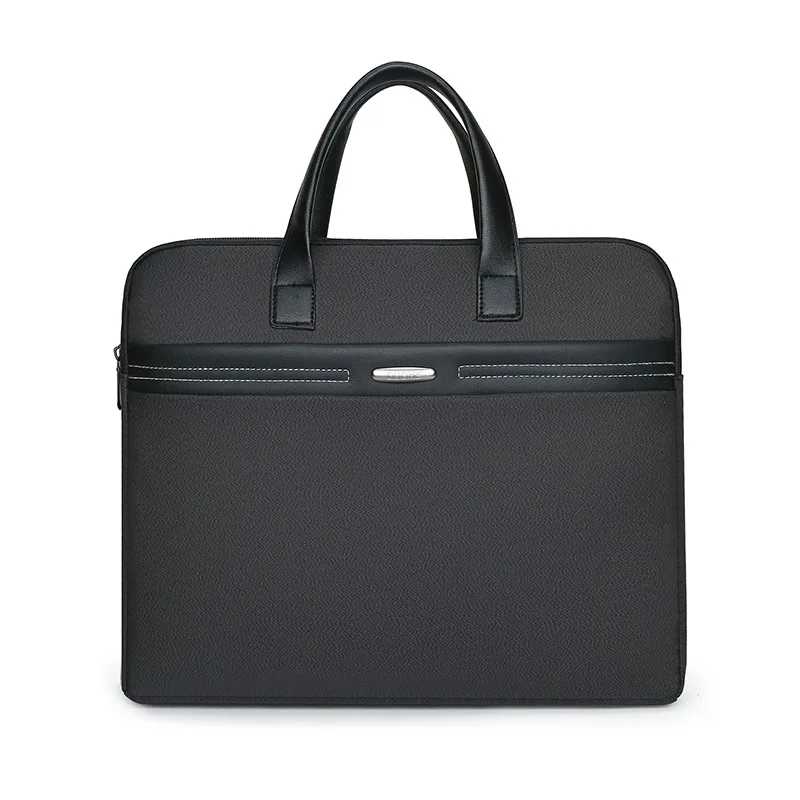
A messenger bag can look distinctly professional with a rectangular profile, organized interior, and restrained logo treatment. For a more formal reference, compare a custom business briefcase OEM model or this lightweight Oxford laptop briefcase.
Build an OEM specification suppliers can quote
Capacity and pockets
Give internal dimensions or list the required contents: a 14-inch or 15.6-inch laptop, A4 documents, power adapter, notebook, or bottle. Identify needed pockets such as a padded sleeve, front organizer, zip security pocket, mesh accessory pocket, or luggage pass-through. “Laptop bag” is not a consistent fit standard across suppliers.
Material and construction
Oxford fabric is a practical option for many corporate and promotional programs because it can create a clean structured appearance while supporting different colors and logo treatments. Describe the intended use—lightweight conference distribution, office commuting, or executive gifting—rather than asking for vague “good quality.” Ask how the bottom panel, shoulder-strap anchors, zipper, lining, and padding will be constructed. Those details affect daily usability.
Branding and private-label details
Specify logo location and approximate size. A front flap suits a visible campaign graphic; embroidery or a woven label can provide a quieter business look. Depending on fabric and artwork, choices may include screen printing, heat transfer, embroidery, woven label, rubber patch, or metal badge. Provide editable vector artwork when available and request a digital artwork layout before sampling.
For private-label work, identify which elements need branding: exterior logo, inside woven label, zipper puller, hangtag, care label, polybag sticker, carton mark, or custom packaging. Selecting only the relevant elements helps control complexity.
Quantity, destination, and deadline
Share target quantity, delivery country, required-in-hand date, and whether goods ship to one warehouse or several locations. Quantity affects the viable customization choices. Allow time for artwork, sampling, approval, production, and shipping rather than asking only for the fastest lead time.
Select the logo method for the visual goal
- Screen printing: suitable for bold, simple artwork on a broad flat panel and event-oriented bulk orders.
- Heat transfer: useful for detailed or multi-color graphics; confirm compatibility with the chosen fabric.
- Embroidery: gives a dimensional corporate mark, though very small type and gradients may not suit it.
- Woven label or patch: provides a product-led private-label identity and can sit alongside an event logo.
- Metal badge: can suit a formal presentation if the bag construction supports secure attachment.
Review logo scale, location, and colors before sampling. A mark that is technically printable can still look crowded near a pocket seam, flap edge, or zipper.
Use the sample as a real approval checkpoint
Assess a production sample against the agreed specification, not just a photograph. Check dimensions, pocket access, device fit, strap adjustment, handle comfort, stitching at load points, zipper movement, fabric color, and logo clarity. Approve custom packaging too if it is part of the project.
For multi-stakeholder projects, share a short checklist with the end client. Mark each item approved, revised, or pending. The record provides a cleaner basis for the final purchase order and makes later reorders easier.
Compare OEM quotes fairly
Unit price can hide substantial differences. Compare fabric and lining, padding, hardware, pocket count, logo method and colors, labels, packaging, sample cost, carton configuration, and delivery terms against the same brief. If quotes differ sharply, ask which construction or branding details are not equivalent before deciding.
Also distinguish between a one-off campaign and a stock or private-label program. Repeat sales benefit from a product code, approved artwork, material reference, and packaging specification. That documentation reduces rework when a distributor needs the bag in a new colorway or for a different client logo.
FAQ
Can a messenger bag be customized for a laptop?
Yes. State the device size and protection level, then request a padded compartment and sample fit check. A charger pocket and reinforced base may be useful for daily business use.
What belongs in the first RFQ?
Include quantity, delivery date, destination, dimensions or contents, material preference, colors, pocket layout, artwork and placement, packaging needs, and private-label components.
Use a structured shape, organized interior, balanced logo scale, and materials suited to the program. An embroidered logo or woven label can fit an executive audience better than an oversized graphic.
Request a custom messenger-bag quote
For a distributor collection, corporate campaign, or OEM promotional bag, send the target quantity, use case, artwork, desired delivery date, and the items the bag must carry. BriefcaseCustom can help turn those details into a custom Oxford business-bag specification with logo and private-label options. For an event-focused alternative, view conference bag model 841, or contact the team to discuss a custom logo, OEM, or ODM brief.