Canvas Tote Bags vs Non-Woven Bags for Events: Which Should You Choose?
Most event-bag conversations start with the wrong question. Buyers ask whether canvas or non-woven is “better,” as if one material had a universal answer. In our workshop we quote both every week, and the honest reply is that canvas tote bags vs non-woven bags comes down to what the bag has to survive: how it is printed, how much it weighs in a shipping carton, and what attendees do with it a month after the event. Get those three things straight first, and the material choice mostly settles itself.
This guide walks through the comparison the way we evaluate it against a real order — material construction, branding, freight and packaging, and the sample checks we recommend before any deposit. It is written for procurement people who need a defensible decision, not a sales pitch.
1. What You Are Really Comparing
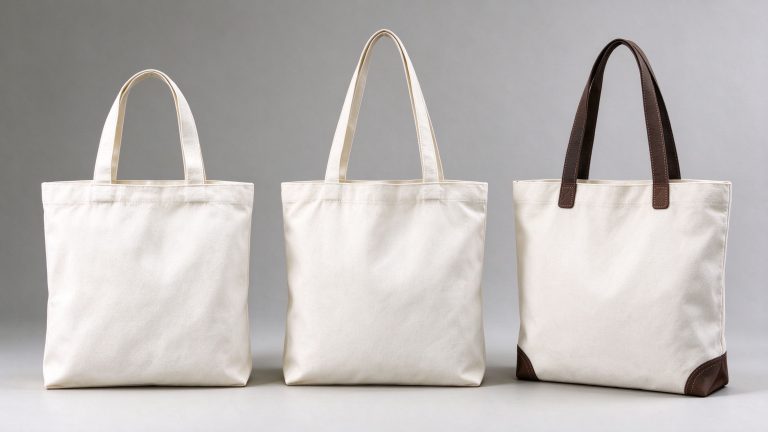
Canvas is a woven fabric, usually cotton or a cotton blend, with the exact composition confirmed per order. Because the yarns are interlaced, the material has a visible texture, holds its shape, and behaves predictably under sewing and printing. A well-built canvas tote can be used for months after an event — which is why it shows up in corporate gifts, conference merchandise, and retail carry bags.
Non-woven fabric is made by bonding or consolidating fibers, typically polypropylene, instead of weaving or knitting them. The result is a lighter, sheet-like material. Its strength and finish depend on the fiber grade, the bonding process, and how the bag is stitched and reinforced — not on the word “non-woven” alone. These bags earn their place in high-volume distribution: registration packs, promotional giveaways, training kits, and programs where the bag is one component of a bigger package.
One thing we tell customers constantly: compare complete products, not material names. A cheaply made canvas bag with weak handles fails faster than a properly built non-woven bag carrying its intended load. Everything below is about what actually changes when you switch materials.
2. The Differences That Show Up in a Quotation
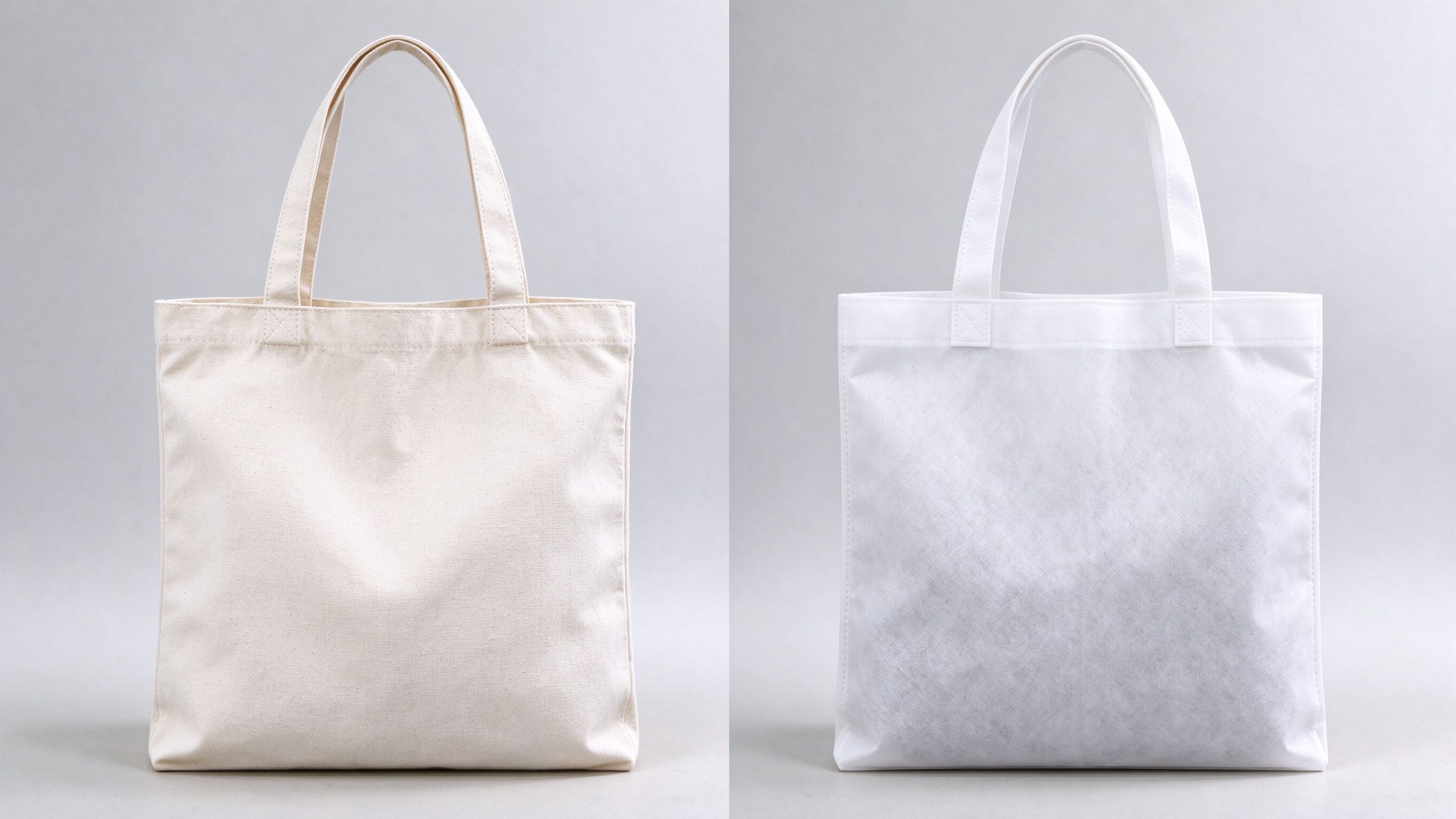
Put the two options side by side on the same specification sheet and the differences become concrete. This is roughly what changes in practice:
| Purchasing factor | Canvas tote bags | Non-woven tote bags |
| Material construction | Woven yarns; texture and structure depend on fabric grade | Bonded or consolidated fibers; surface depends on process |
| Typical positioning | Corporate gifts, conference merchandise, retail carry bags | Promotional distribution, event giveaways, registration packs |
| Appearance in hand | Structured, fabric-based; holds shape depending on weight | Lighter, more flexible; shape depends on construction |
| Printing behavior | Woven surface; screen printing and heat transfer behave predictably | Bonded surface; method must be matched to material grade |
| Handles and seams | Customizable; handle attachment and stitching are quality-critical | Customizable; attachment method must match material strength |
| Weight and freight | Heavier per bag; carton gross weight must be quoted | Lighter per bag; packing efficiency still matters |
| Repeated use | Candidate for continued daily use if construction is sound | Generally evaluated for single-event or short-term use |
| Budget planning | Fabric, construction, and decoration drive unit cost | Material grade, construction, and quantity drive unit cost |
| Packaging | Retail or bulk packaging as specified | Retail or bulk packaging as specified |
Read that table as a starting point for a quotation, not a verdict. A light 8-oz canvas and a reinforced non-woven bag can sit very close on price while feeling completely different in hand — which is why the decision belongs to approved samples and written specifications. If you need the woven look and long-term reuse, custom canvas tote bags give you the full range of fabric weights and constructions to weigh against a non-woven alternative.
3. Let the Distribution Plan Pick the Material
We see the same mistake in almost every inquiry that gets the material wrong: the buyer frames the choice as a contest between fabrics when it is really a question about how the bag gets used. Start with what attendees will carry, how the bag is handed out, and what the organizer wants it to say, and the canvas tote bags vs non-woven bags decision stops being abstract.
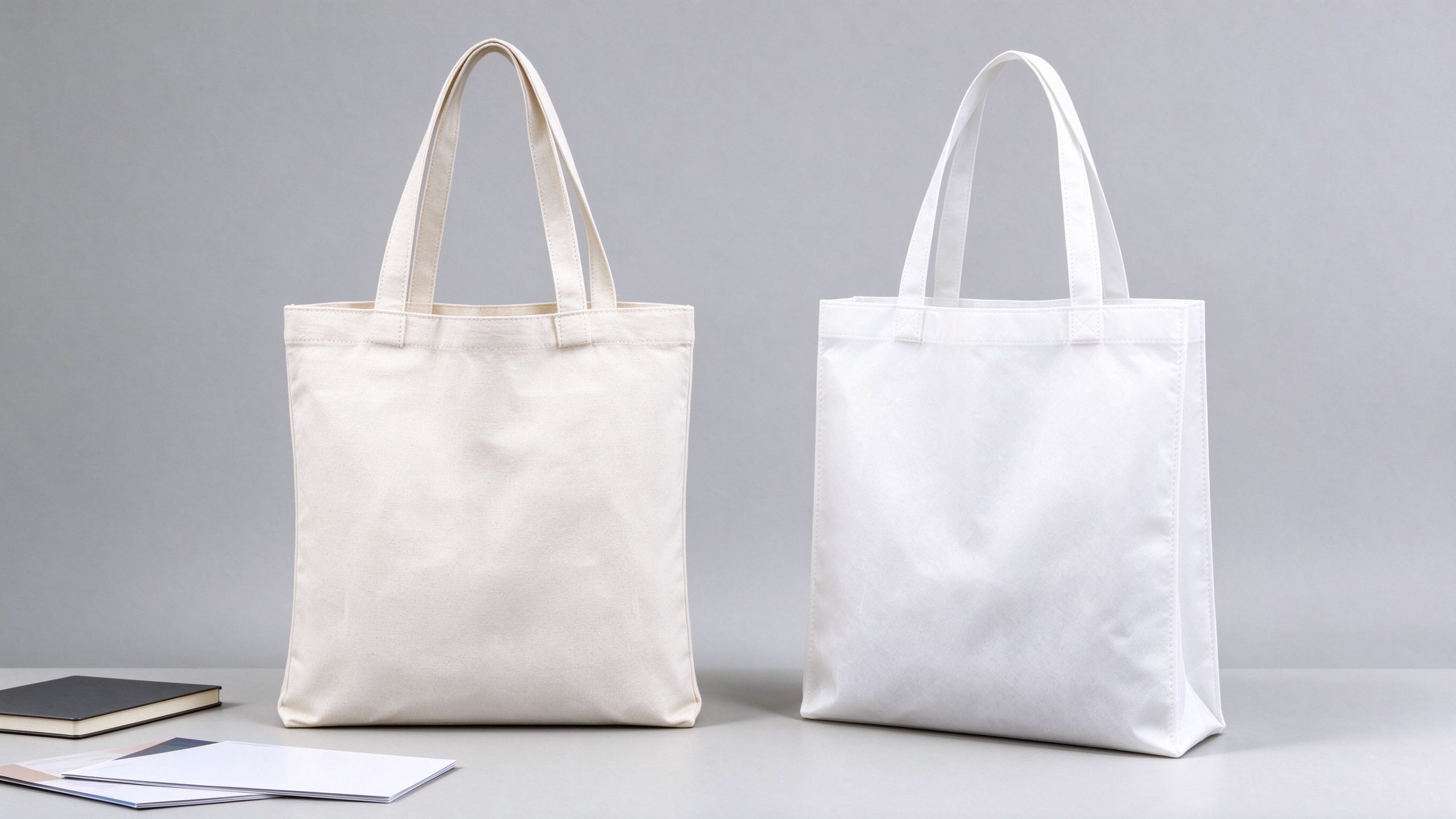
Canvas earns its place when the bag is part of the brand experience. A conference bag attendees actually keep, a launch kit meant to sit on an office shelf, or a gift bag accompanying premium merchandise all benefit from the woven texture and structured shape. For those programs, lock down four things before sampling: fabric weight, handle width, seam construction, and print placement. These four variables decide whether the bag looks intentional or cheap at arm’s length.
Non-woven earns its place in volume. When five thousand to fifty thousand bags have to move through registration or a distribution line in a single morning, the priorities shift to a consistent specification, efficient packing, and legible branding at a controlled unit cost. Non-woven bags are a legitimate answer for large giveaways and document packs — provided you still define size, handle style, gusset, and logo method instead of taking whatever the supplier stocks.
A practical rule from the shop floor: if the contents weigh more than the handle can comfortably hold, no material name fixes it. Tell the supplier the heaviest realistic combination and ask for a sample loaded with those exact items. For light brochures and folders, compare both materials against the same specification sheet — the cheaper quotation usually differs in construction, not just in material.
4. Printing Is Where Event Orders Usually Go Wrong
Both materials can carry a logo. What changes is how the same print method behaves on each surface, and that is the most common source of disappointment in event-bag orders.
Screen printing is usually a good fit for woven canvas because the surface accepts ink consistently; heat transfer can handle finer detail or photographic elements. On non-woven material the bonded surface behaves differently — ink lays down differently, colors can shift, and heavy coverage may change the surface feel. A supplier that answers “yes, we can customize” without naming the method has not done the homework. The quotation should state the proposed method and any constraints it implies.
Put the artwork package together before you ask for quotes: file format, logo dimensions, print location, brand colors or references, color count, single- or double-sided printing, and any extra labels or tags. Then check three things on the sample: logo position relative to edges and handles, color appearance against the approved reference, and print edges under normal handling. If brand color fidelity matters — and for event merchandise it usually does — approve a physical sample before production.
5. The Real Cost Is Not the Unit Price
A lower unit price on non-woven bags can disappear once freight, packaging, and sampling are added to the comparison. Work through these line items for both options:
- Product specification. Confirmed dimensions, material composition, fabric grade, handles, gusset, closure, and pockets. Two quotes at the same unit price can describe different products.
- Logo customization. Method, artwork requirements, print locations, color count, and any setup or sampling charges. Simple artwork on one material is not automatically simple on the other.
- Sample and approval costs. Whether a physical sample exists, what it costs, and whether it uses the intended production material and decoration method. A sample in the wrong material proves nothing.
- Packaging. Individual packing, sets, hang tags, labels, carton markings — packaging changes the final quote and the packing line.
- Freight and delivery. Estimated packed dimensions, cartons, gross weight, and shipping terms. A lighter bag is not automatically cheaper to ship; carton packing density often matters more than material weight.
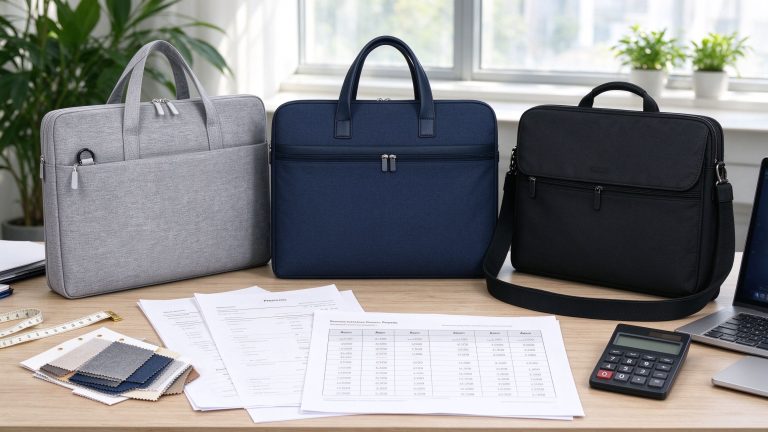
Use one specification sheet for both options. When the canvas quotation and the non-woven quotation are built on the same dimensions, handles, logo method, and packaging, the price difference becomes meaningful instead of misleading.
6. What to Check on the Sample Before Bulk Production
A photo tells you nothing about how the bag actually holds up. The sample is where the drawing becomes a physical object, and for event orders the checks are quick and specific.
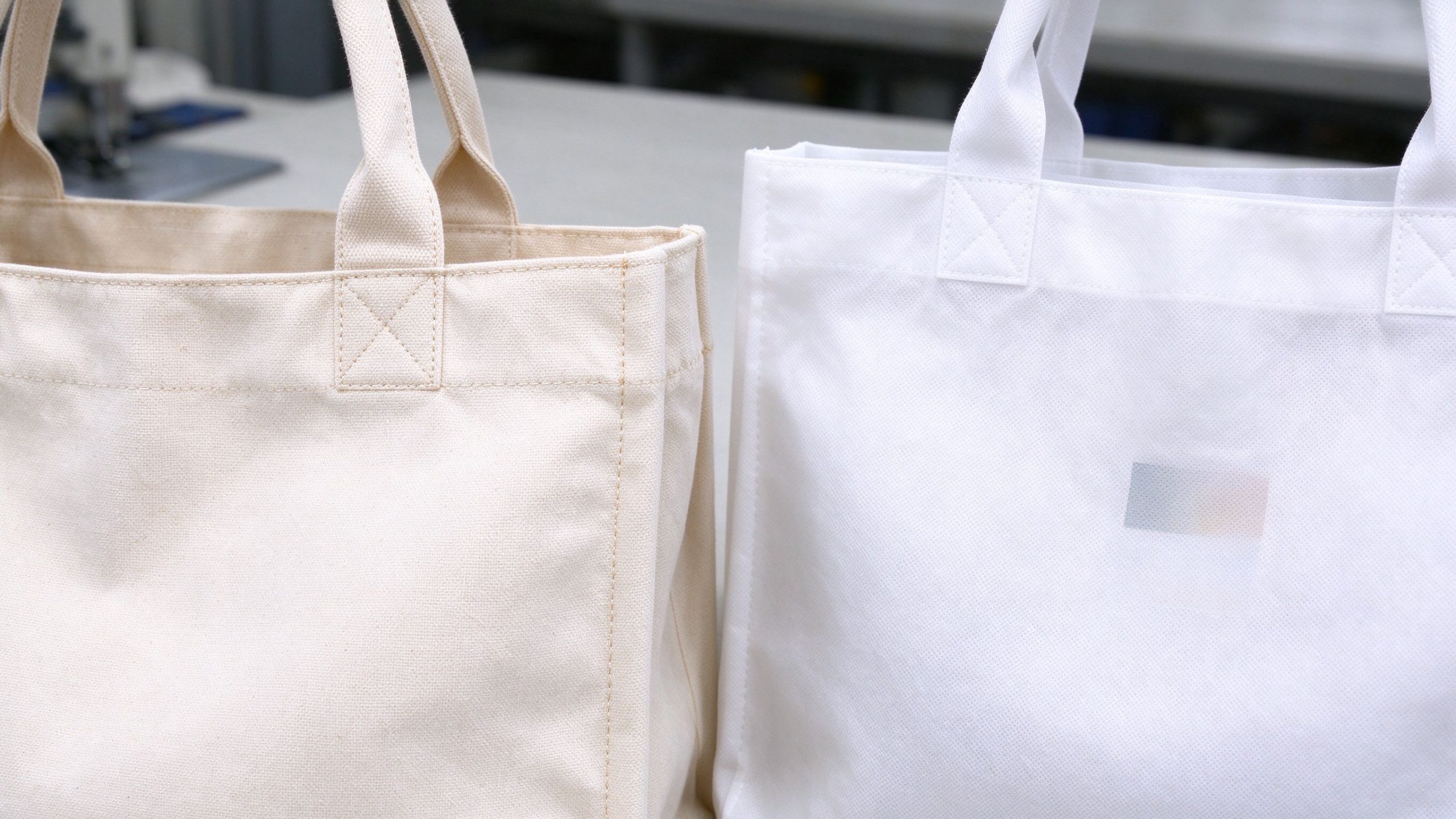
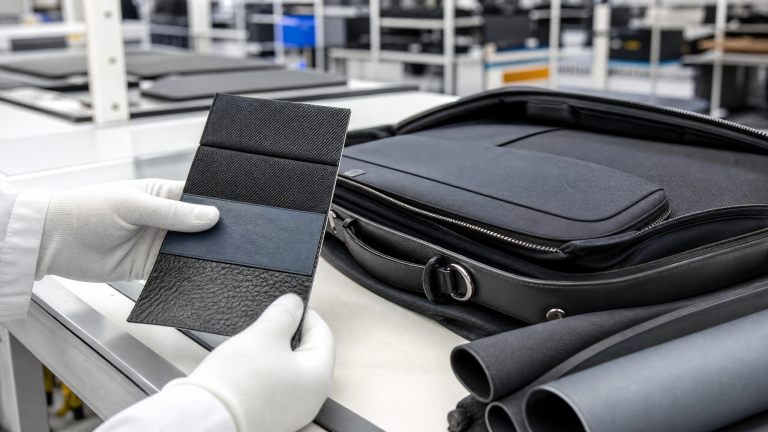
Start with the material itself: the supplied fabric should match the agreed specification with no stains, holes, color inconsistency, or surface damage. Then measure the finished bag against the approved dimensions, paying attention to handle attachment points and seams where stress concentrates during normal use. This is the stage where a bad construction gets caught cheaply.
Then do the loaded test: put the real contents — catalogs, notebooks, samples — into the bag and carry it the way an attendee would. No load-capacity assumption survives contact with actual contents. Check the logo for size, placement, orientation, and color against the approved artwork, and agree on acceptable tolerance before production starts, not during it. Finally, confirm the packing and distribution details: carton labels, quantity per carton, and delivery arrangements, especially when bags ship to multiple venues.
For a deeper walkthrough of what to measure and which tolerances to set, the canvas tote bag weight guide covers fabric weight and finished-weight checks, and the canvas tote bag fabric quality checklist covers material defects and construction acceptance criteria. The same inspection discipline applies whether the order is canvas or non-woven.
7. Questions That Separate Serious Suppliers
Send the same set of questions to each supplier and compare the answers side by side. The differences in how they respond will tell you more than the price column.
Ask for the exact material composition and specification for each option, the finished dimensions and handle configurations available, and which logo application methods the supplier recommends for the selected material. Then ask whether a sample can be made with the proposed material and decoration method, what quality criteria will be applied during bulk inspection, and how packaging options affect the carton count. Two more questions are worth asking explicitly: what information the supplier needs to prepare an accurate quotation, and how changes to the approved specification are controlled once production starts. Where any material, safety, or environmental claim matters, ask for documentation — a claim without evidence is a marketing sentence, not a specification.
8. A Decision Path the Procurement Team Can Defend
When both materials are genuinely on the table — and a real canvas tote bags vs non-woven bags evaluation should run with both quoted against the same specification — follow this order so the decision stays defensible.
- Define the contents. List every item attendees will carry — brochures, catalogs, merchandise, samples — and the heaviest realistic combination.
- Define the after-event role. Disposable carrier, keepable giveaway, corporate gift, or retail item? This single decision drives the material choice more than any other.
- Request equivalent specifications. Ask for canvas and non-woven options on the same dimensions, handles, logo method, and packaging.
- Compare total project cost. Add customization, packaging, sampling, inspection, and freight to both unit prices.
- Approve on sample, not on spec sheet. Approve the reference sample, record the specification, and confirm the delivery plan backward from the event date.
For background on how material quality and safety claims are actually verified in the textile trade, the OEKO-TEX Standard 100 certification documentation explains the testing scope and limits that apply to both woven and non-woven bag materials.
Frequently Asked Questions
Are canvas tote bags better than non-woven bags for events? Not by default. Canvas suits programs where the bag represents the brand after the event; non-woven suits high-volume distribution with a controlled unit cost. The right choice depends on contents, after-event role, branding, and budget — confirmed on a sample.
Are non-woven bags always cheaper? There is no universal price relationship. The quote depends on material grade, dimensions, construction, logo method, packaging, quantity, and freight. Compare equivalent specifications, not headline prices.
Can both materials carry a logo? Yes, but the suitable method differs. Woven canvas accepts screen printing consistently; non-woven surfaces may need a method matched to the fiber grade. Confirm the method in the quotation and approve a printed sample.
Which material is more durable? Neither name guarantees durability. Fabric grade, handle attachment, seams, and construction decide it. Load the sample with the real contents and carry it before approving bulk production.
Is canvas automatically more environmentally friendly? No. Environmental impact depends on material composition, manufacturing, transportation, product life, and end-of-life handling. If a claim matters to the decision, ask for documented evidence within a stated scope.
Can one event order mix both materials? Sometimes yes — canvas for premium VIP or gift bags, non-woven for general giveaways. List each variant with its quantity so the supplier can confirm feasibility and pricing per variant.
Send the Specification, Not Just the Idea
When you are ready to compare real numbers, brief the supplier with the event type, estimated quantity, bag dimensions, material preference if any, handle and gusset requirements, logo artwork, brand color references, packaging needs, destination, and target delivery date. Ask for canvas and non-woven quotations on the same specification — that is the only comparison worth reading.
If you are still deciding, tell the supplier what the bags must carry and how they will be used, and let the two quotations answer the material question for you. Start from the custom tote bags hub to review product options, or request a quote with your specification — the faster you send real numbers, the faster the comparison stops being theoretical.