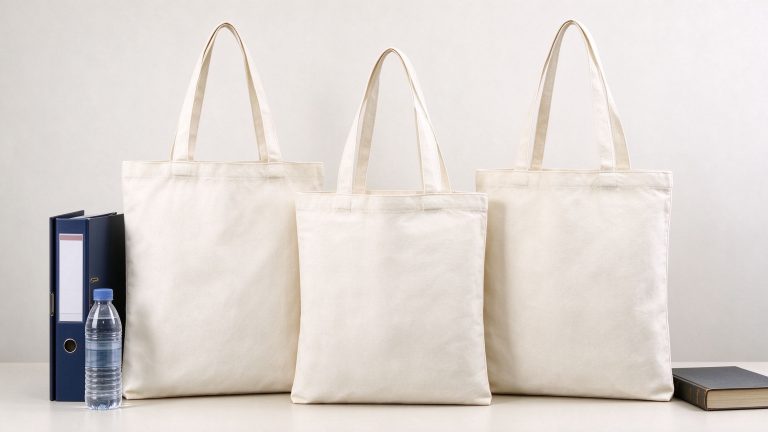
Canvas Tote Bag Handle and Gusset Options: A Buyer’s Guide
When ordering custom canvas tote bags in bulk, handle design and gusset construction can make a significant difference to the finished product. They influence how the bag is carried, how it accommodates different contents, how it looks when filled, and how clearly its construction can be specified for production.
For B2B buyers, these decisions should be made before approving a sample. A handle that looks suitable in a product photograph may not provide the required carrying clearance, while a bag with the wrong gusset design may not accommodate the intended merchandise.
This guide compares common canvas tote bag handle and gusset options, explains the factors buyers should evaluate, and provides a practical checklist for preparing an OEM or wholesale order. Understanding the full range of canvas tote bag handle and gusset options helps buyers specify construction clearly instead of relying on vague descriptions. Explore our custom canvas tote bags to review available designs and customization options for your project.
1. Why Handle and Gusset Design Matters
The handle and body construction should work together. A tote designed for lightweight promotional materials may have different requirements from one intended for retail merchandise, corporate gifts, or a welcome kit containing several products.
Before choosing a design, identify:
- What the bag needs to carry
- Whether it will be carried by hand, over the shoulder, or both
- How frequently it is expected to be used
- Whether the bag needs to stand in a particular shape
- Whether the contents are flat, bulky, rigid, or irregularly shaped
- How the logo and other artwork will fit around seams and handles
- Whether the product will be packed individually or shipped in bulk
These requirements help determine which construction options are appropriate. There is no single handle or gusset design that is best for every application. The correct specification depends on the intended use, the materials, the finished dimensions, and the buyer’s acceptance criteria.
2. Common Canvas Tote Bag Handle Options
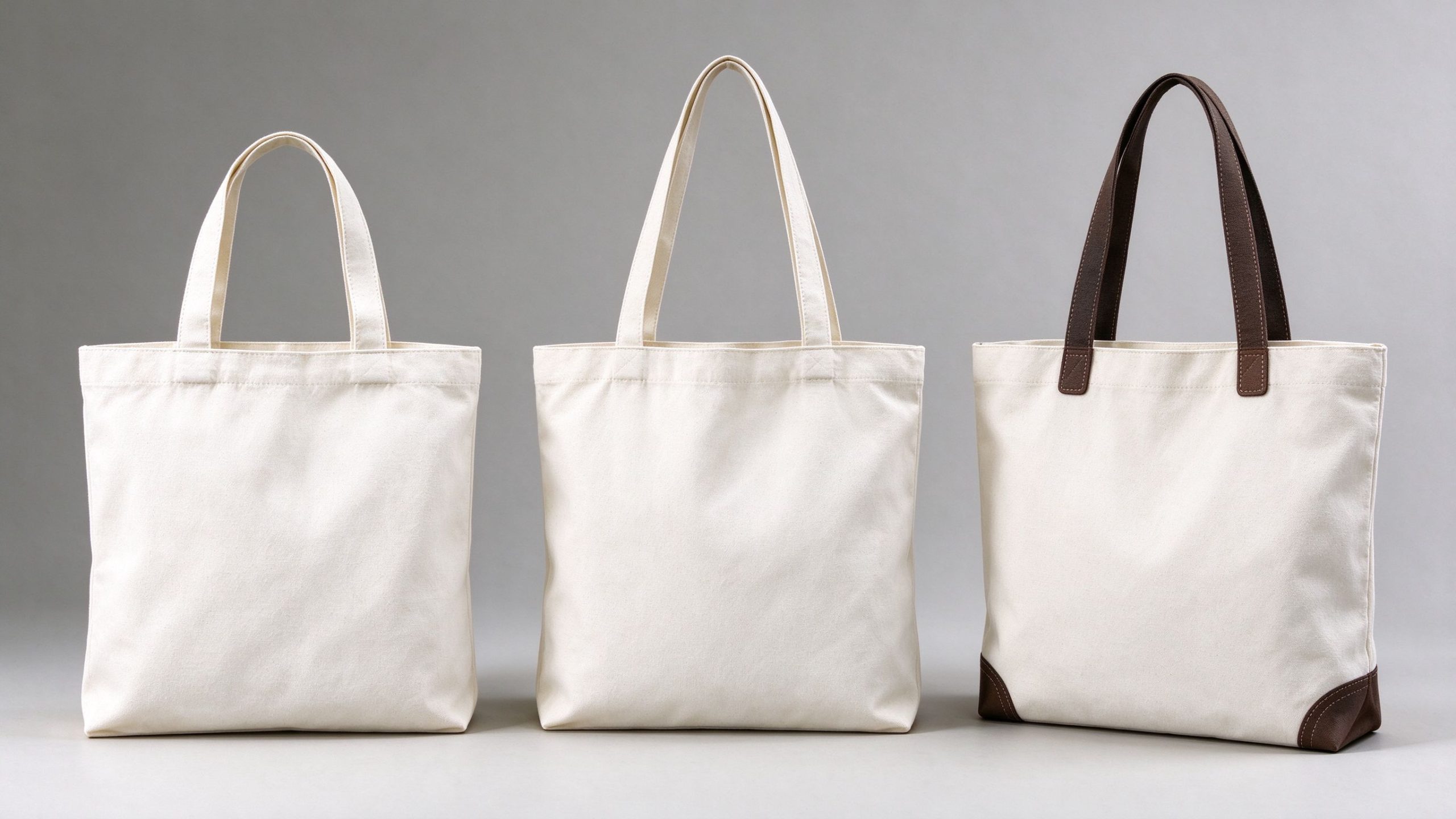
Handles affect carrying comfort, appearance, and the way force is transferred to the bag body. When requesting a quotation, specify the handle material, dimensions, placement, and attachment method instead of relying on descriptions such as “standard handle” or “long handle.”
Short handles for hand carrying
Short handles are suitable for designs intended primarily for hand carrying. They can give a tote a compact appearance and may work well for smaller retail products, gift packaging, or selected promotional applications.
When considering short handles, evaluate:
- The intended contents and overall bag size
- The available clearance between the handle and bag opening
- Whether the user needs to carry the bag while holding other items
- The appearance of the handle attachment
- Whether reinforcement is required for the intended application
A short handle should not be selected solely because it looks neat in a product photograph. Test the sample using the intended contents and carrying method.
Long handles for shoulder carrying
Long handles provide additional clearance for carrying a bag over the shoulder. They may be useful for shopping bags, conference bags, corporate gifts, and bags intended for repeated use. However, the appropriate handle length depends on the body dimensions, handle placement, intended user, and expected contents.
When requesting long handles, define both the full handle length and the desired handle drop where relevant. Handle length refers to the full length measured according to the agreed method. Handle drop generally refers to the distance from the top edge of the bag to the highest point of the handle when positioned for measurement. These measurements should not be treated as interchangeable.
Ask the supplier to document the measurement method and confirm the final dimensions on the physical sample.
Handle width
Handle width affects the appearance and feel of the finished bag. A wider handle may distribute contact across a broader area of the hand or shoulder, depending on the construction and use. However, width alone does not establish carrying comfort or load capacity.
Consider handle width alongside the handle material, length, attachment points, and the overall dimensions of the bag. If branding is important, also review how the handle width and placement affect the available front-panel area.
Self-fabric handles
Self-fabric handles are made from the same or a specified compatible fabric as the bag body. They can create a coordinated appearance, particularly when the bag is intended to display a printed logo or brand identity.
For these handles, clarify:
- Whether the handle uses the same fabric specification as the body
- Whether it is single-layer or reinforced
- The finished width and length
- The attachment position
- The stitching and reinforcement requirements
Do not assume that handles made from the same fabric will have identical construction across suppliers. Request a sample or technical drawing showing the intended details.
Webbing handles
Webbing handles provide a different material and appearance from self-fabric handles. Depending on the selected material and design, webbing may be appropriate for a more structured or contrasting look.
When specifying webbing, identify the material, colour, width, length, and attachment method. If the handle must match a brand colour, clarify the colour approval process before production. The material name alone does not confirm the handle’s performance. If the project has specific carrying requirements, request appropriate test information for the complete bag construction.
3. Handle Attachment and Reinforcement Options
Handle selection should include how the handles are attached to the bag. The attachment points are important because the handle transfers the load to the bag body. A suitable design must consider the material, stitching, reinforcement, intended use, and agreed performance requirements.
Top-edge attachment
Some handles are attached near the top edge of the bag body. The appearance and construction depend on how the handle ends are folded, stitched, and finished. For this design, review the visible stitching, attachment position, and the way the handle sits when the bag is filled.
Extended or reinforced attachment areas
Some designs use extended handle ends, additional fabric layers, or reinforcement in the attachment area. These features can affect the appearance, construction, and finished weight of the bag. They may also be relevant where the product has defined performance requirements. However, reinforcement should not be treated as an automatic guarantee of carrying capacity. The complete construction must be evaluated under the intended conditions.
Cross-stitching and other stitching patterns
Different stitching patterns may be used to secure handles, depending on the bag design. Buyers should specify the required appearance and construction rather than assuming that one stitching pattern is suitable for every application. If the handle attachment is a critical quality requirement, request a sample showing the actual stitching and agree on inspection criteria before bulk production.
What to check during sample approval
Inspect the following:
- Handle length, width, and drop
- Left and right handle placement
- Stitching consistency
- Fabric condition around the attachment points
- Reinforcement details, where specified
- Appearance when the bag is empty
- Appearance when the bag contains representative items
- Compliance with any agreed carrying-performance test
If the project requires a defined load, specify the load, test method, conditions, and acceptance criteria with the supplier. Do not infer a safe load from handle appearance or material thickness alone.
4. What Is a Tote Bag Gusset?
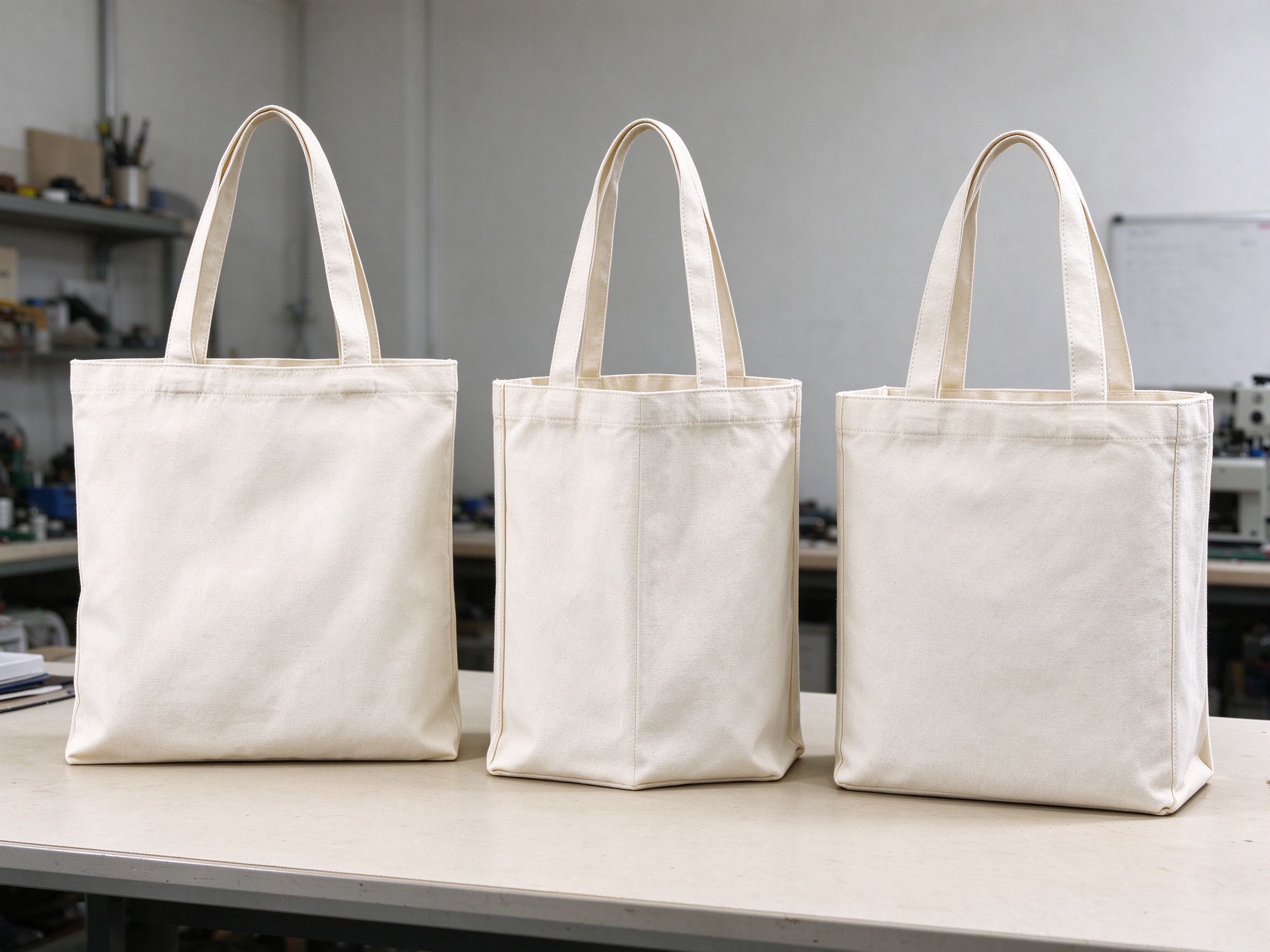
A gusset is a section of material that creates depth or additional space in a bag. Depending on the construction, a tote may have a side gusset, a bottom gusset, or both. The gusset side of canvas tote bag handle and gusset options determines the bag’s shape and usable depth.
Gusset design influences the bag’s shape and the way its contents are arranged. It can also affect the finished dimensions, seams, artwork layout, and packing configuration. When requesting a quotation, describe the required construction rather than using the word “gusset” without additional details.
Flat tote bags
A flat tote generally has a simple body without a defined side or bottom gusset. This construction can be appropriate for relatively flat contents, such as documents, brochures, or selected retail products.
Potential advantages include a straightforward silhouette and a relatively simple specification. However, the usable space depends on the body dimensions, opening, fabric behaviour, and intended contents. A flat tote should not be assumed to accommodate bulky merchandise simply because its front panel is large.
Side-gusset tote bags
A side-gusset tote includes additional material along the sides of the bag. This creates depth when the bag is opened and may help accommodate products that need more space than a flat design provides. Side gussets can also change the bag’s appearance when filled.
When specifying this construction, identify the required gusset depth and clarify how it should be measured. Confirm whether the bag also requires a separate bottom gusset.
Bottom-gusset tote bags
A bottom-gusset tote includes a defined base that allows the bag to expand in depth. This can be useful for retail packaging, merchandise, or products that need a more box-like shape. The bottom construction should be evaluated together with the side seams and overall body dimensions.
If the bag needs to maintain a particular appearance when filled, include that requirement in the sample review.
Side and bottom gussets combined
Some designs use both side and bottom gussets. This configuration can provide a more structured shape and additional space for certain types of contents. However, the resulting capacity cannot be determined from gusset depth alone. The full dimensions, opening, construction, and intended contents must be considered together.
For products with rigid boxes or multiple items, test the sample with the actual contents before approving the specification.
5. How to Choose the Right Handle and Gusset Combination
The most useful way to choose a construction is to start with the application.
| Application | Handle considerations | Gusset considerations |
|---|---|---|
| Trade show giveaways | Convenient carrying and suitable clearance | Flat or gusseted design based on brochures and promotional items |
| Corporate gift bags | Handle appearance and compatibility with gift packaging | Depth required for the gift box and other contents |
| Retail shopping bags | Carrying method and intended use | Space needed for the merchandise |
| Apparel packaging | Handle length and bag proportions | Depth required for folded garments or multiple items |
| Conference bags | Comfortable carrying with documents and materials | Space for catalogues, folders, and related items |
| Employee welcome kits | Carrying clearance for mixed contents | Depth and shape required for the complete kit |
| Premium retail merchandise | Coordinated materials and finishing | Construction suited to the presentation and shape of the products |
Use this table as an initial planning tool rather than a universal product specification. For example, a conference bag intended mainly for documents may not need the same depth as a corporate gift bag containing a boxed product and accessories. Likewise, a long shoulder handle may be useful for one application but unnecessary for a small gift bag intended for hand carrying.
A practical selection process
Step 1: List the contents. Identify the largest items and determine whether they are flat, bulky, rigid, or irregularly shaped.
Step 2: Define the carrying method. Decide whether the bag will be carried by hand, over the shoulder, or in more than one way.
Step 3: Establish the body dimensions. Specify the finished width, height, and required depth. For guidance on choosing the right dimensions and handle drop, see our custom canvas tote bag sizes guide.
Step 4: Choose the handle configuration. Define the material, width, length, drop, placement, and attachment requirements.
Step 5: Select the gusset construction. Determine whether a flat body, side gusset, bottom gusset, or combined design best suits the contents.
Step 6: Review branding and packaging. Check whether the handle and seams interfere with the artwork or the intended packing arrangement.
Step 7: Confirm the design with a sample. Evaluate the complete construction before approving bulk production.
6. How Handle and Gusset Choices Affect Printing and Appearance
Structure and artwork should be planned together. A large logo may appear balanced on a flat front panel but become visually different when the bag expands through its gussets. Similarly, handles may cover part of the design or limit the available printing area near the top edge.
Before approving the artwork, confirm:
- The intended front and back panels
- The location of seams and gussets
- The distance between the logo and handle attachment points
- Whether printing is required on the side panels
- Whether the design changes when the bag is filled
- Whether the artwork must align across multiple panels
For a simple one-colour logo, the layout may be relatively straightforward. Designs that wrap around the bag or span several panels require more careful coordination. Ask the supplier to review the artwork against the actual construction drawing. Approve a sample or suitable pre-production proof before mass production.
7. How to Write a Clear Handle and Gusset Specification
Avoid vague instructions such as “long handles,” “strong stitching,” or “large bottom.” These descriptions may be interpreted differently by different suppliers. The most reliable way to communicate canvas tote bag handle and gusset options is a specification sheet that records the intended design.
| Specification item | What to document |
|---|---|
| Bag body | Finished width, height, and depth |
| Handle material | Self-fabric, webbing, or another specified material |
| Handle dimensions | Width, full length, and drop where applicable |
| Handle placement | Position and spacing of attachment points |
| Handle construction | Single-layer, folded, or reinforced as specified |
| Attachment method | Required stitching and reinforcement details |
| Side gusset | Required depth and measurement method |
| Bottom gusset | Required depth and bottom construction |
| Seams | Construction and appearance requirements |
| Artwork | Print locations and restrictions near seams or handles |
| Sample approval | Reference sample, drawing, and revision |
| Performance requirements | Defined test method and acceptance criteria, if applicable |
| Dimensional tolerances | Agreed tolerances for relevant measurements |
If you are uncertain about the best configuration, ask the supplier to propose alternatives. Each option should be described clearly enough to compare its construction and suitability. Any change to the approved handle or gusset design should be documented before production.
8. Common Mistakes Buyers Should Avoid
Mistake 1: Choosing handles by appearance alone. A handle that looks appropriate in a photograph may not provide the desired carrying clearance. Evaluate the physical sample.
Mistake 2: Confusing handle length with handle drop. Specify the required measurements separately where both matter.
Mistake 3: Assuming thicker materials guarantee better performance. Performance depends on the complete construction and must be evaluated against defined requirements.
Mistake 4: Adding gussets without checking the contents. More depth is not automatically better. Choose the construction based on the items the bag needs to carry.
Mistake 5: Ignoring the opening. The bag must allow the intended contents to be inserted and removed conveniently.
Mistake 6: Placing artwork before confirming construction. Handle attachment points and seams can affect the printable area. Coordinate structure and artwork before sample approval.
Mistake 7: Changing specifications after approval. Changes to handle material, length, attachment, gusset depth, or reinforcement can affect the finished product. Review and approve relevant changes before mass production.
Frequently Asked Questions
What is the difference between a side gusset and a bottom gusset?
A side gusset creates depth along the sides of the bag. A bottom gusset creates depth at the base. Some tote bags use both, depending on the desired shape and the contents they need to accommodate.
Are long handles better than short handles?
Neither option is universally better. Short handles may suit hand-carry applications, while long handles can provide additional clearance for shoulder carrying. The correct choice depends on the bag dimensions, intended user, and application.
Does a gusset increase the carrying capacity of a tote bag?
A gusset can create additional space, but it does not independently establish safe carrying capacity. Capacity and performance depend on the complete construction, materials, seams, handles, and attachment points.
Should I specify handle reinforcement in my quotation request?
Yes, if reinforcement is important to the intended use or required appearance. Describe the desired construction and ask the supplier to confirm the details in the sample or technical drawing.
How can I confirm that the handles are suitable?
Evaluate the handle dimensions, attachment construction, stitching, and performance against the intended requirements. If the bag must carry a defined load, agree on an appropriate test method and acceptance criteria with the supplier.
Can the same tote bag design have different handle and gusset options?
Potentially, but each option should be evaluated as a defined configuration. Changes can affect dimensions, appearance, materials, construction, artwork placement, and the final product specification. Confirm the selected combination with the supplier before production.
Request a Custom Canvas Tote Bag Quotation
Planning a wholesale order of custom canvas tote bags? Share your intended application, required dimensions, preferred handle configuration, gusset design, logo artwork, and packaging requirements. A clear summary of your canvas tote bag handle and gusset options helps the supplier quote the intended product.
If the bag needs to accommodate particular merchandise or gift boxes, include the dimensions or reference photographs of the intended contents. Since structural choices can affect finished product weight, also review the canvas tote bag weight guide when preparing your specification.
BriefcaseCustom can review the requested specification and clarify the details that need to be confirmed before sample approval. Browse our custom tote bags for more product and OEM options. Contact BriefcaseCustom to discuss your custom canvas tote bag requirements and request a quotation.