Satchel Bag vs Briefcase for Work: Key Differences, Uses and Buying Guide
A satchel bag and a briefcase can both carry documents, a laptop, notebooks and other work essentials. They may also share similar materials, colours and practical features. However, they are designed with different priorities.
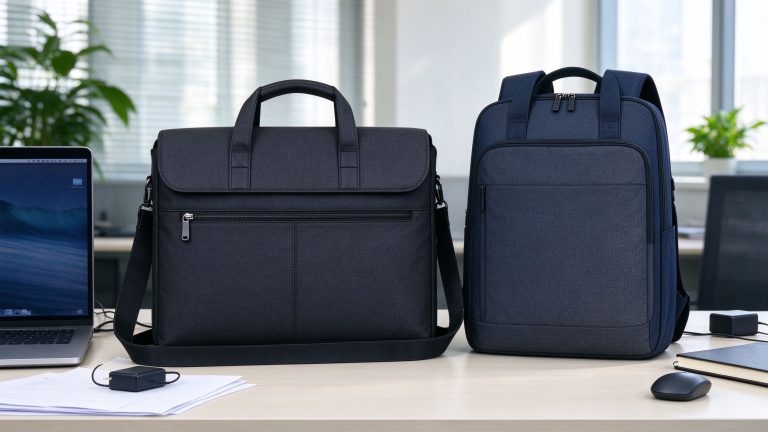
A briefcase usually creates a more formal and structured business appearance. It is often associated with professional meetings, executive work and document organisation. A satchel is generally more flexible. It may combine top handles with a shoulder strap, offer a softer structure and work across office, commuting and everyday settings.
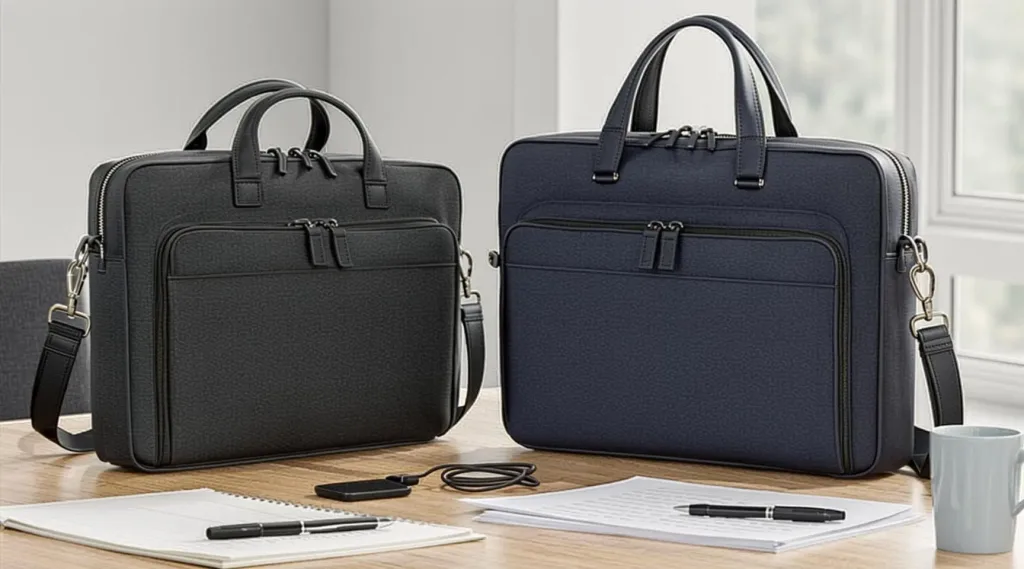
The right choice depends on the user’s working environment, the items being carried, the desired appearance and the level of organisation required. For companies sourcing bags for employees, conferences or promotional programmes, the decision also affects branding space, material selection, production cost and long-term usability.
This guide explains the main differences between satchel bags and briefcases, when each one is suitable for work, and what businesses should check before placing a bulk or custom order.
What Is a Satchel Bag?
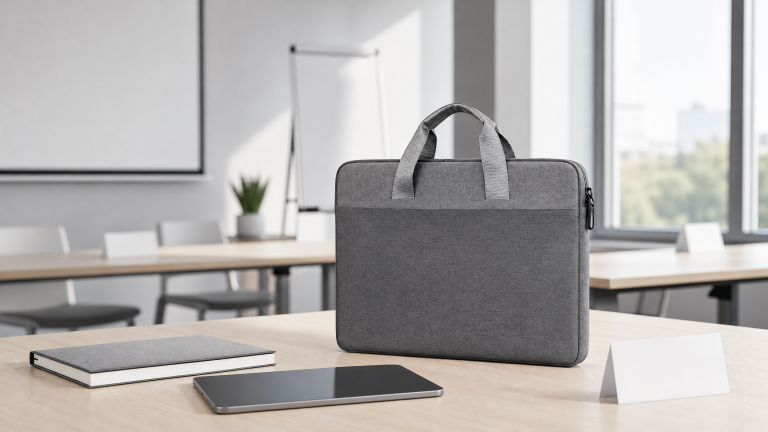
A satchel is a structured or semi-structured bag with a relatively flat body, a defined base and one or more handles positioned near the top.
Modern satchels may include:
- Two top handles
- A detachable shoulder strap
- A front flap or zipper closure
- A document compartment
- A padded laptop section
- Internal organiser pockets
- A structured base
The term “satchel” describes a general bag style rather than one fixed size or material. A small satchel may carry personal items and a tablet, while a larger work satchel may hold A4 documents, a laptop, charger, notebook and business accessories.
Satchels are often chosen because they balance appearance and flexibility. They can look more organised than a casual shoulder bag while being less formal than a traditional executive briefcase.
What Is a Briefcase?
A briefcase is a professional work bag traditionally designed to carry documents, files and business materials.
Typical briefcase features include:
- A structured rectangular shape
- One or two top handles
- A wide main opening
- Internal document compartments
- A slim or moderate depth
- A professional exterior design
- Optional shoulder strap
Modern briefcases may be made from leather, PU leather, nylon, polyester or Oxford fabric. Some are designed mainly for paper documents, while others include padded laptop compartments and accessory storage.
A briefcase usually places more emphasis on professional presentation and organised document carrying. It is common in formal offices, business meetings, legal work, financial services, government programmes and executive environments.
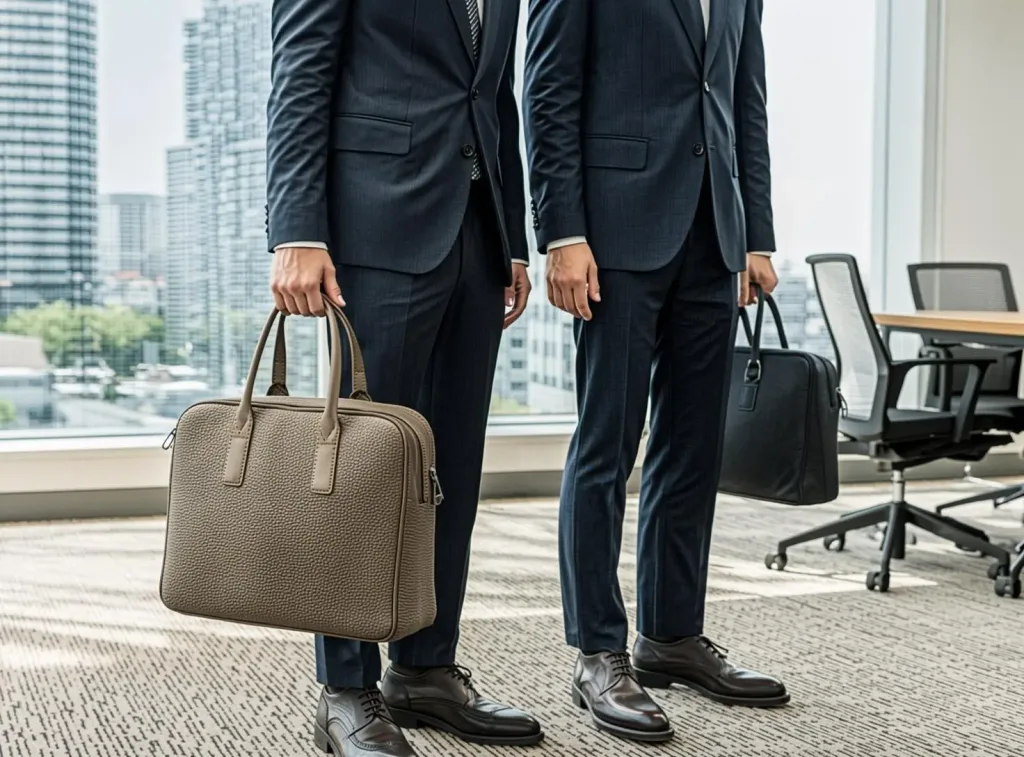
Satchel Bag vs Briefcase: The Main Difference
The most important difference is design priority.
- A satchel usually prioritises flexibility, everyday use and a combination of hand-carry and shoulder-carry options.
- A briefcase usually prioritises professional structure, document organisation and a formal business appearance.
There is some overlap. A large satchel can look similar to a soft briefcase, and a modern briefcase may include casual features such as a detachable strap or lightweight Oxford fabric.
This is why buyers should not rely on the product name alone. The internal dimensions, closure, carrying options, padding, structure and material often matter more than the category label.
Differences in Shape and Structure
Satchel shape
Satchels are usually structured enough to stand or maintain their shape, but they may be softer and more flexible than traditional briefcases.
Common characteristics include:
- Slightly rounded or rectangular edges
- A visible base
- Flexible side panels
- Top handles
- Optional shoulder strap
- Moderate internal structure
This makes a satchel suitable for users who move between work, commuting and personal activities.
Briefcase shape
Briefcases are generally more rectangular and controlled in appearance.
Common characteristics include:
- Straight horizontal lines
- A firm front and back panel
- A stable base
- A defined opening
- Internal file organisation
- A cleaner executive silhouette
A structured briefcase can make documents easier to organise and may look more appropriate in formal meetings.
Which One Looks More Professional?
Both styles can look professional, but they create different impressions.
A briefcase often appears:
- More formal
- More traditional
- More executive
- More structured
- Better suited to conservative business environments
A satchel often appears:
- More flexible
- More contemporary
- More approachable
- More suitable for business-casual workplaces
- Easier to use outside the office
For legal meetings, financial presentations, executive appointments or formal corporate environments, a structured briefcase may be the safer choice.
For commuting, training programmes, creative offices, field work and mixed work-and-travel use, a professional satchel may offer a better balance.
The material also changes the impression. A clean Oxford fabric satchel with restrained branding can look highly professional, while a poorly structured leather briefcase may look less practical than a well-designed textile model.
Which Is Better for Carrying a Laptop?
The answer depends on the internal layout rather than the bag category.
A satchel can be suitable for a laptop if it includes:
- A padded laptop compartment
- Enough internal width
- A secure closure
- Protection around the base and sides
- Room for a charger and documents
A briefcase may be a better choice when the user wants a slimmer, more organised laptop-and-document format.
When comparing models, measure the laptop itself rather than relying only on the advertised screen size. A laptop listed as 15.6 inches may have different external dimensions depending on the frame, bezel, battery design and protective case.
The buyer should confirm:
- Laptop length
- Laptop width
- Laptop thickness
- Case dimensions
- Charger size
- Required document space
- Desired padding level
For corporate orders, the exact device model or dimensions should be included in the product specification before sampling.
Which Has Better Document Capacity?
A briefcase is often more efficient for flat document carrying because its body is designed around folders, files and papers.
It may be useful for:
- A4 documents
- Contracts
- Presentation materials
- Notebooks
- Reports
- Business cards
- Small office accessories
A satchel may have more flexible space, especially when the design includes a deeper body or an expandable section. This can be helpful when the user carries a mixture of work and personal items.
However, extra depth can also make the bag look less formal or become heavier when fully loaded. The best choice depends on whether the priority is slim document organisation or flexible everyday capacity.
Which Is More Comfortable for Commuting?
Comfort depends on the total weight, strap design and how the contents are distributed.
A satchel often has an advantage for commuting because it may support several carrying methods:
- Hand-carry by the top handles
- Shoulder-carry with a detachable strap
- Crossbody carry for short periods
This flexibility allows the user to change carrying positions during the day.
A briefcase may be comfortable when it is carried by hand or used with a wide shoulder strap. However, a traditional narrow-handle design may be less convenient for long walking routes or public transport.
Important comfort features include:
- Wide shoulder strap
- Padded shoulder section
- Reinforced attachment points
- Lightweight outer material
- Balanced internal compartments
- Handles that do not collapse awkwardly
- A base that keeps the bag stable
A one-shoulder bag should not be overloaded simply because it has a large main compartment. The actual carrying weight matters more than the maximum available space.
Satchel Bag vs Briefcase for Business Meetings
For formal business meetings, a briefcase usually creates a more conventional impression.
It can be suitable when the user needs:
- A polished executive appearance
- Quick access to documents
- A stable bag that can sit beside a chair
- A slim profile
- Organised presentation materials
A satchel can also work well, especially in business-casual settings. It may be preferable when the user needs to carry:
- A laptop
- A notebook
- A charger
- Personal belongings
- Documents
- Small accessories
A satchel may appear less rigid and more modern, but it should still have a clean silhouette, controlled branding and reliable hardware.
For businesses providing bags to employees or sales teams, a satchel can offer more flexibility across different work environments. A briefcase may be a stronger fit when every recipient operates in a formal office or client-facing role.
Which One Is Better for Conferences and Training Events?
For conferences and training programmes, the better choice depends on the contents and the expected continued use.
A briefcase can be appropriate when the programme includes:
- Formal business materials
- Executive documents
- Laptop-based training
- Corporate presentations
- Branded folders
A satchel may be more practical when participants need to carry:
- A notebook
- A tablet
- Event documents
- Chargers
- Personal items
- Light promotional materials
Satchels may also be used more frequently after the event because they can transition into everyday commuting or casual work use.
For a conference bag project, companies should consider:
- The size of the event materials
- Whether A4 documents must fit
- Whether the bag should include a laptop compartment
- How visible the logo should be
- Whether attendees will use the bag after the event
- Whether a detachable shoulder strap is needed
A product that remains useful after the event may provide more value than a bag designed only for one-day distribution.
For event-specific requirements, a buyer may also compare available options from a conference bag manufacturer.
Which Is Easier to Customize?
Both satchels and briefcases can be customized, but their surfaces provide different branding opportunities.
A satchel may support:
- Front-panel logo printing
- Woven labels
- Interior labels
- Custom lining
- Colour changes
- Shoulder-strap adjustments
- Pocket modifications
- Custom packaging
A briefcase may provide a more controlled surface for:
- Company logos
- Executive branding
- Corporate colour applications
- Metal or rubber badges
- Front-panel printing
- Internal brand labels
The appropriate logo method depends on the fabric, artwork and use conditions. Possible methods may include:
- Silk-screen printing
- Heat-transfer printing
- Embroidery
- Woven labels
- Rubber patches
- Metal badges
The selected method should be confirmed after reviewing the actual material and artwork. A logo that looks suitable on smooth PU leather may require a different treatment on textured Oxford fabric.
For companies developing branded work bags, the custom bags with logo service page can be used as a supporting reference when planning logo placement and decoration options.
Material Considerations
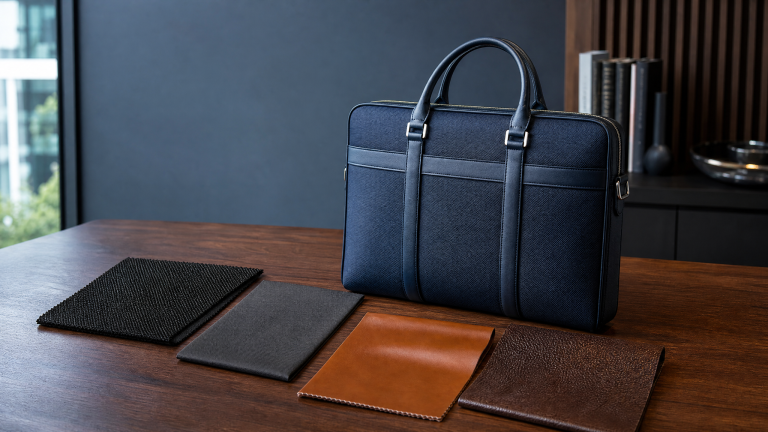
Satchels and briefcases can both be produced in different materials, including:
- Genuine leather
- PU leather
- Canvas
- Nylon
- Polyester
- Oxford fabric
Leather can create a premium and traditional appearance, but it may add weight and cost.
PU leather can provide a consistent surface and a leather-like appearance for controlled-budget projects.
Canvas offers a softer and more casual visual direction.
Nylon and Oxford fabric are often considered when the product needs to be lightweight, practical and suitable for daily use.
Oxford fabric can be relevant for business bags because it may provide:
- A professional textile appearance
- A balance between weight and durability
- Water-resistant performance depending on construction and treatment
- Compatibility with several branding methods
- Cost efficiency for bulk programmes
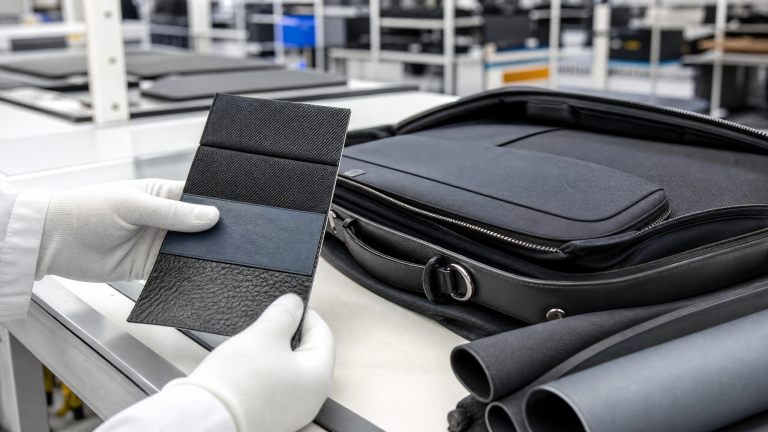
Material selection should be connected to the intended use, target price, bag structure and branding requirements. Buyers should request the exact material specification rather than relying on general terms such as “premium fabric” or “waterproof.”
What Should Businesses Check Before Ordering?
Businesses sourcing satchels or briefcases in bulk should define the project before selecting the final design.
1. Identify the recipient
The correct format may differ for:
- Employees
- Sales teams
- Conference attendees
- Students
- Government staff
- Business travellers
- Promotional customers
- Retail buyers
A formal executive briefcase may not be the best choice for a mobile training team, and a casual satchel may not suit a financial presentation programme.
2. List the contents
Write down the actual items the user must carry:
- Laptop
- Tablet
- A4 folder
- Notebook
- Charger
- Mouse
- Documents
- Samples
- Personal items
This prevents the product from being selected based only on appearance.
3. Confirm carrying methods
Decide whether the bag should be:
- Hand-carried
- Shoulder-carried
- Worn crossbody
- Used with a luggage trolley
- Carried for long periods
This affects handles, strap design, reinforcement and balance.
4. Review the branding area
Confirm:
- Logo size
- Logo position
- Decoration method
- Number of colours
- Distance from seams and zippers
- Visibility when the bag is carried
5. Approve a physical sample
A physical sample should be reviewed with the actual:
- Device
- Documents
- Accessories
- Logo artwork
- Packaging
- Carrying method
A sample can reveal problems that are difficult to identify from a product image, including awkward openings, insufficient padding, unstable bases or uncomfortable straps.
6. Confirm quality requirements
Bulk orders should include written requirements for:
- Fabric
- Stitching
- Zippers
- Handles
- Shoulder straps
- Logo position
- Colour tolerance
- Packing
- Quantity inspection
A written specification helps the buyer, factory and inspection team evaluate the same product standard.
For buyers comparing formal work-bag formats, the existing custom business briefcases manufacturer page is a relevant next step when the project requires a structured business format.
Quick Decision Guide
Choose a satchel bag when the priority is:
- Flexible daily use
- Hand-carry and shoulder-carry options
- Business-casual appearance
- Mixed work and personal items
- Commuting
- Training programmes
- A modern but practical design
Choose a briefcase when the priority is:
- Formal professional appearance
- Document organisation
- Executive meetings
- Slim business presentation
- Structured internal storage
- Traditional office use
- A clearly defined corporate format
Choose a custom laptop bag or laptop briefcase when the device and protection requirements are the main concern. A purpose-built custom laptop bag manufacturer can help align the bag dimensions, padding, compartments and branding with the intended device and programme.
Final Thoughts
Satchel bags and briefcases are both useful work-bag formats, but they serve different priorities.
A satchel is usually more flexible, easier to adapt to commuting and suitable for mixed work-and-everyday use. A briefcase usually provides a more formal appearance, stronger document organisation and a clearer executive profile.
For personal use, the decision should be based on the way the bag will be carried, the required contents and the working environment.
For business and wholesale projects, buyers should also consider material, branding space, internal layout, product lifespan, sampling and quality control. The most suitable bag is not always the most formal or the most spacious. It is the format that matches the recipient’s real working routine and remains useful after the initial purchase or event.
Frequently Asked Questions
Is a satchel more casual than a briefcase?
Usually, yes. A satchel often has a softer structure and more flexible carrying options, while a briefcase tends to look more formal and controlled. However, materials, colour and construction can change the final appearance.
Can a satchel carry a laptop?
Yes. A satchel can carry a laptop if it has a properly sized padded compartment and enough room for the charger and other accessories. Always confirm the laptop’s external dimensions before ordering.
Is a briefcase better for business meetings?
A briefcase is often better for formal meetings because it creates a conventional professional appearance and keeps documents organised. A structured satchel can also be suitable in business-casual environments.
Can satchels and briefcases be customized with a company logo?
Yes. Both formats may support logo printing, heat transfer, embroidery, woven labels, packaging changes and selected design modifications. The best method depends on the material and artwork.
Which is better for conference giveaways?
A satchel may be more versatile for attendees who will continue using the bag after the event. A briefcase may be better for formal corporate programmes or when documents and laptops must be carried in a structured format.
What is the most important specification for a laptop work bag?
The most important specification is the internal fit for the actual laptop, including its case and accessories. Screen size alone does not provide enough information to approve a final bag design.