Laptop Bag vs Messenger Bag for Work: Which Is Better?
If you are researching a laptop bag vs messenger bag for work decision, the short answer is: both formats can carry a computer, documents and everyday work accessories — the difference is design priority.
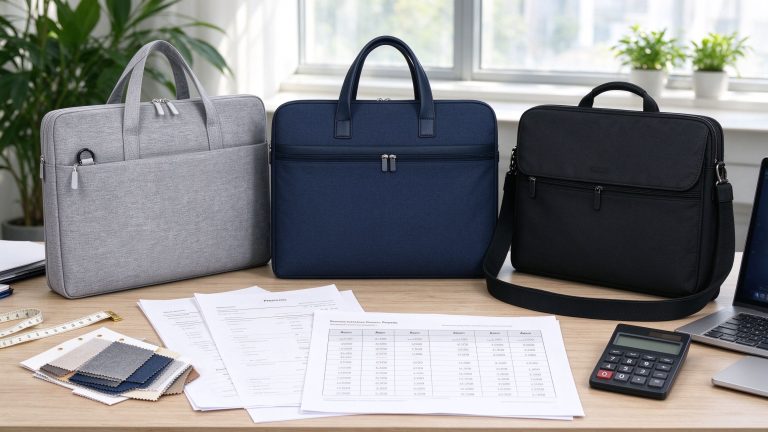
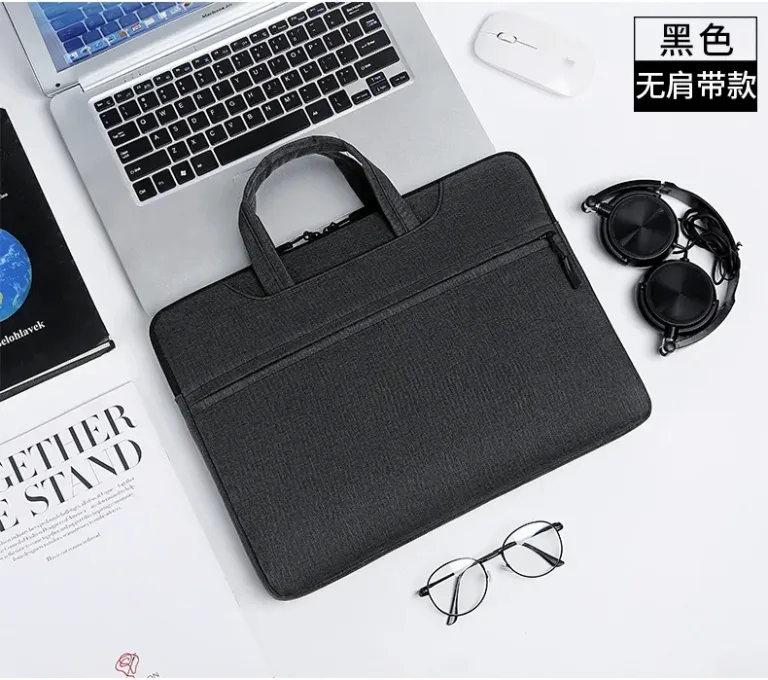
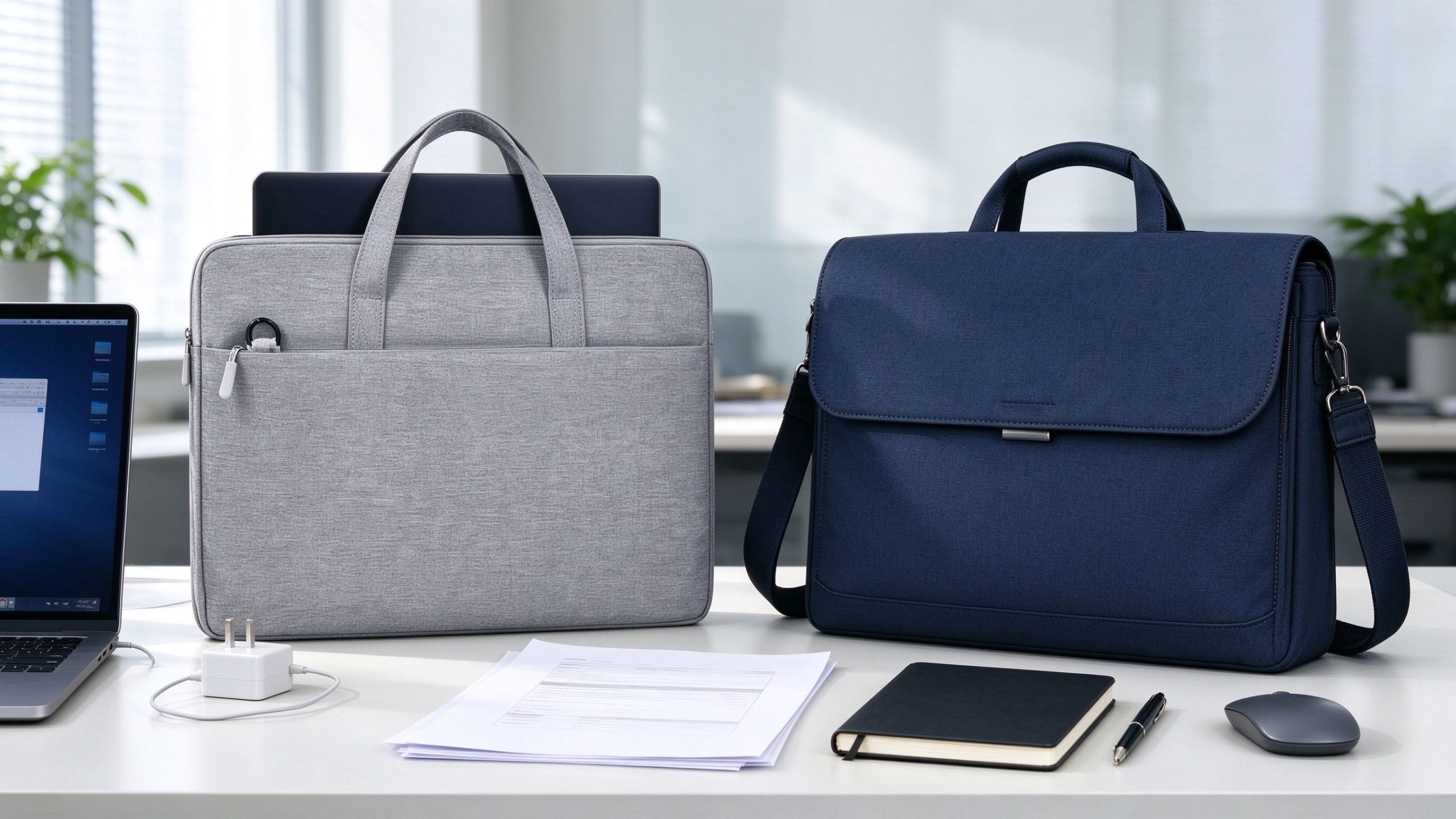
A laptop bag is usually designed around protecting and organizing a computer. It may be a slim sleeve, a structured briefcase-style bag, or a shoulder bag built around a padded computer compartment.
A messenger bag is usually defined by its carrying system: a long shoulder strap lets the bag rest on one shoulder or be worn across the body. Modern business messenger bags may also include a padded laptop compartment, document storage and organised pockets.
That means the categories overlap. A messenger bag can be a laptop bag, and a laptop bag can also be designed as a messenger bag. For work, the better choice depends on laptop size, document needs, daily load, commute length, hands-free requirements, workplace formality and branding requirements for corporate programs.
1. Laptop Bag vs Messenger Bag for Work: The Main Difference
The simplest way to understand the difference is that a laptop bag describes a primary function — carrying and protecting a computer — while a messenger bag describes a carrying format — a long strap for shoulder or crossbody wear.
| Feature | Laptop Bag | Messenger Bag |
|---|---|---|
| Primary focus | Laptop protection and organisation | Flexible shoulder / crossbody carrying |
| Carrying method | Handle, shoulder strap or both | Usually long shoulder strap |
| Laptop compartment | Central to the design | Optional but common in work models |
| Hands-free use | Depends on design | Strong |
| Document storage | Often good | Often good |
| Formality range | Casual sleeve to formal briefcase | Business-casual to professional |
| Quick access | Often good | Usually very good |
| Best for | Computer-focused work carry | Mobile work and commuting |
The important point is that this is not necessarily an either-or product classification. A buyer may actually be looking for a laptop messenger bag: one structured bag that covers both requirements.

2. What Is a Laptop Bag?
A laptop bag is a work bag designed primarily to carry and protect a computer. The term covers several formats: laptop briefcase, laptop shoulder bag, laptop sleeve, laptop messenger bag, crossbody laptop bag and business laptop case.
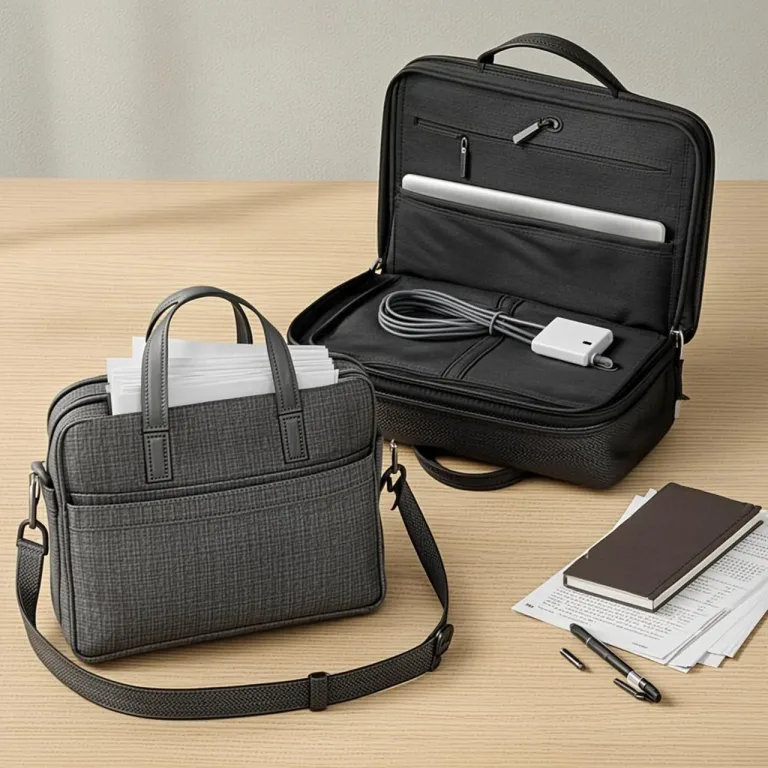
A laptop bag may include a padded laptop compartment, tablet sleeve, document section, charger pocket, accessory organiser, top handle, shoulder strap and rear luggage sleeve. The defining feature is not the external shape — it is the emphasis on computer storage and protection. A structured laptop briefcase can look almost identical to a traditional business briefcase while being designed specifically around a laptop.
Actual laptop dimensions should be used when selecting or developing the bag. Screen size alone does not guarantee compatibility, because computers with the same nominal screen size can have different external dimensions. The laptop bag size guide explains the same distinction between screen-size labels and the internal space actually available.
3. What Is a Messenger Bag?
A messenger bag is generally a shoulder-carried bag with a long strap that allows it to rest on one shoulder or be worn across the body. Modern business messenger bags can include a padded laptop compartment, A4 document storage, front organiser, internal pockets, adjustable shoulder strap, top handle, rear luggage sleeve and a zip or flap closure.
The key distinction is that messenger describes a bag format and carrying method, while laptop bag describes a primary function. This is why one product can legitimately be both: a business messenger bag with a padded 14-inch laptop compartment could be described as a laptop messenger bag, business messenger bag or crossbody laptop bag depending on its construction and marketing position. A short historical overview of the messenger bag is available on Wikipedia.
4. Which Is Better for Office Commuting?
For daily commuting, the carrying method becomes especially important.
A laptop bag works well when the daily load is controlled: laptop, charger, notebook, a few documents, mouse and small accessories. A structured laptop briefcase is particularly appropriate for employees who travel a short distance between home, car and office. Advantages include a professional appearance, easy laptop access, organised compartments and hand-carry option. The limitation is that a hand-carried bag becomes less convenient on long walks or when both hands are needed.
A messenger bag has an advantage when the commute involves walking, public transportation, cycling, frequent movement, or carrying a phone and tickets. The long strap allows hands-free carrying. For strap positioning, the bag should sit around the upper hip rather than hang too low — the how to wear a messenger bag for work guide covers strap length and walking-adjustment details.
Best choice by commute type: short car-based commute → laptop bag; walking or public-transport commute → laptop messenger bag; long-distance commute with a heavy load → consider a backpack instead of either format.
5. Which Is More Comfortable?
Comfort depends more on the total load and carrying system than on the product name. A laptop bag is comfortable when it is lightweight, the laptop compartment is properly positioned, the strap is wide enough and the load is moderate. A traditional hand-carry briefcase can become tiring once it contains a heavy laptop, charger and documents — a detachable shoulder strap adds flexibility.
A messenger bag keeps the hands free, but most of the load still passes through one shoulder. Strap width, shoulder padding, adjustability, attachment strength and internal load distribution all matter. A narrow strap becomes uncomfortable with a heavy computer. Neither format should be evaluated empty: a sample should be loaded with the actual laptop, charger and documents before judgement. For heavier loads, a backpack generally provides better weight distribution than either.
6. Which Looks More Professional?
This depends heavily on the design. A laptop bag ranges from a simple padded sleeve to a formal business briefcase; a messenger bag ranges from a casual canvas bag to a structured Oxford business messenger.
A structured laptop bag generally reads as more formal and suits client meetings, executive offices, consulting, finance, legal work and corporate presentations. A messenger bag usually reads as more mobile and contemporary, suiting business-casual offices, technology companies, training, conferences, sales teams and urban commuting. A structured messenger in black, navy or dark gray with restrained branding can still look highly professional. The difference is usually one of formality, not whether the bag is professional at all.
7. Which Is Better for Documents and Laptop Protection?
A structured laptop bag may offer an A4 document divider, flat rear compartment and separate laptop section — useful when users regularly carry contracts, reports, proposals and presentation folders. Its controlled shape helps keep papers flat. A messenger bag can also carry A4 documents well, especially with a wide rectangular main compartment that combines laptop, documents, charger and personal items; the trade-off is that a very deep messenger can look bulky.
Laptop protection depends on construction, not category: padded compartment, correct compartment dimensions, secure closure, internal dividers and bottom padding all matter. Always fit the compartment to the actual computer — two 15.6-inch laptops can differ in width, height and thickness, and a protective case adds more dimensions. If the main requirement is formal document organisation, choose a structured laptop briefcase; if the requirement is laptop plus documents plus flexible commuting, a messenger-style laptop bag is the practical middle ground.
8. Which Is Better for Business Travel and Conferences?
For business travel, a structured laptop bag works well with a suitcase: a rear luggage sleeve lets it sit on the rolling handle, keeping the computer accessible through airports and hotels. A messenger bag is useful when hands-free movement and quick access matter more than formality, though a heavily loaded messenger concentrates weight on one side.
At conferences, attendees move between registration, meeting rooms, exhibition halls and transport. A structured laptop bag suits formal corporate environments; a messenger bag suits frequent movement. For event-specific sourcing, the conference bag manufacturer page covers bags configured around notebooks, documents, tablets, chargers and branding. For sales representatives who alternate between client meetings and mobile visits, the practical solution is a hybrid laptop messenger with top handle, detachable shoulder strap, padded laptop compartment, A4 document section and front organiser — it transitions from shoulder carry during travel to hand carry in the meeting.
9. What About Branding and Materials?
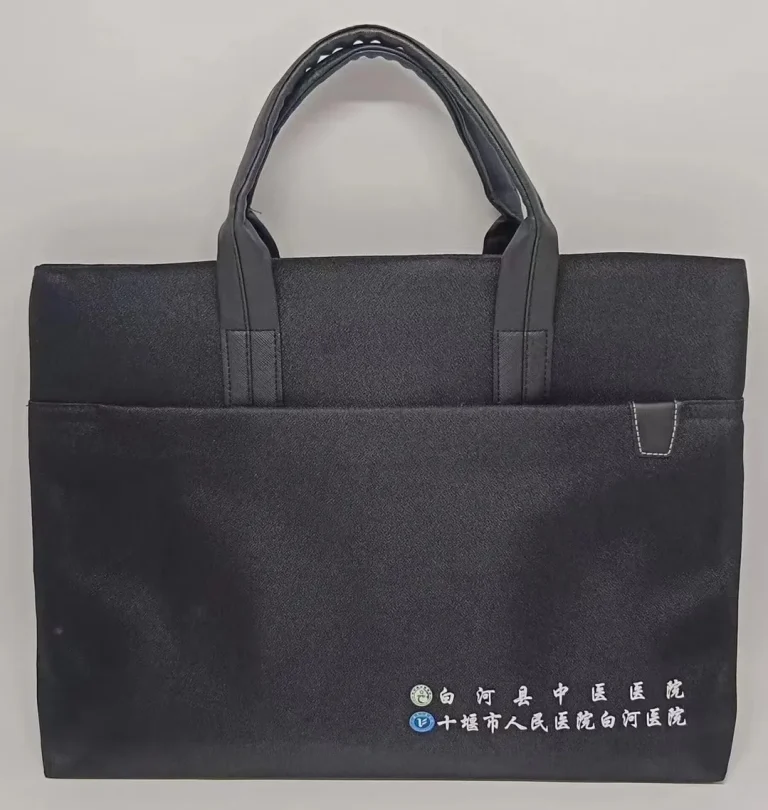
Both formats support corporate branding: screen printing, heat transfer, embroidery, woven labels, rubber patches and metal badges. A laptop briefcase offers a large, controlled front surface; a messenger offers front-panel, flap, woven-label or interior branding. The correct method depends on fabric, logo complexity, number of colours, surface texture and quantity. For comparing logo application methods, see custom bags with logo.
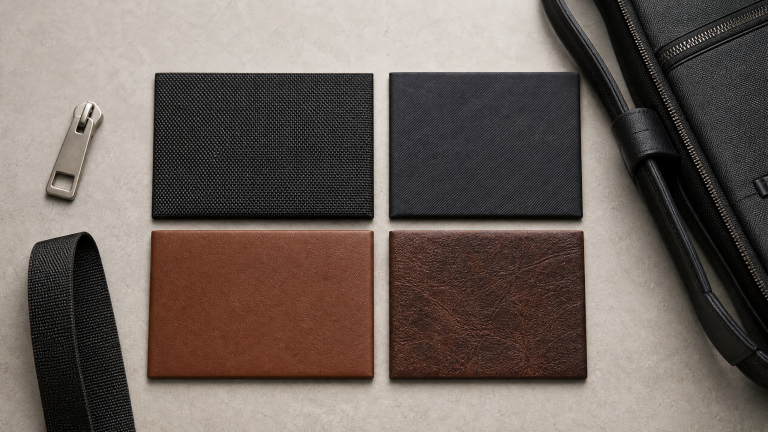
Material choice follows the application, not the category. Oxford fabric offers a professional textile appearance at a practical weight; nylon adds lightness and flexibility; canvas leans casual; PU leather smooths the visual direction; genuine leather adds traditional premium feel but increases weight and cost. Exact water resistance and wear performance depend on the fabric specification and construction, so confirm these from the mill data rather than assuming them from the material name.
10. What Should a Business Buyer Specify to a Manufacturer?
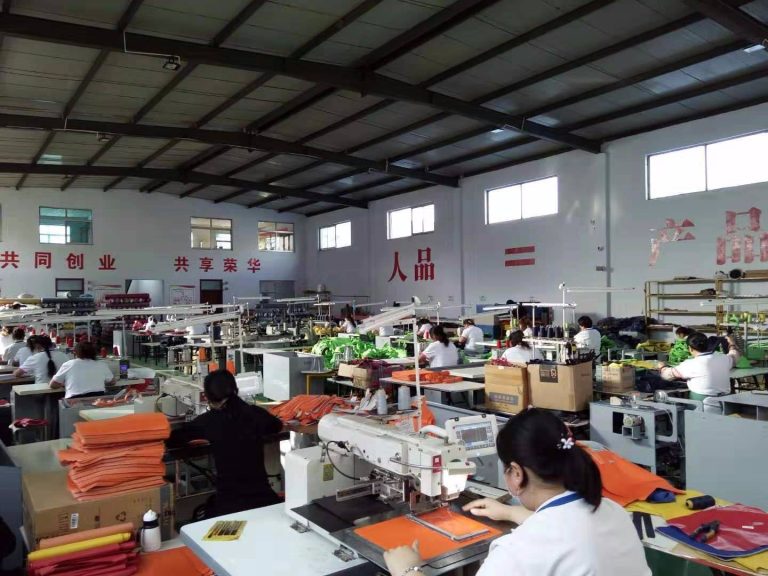
For bulk orders, provide more than a product name. A useful specification includes the laptop model and its measured dimensions (with any protective case), the expected contents, required internal and external dimensions, material, lining, padding, handles, strap, closure, hardware, logo artwork with position and decoration method, packaging, quantity and delivery date. This lets suppliers quote the same product. For a laptop-focused OEM project, the custom laptop bag manufacturer page covers dimensions, materials, branding, packaging and production in detail.
Before bulk production, test a loaded sample: laptop fit and padding, A4 document fit, strap width and comfort under load, handle grip and balance, quick access to charger and notebook, and logo alignment. A small layout problem multiplied across a large production run becomes expensive to correct.
11. Common Mistakes When Choosing Between the Two
- Choosing only by appearance — a bag can look professional but be uncomfortable or poorly organised.
- Choosing by laptop screen size alone — actual device dimensions decide fit.
- Ignoring the charger — the laptop may fit while the charger does not.
- Adding too much capacity — a larger bag encourages unnecessary weight.
- Using a narrow shoulder strap — it becomes uncomfortable under a heavier load.
- Assuming every messenger bag is casual — a structured messenger with restrained branding works in professional environments.
- Ordering without testing the loaded sample — carrying experience changes once the bag holds the full work kit.
12. Frequently Asked Questions
Is a laptop bag or messenger bag better for work?
For formal offices, client meetings and structured document carry, a laptop briefcase is usually the stronger choice. For walking or public-transport commutes, hands-free movement and mixed contents, a laptop messenger bag is more practical.
Can a messenger bag hold a laptop safely?
Yes, when it includes a properly padded laptop compartment matched to the device’s actual dimensions. Check the compartment fit with the real laptop or a dimensional equivalent, not the screen-size label.
Which bag is more comfortable for a heavy work kit?
Neither a hand-carried laptop bag nor a one-shoulder messenger bag is ideal for very heavy loads. For long walks or heavy daily weight, a backpack provides better two-shoulder weight distribution.
13. Laptop Bag vs Messenger Bag for Work: Quick Decision Guide
Choose a laptop bag if laptop protection is the main priority, the work environment is formal, documents need structured storage, the daily load is moderate, client meetings are frequent, or you prefer hand-carrying.
Choose a messenger bag if you commute on foot or by public transport, hands-free carrying matters, you need quick access, you carry a mix of laptop, documents and personal items, the workplace is business-casual, or you move between multiple locations.
Choose a laptop messenger bag if you need both laptop protection and hands-free carrying, one bag for commuting and office, or the option of shoulder or crossbody wear. Consider a backpack if the daily load is heavy or two-shoulder weight distribution matters more than formal styling.
14. Final Takeaway
The laptop bag vs messenger bag for work decision is not simply about the shape of the bag. A laptop bag is primarily defined by its computer-carrying function; a messenger bag is primarily defined by its long shoulder strap and flexible carrying method. That means one product can be both.
For formal office work, client meetings and structured documents, a laptop briefcase may be the stronger choice. For commuting, mobile work and hands-free movement, a laptop messenger bag may be more practical. For corporate buyers, the decision should start from the actual employee workflow: what laptop is carried, what documents are required, how far employees commute, how much weight they carry, how formal the workplace is, and whether the bag will still be used after the conference or onboarding program ends. The best custom business bag is not the one with the most pockets or the lowest initial price — it is the one whose dimensions, compartments, carrying system, material and branding match the real use case.