Wholesale Briefcase: The Complete OEM Supplier Buying Guide
Sourcing wholesale briefcase is a procurement decision, not simply a catalogue purchase. Importers, promotional-product distributors, corporate buyers and private-label brands need a bag that fits its intended user, can carry the promised contents, accepts branding cleanly and can be delivered on schedule. The right wholesale briefcase supplier helps turn those requirements into a specification, sample and repeatable production order. The wrong one can leave a buyer comparing prices for products that are not actually equivalent.
This guide explains how to evaluate a wholesale briefcase manufacturer, select practical materials and features, plan OEM or ODM customisation, and reduce risk before mass production. It is written for buyers ordering branded business bags, conference briefcases, laptop bags and corporate-gift programmes—not for shoppers looking for a single personal briefcase.
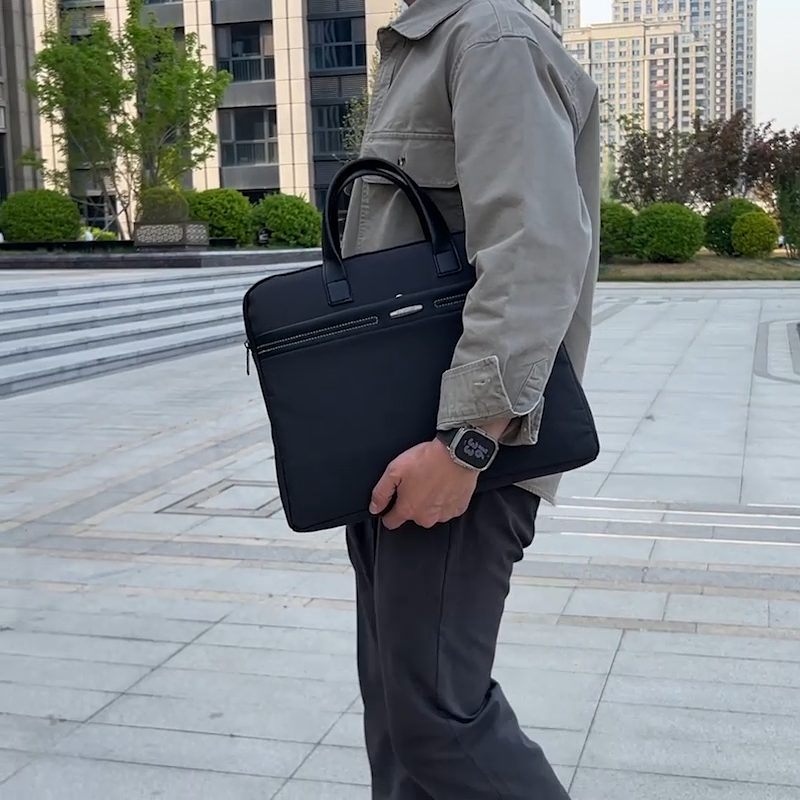
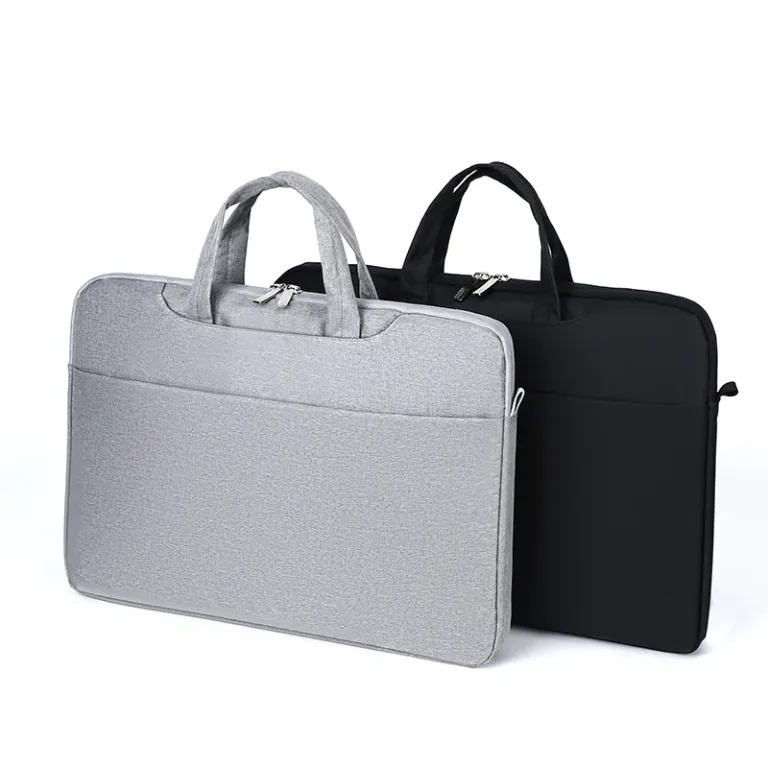
BriefcaseCustom supplies Oxford fabric business, conference and laptop briefcases for bulk orders. Browse the business briefcase collection to compare starting models, then use this checklist to prepare a clearer enquiry.
What “wholesale briefcase” means for a B2B buyer
The phrase can describe several different buying models. A retailer may be seeking finished, unbranded styles for resale. A promotional distributor may need a stock model decorated with an end client’s logo. A corporation may be planning a conference, employee kit or sales-team issue. A private-label brand may require a new silhouette, custom hardware and retail packaging. These projects share a product category, but their specifications, minimum order quantities and approval process are different.
Before contacting suppliers, identify which model applies to your project:
- Ready-model wholesale: select an existing briefcase and agree quantity, colour and packing.
- Logo-customised order: start with an existing style and add screen printing, heat transfer, embroidery, label or other agreed decoration.
- OEM order: provide your design, technical requirements or reference sample for manufacture under your brand.
- ODM order: adapt a supplier’s existing design through selected changes such as fabric colour, pockets, trims and branding.
Using the right term avoids a common mismatch. A buyer who needs a full custom bag should not assume that the price or lead time of a stock-style wholesale briefcase applies. Conversely, an event buyer with a fixed date may obtain a more reliable result by adapting a proven model instead of changing every component.
Start with a purchase brief, not a price request
“Please quote 1,000 briefcases” does not give a manufacturer enough information to recommend the correct product or price it accurately. It may produce a fast answer, but it does not create a useful comparison. Build a one-page purchase brief first. Include the programme objective, recipient, quantity, destination and required in-hands date. Explain what the bag must carry: laptop size, document format, chargers, catalogues, samples or event materials. If the bag will be part of a gift set, state what else must fit inside.
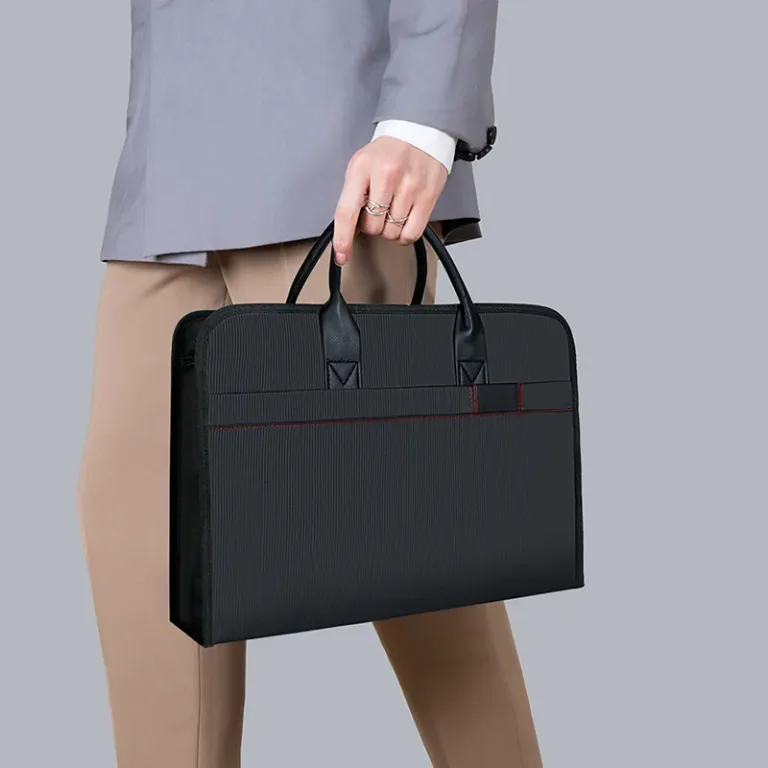
Then define the visible and functional requirements. For example: a slim black Oxford briefcase for A4 documents, a padded 15-inch laptop sleeve, front organiser pocket, detachable shoulder strap, one-colour front logo, individual polybag packing and delivery to a nominated port. This is far more useful than a product photo alone.
Information to include in every wholesale briefcase enquiry
- Target quantity, colour split and whether a repeat order is expected
- Recipient and use case: event attendee, employee, customer gift, reseller or executive team
- Contents and dimensions, including the actual laptop size if protection is required
- Preferred style, reference photo or link to an existing model
- Material and feature priorities: light weight, structure, padding, pockets, strap or water resistance
- Logo artwork, logo locations, brand colours and preferred decoration method if known
- Packaging, labelling, barcode, insert-card or kitting requirements
- Destination, target incoterm if applicable and the real delivery deadline
A complete brief also protects the buyer. It gives you a written baseline to use when reviewing a sample and checking the finished goods. If a requirement is important enough to mention to a salesperson, it is important enough to appear in the approved specification.
Choose the right wholesale briefcase supplier type
There is no single “best” supplier type. The appropriate partner depends on the project. A distributor who needs quick access to several brands may prefer a local supplier with inventory and domestic delivery. A buyer developing a branded range or ordering hundreds of units may benefit from working directly with a manufacturer. An experienced sourcing agent can be useful where the buyer needs support across several product categories, but the roles and quality responsibilities should be clear.
Manufacturer, trading company or local distributor?
A manufacturer is generally best positioned to discuss material, construction, customisation and production sequencing. This matters when you need OEM changes, consistent repeat orders or factory-level sample approval. A trading company may offer broader sourcing across multiple factories, which can help with mixed product assortments. A local distributor can simplify domestic fulfilment and smaller orders, though its product and customisation range may be narrower.
Do not choose based only on the label a seller uses. Ask practical questions: Who will make the sample? Who owns the production specification? Can the supplier explain the fabric, lining, printing and packing choices? Who carries out final inspection? A supplier that answers clearly is easier to manage than one that offers an attractive title but vague production details.
Briefcase styles should match the end use
Briefcases are not interchangeable. A compact conference document bag is designed for a different job from a padded business laptop bag. Start with the recipient’s daily experience rather than an abstract idea of “premium.” The best design is usually the one recipients will be willing to carry after the campaign ends.
Document and conference briefcases
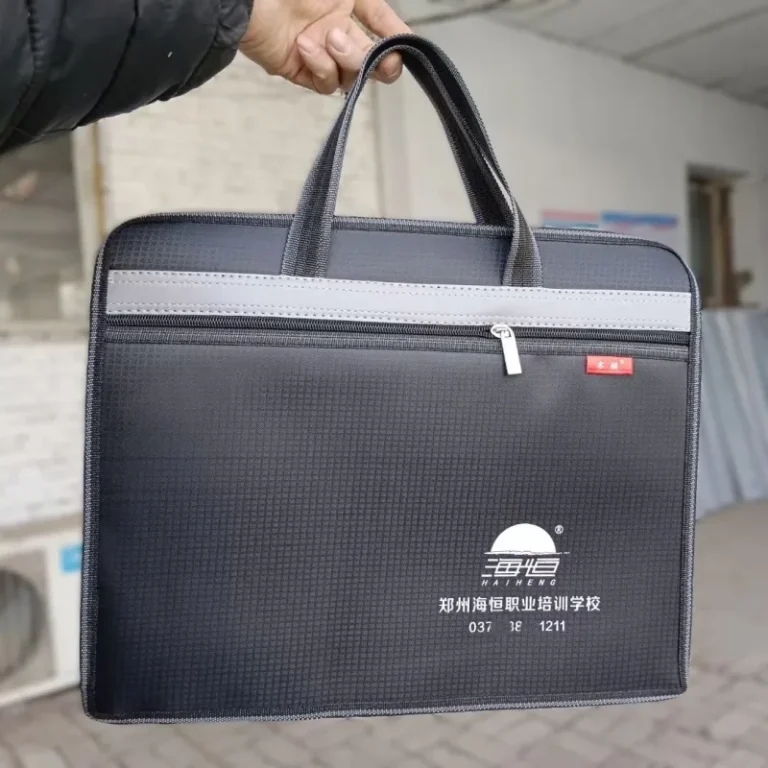
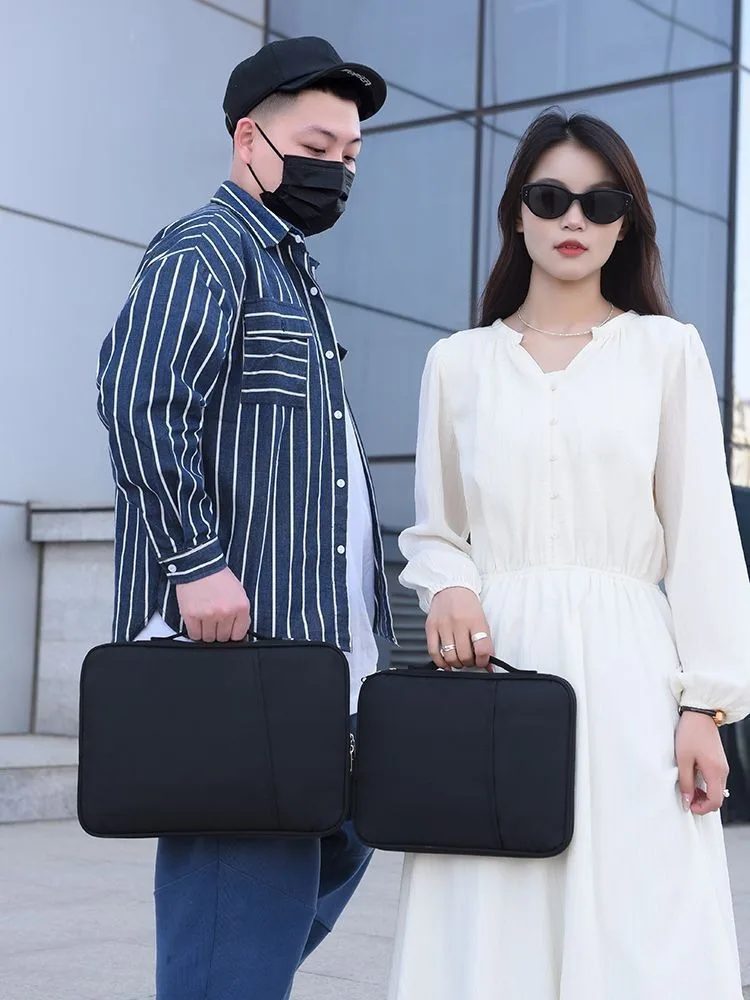
For registration packs, training sessions and seminars, a slim zippered case can be efficient and professional. It should fit the required document format and have comfortable handles. A front pocket can be useful for badges, programmes and small printed materials. When the event lasts several days or includes tablets and chargers, add capacity only after confirming what attendees receive. For more event-planning guidance, see the custom conference bags buying guide.

Laptop briefcases
For employee kits, sales teams and business travel, a padded laptop compartment may be the deciding feature. State the device size and whether the padded sleeve must be suspended or simply lined. Consider charger space, document sections, a trolley sleeve, shoulder strap and handle reinforcement. Avoid claiming universal laptop compatibility; internal dimensions matter more than a marketing label.
Corporate gift and executive briefcases
Corporate gifts usually demand more restrained decoration and a finish that works in client meetings. A structured shape, clean logo placement, coordinated lining or custom label can add perceived value without making the bag impractical. When comparing an Oxford option with leather-like alternatives, consider total programme requirements rather than appearance alone. The Oxford fabric versus leather briefcase guide explains the core trade-offs for corporate programmes.
Material selection: specify performance, not buzzwords
Material affects appearance, printability, weight, abrasion resistance, structure and cost. Oxford fabric is widely used for business and promotional briefcases because it can offer a professional texture while remaining practical for bulk orders. However, “Oxford fabric” alone is not a complete specification. Discuss the fabric option, coating or backing if relevant, lining, foam or padding, webbing, piping, zipper and hardware together.
For each project, separate essential performance from optional upgrades. If the bag will carry heavy catalogues, reinforce handles and base construction may be more valuable than adding a decorative pocket. If laptop protection is the promise, padding and internal fit should be confirmed. If the bag will be distributed outdoors during a short event, light weight and logo visibility may matter more than a highly structured shell.
Be careful with unqualified terms such as “waterproof,” “scratchproof” or “premium.” Agree on the intended use, construction and acceptance standard instead. A realistic specification creates a better buyer experience than a broad claim that is open to interpretation.
Plan logo decoration before finalising the bag
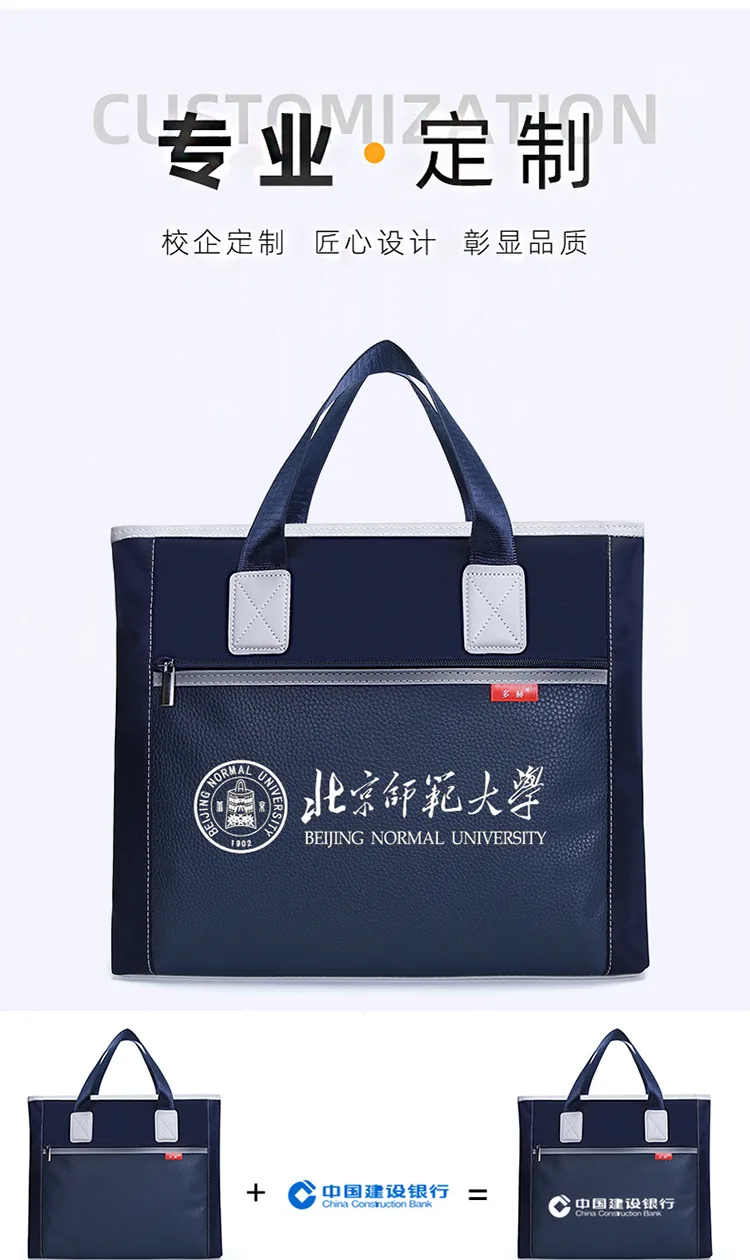
Branding is a production decision, not a last-minute artwork task. The logo method, number of colours, position and bag fabric all affect cost and approvals. A simple one-colour mark may work well with screen printing. Fine detail, gradients or multi-colour artwork may call for another approach. The manufacturer should evaluate the original artwork, not just a screenshot in a presentation.
Supply editable vector artwork when available, together with clear brand-colour references. Confirm the decoration plan in writing:
- Logo method, print size, colour count and placement measurements
- Whether the bag has one or multiple branded sides
- Any woven label, interior label, zipper pull, patch or packaging artwork
- Orientation, safe area and approval reference for the print
- Whether a digital rendering, physical sample or both are required
For most corporate programmes, a clean, correctly placed logo is more useful than covering every surface. A bag that feels appropriate for commuting and meetings is more likely to stay in use.
OEM and ODM: decide how much change is necessary
OEM and ODM are often used loosely, but the distinction is practical. OEM work generally means making a product to a buyer’s design or technical requirements. ODM starts from a supplier-developed design and adapts selected elements. Both can be valuable; the choice depends on your brand position, deadline and order size.
An OEM project may involve custom dimensions, a new pocket layout, specific materials, branded hardware and retail presentation. It normally needs more engineering, sampling and decisions before production. ODM can be faster because the main pattern and construction already exist. You may still change fabric colour, lining, logo, label, packaging or selected features. For a time-sensitive conference order, ODM may be the more sensible route. For a long-term private-label collection, the extra development of OEM can be justified.
MOQ, price and margin: compare like for like
Minimum order quantity is not an arbitrary obstacle; it reflects material purchasing, cutting, decoration setup and production efficiency. A custom order can have a different MOQ from an existing model, and each colour or decoration variation may affect it further. BriefcaseCustom’s custom orders generally start at 500 pieces, making the range suitable for corporate programmes, distributors and wholesale buyers with planned demand.
When reviewing quotes, do not treat unit price as the whole project. Confirm whether the price includes the same fabric, padding, logo process, packaging, sample work and delivery basis. Two quotes may describe “black laptop briefcase with logo” yet represent different products. Ask for an itemised quotation that identifies the model, specifications, quantity, decoration, sample cost if applicable, packing, production estimate and shipping terms.
Good buyers also consider the end client’s tolerance for substitutions. If a presentation requires a padded laptop briefcase, a cheaper unpadded document case is not a comparable alternative. The lowest initial price can be expensive if it leads to a missed deadline, weak logo result or unsatisfactory recipient experience.
Sample approval is your most important quality-control step
A sample turns a written expectation into something that can be checked. It should be reviewed against the purchase brief, not only against a visual impression. Check dimensions, capacity, fabric, lining, stitching, handle attachment, strap hardware, zipper action, pocket layout, logo position, logo colour and packaging. If the bag carries a laptop, test it with a device or a dimensional stand-in.
Record changes in one consolidated approval file. Multiple untracked email comments create conflicting instructions. Once the sample is approved, keep photos and the final specification with the purchase order. This becomes the reference for production inspection and a valuable baseline for reorders.
A practical pre-production checklist
- Correct external and internal measurements
- Approved fabric, lining, trim, webbing and hardware colours
- Correct pocket count, laptop fit and closure type
- Secure handles, strap anchors, seams and zipper operation
- Approved logo size, placement, colour and orientation
- Correct individual packing, carton markings and inserts
Build a realistic lead-time and shipping plan
A wholesale briefcase order moves through specification, quotation, artwork approval, sampling, approval, material preparation, mass production, inspection, packing and shipping. A fixed event date should be shared from the beginning. Work backward from the date goods must be available at the final destination, allowing time for freight, customs clearance, delivery, receiving and client-side kitting.
Set an internal no-change date. Any change to material, colour, dimensions, print method or packaging after sample approval can alter the sequence. This is especially important for trade shows, annual meetings and seasonal gifts. Clear early communication gives both the buyer and manufacturer more control than a last-minute request for an impossible promise.
How to evaluate a wholesale briefcase manufacturer
Use evidence from the actual project. A reliable supplier should be able to discuss the selected model, explain viable customisation options, recommend an appropriate logo method and identify what information is missing from the brief. You should understand how the sample will be approved, what will be checked before packing and how shipment information will be communicated.
Ask these questions before committing:
- Which existing model best suits the contents, recipient and budget?
- What material and construction details are included in this quote?
- What changes are feasible at this quantity?
- Which decoration method is recommended for the supplied artwork?
- Can a rendering and pre-production sample be provided?
- What inspection points will be checked before shipment?
- What production and shipping information is needed to plan the deadline?
For buyers new to custom business bags, the custom bag production guide provides a useful overview of the project sequence. The important point is to select a partner that can manage the agreed scope, not simply one that makes the broadest marketing claims.
Use a supplier comparison matrix before selecting a partner
When several suppliers reply, turn their quotations into a comparison matrix. This prevents the decision from being driven by the first number in an email. Put each proposal on one row and compare the same fields across every row: product model, fabric, dimensions, lining, padding, logo process, sample plan, MOQ, packing, production estimate, shipping basis and payment terms. Add a column for unanswered questions. A lower-priced offer with several missing fields is not yet a lower-priced equivalent.
Weight the factors according to your programme. A private-label brand may place the highest weight on product consistency, development support and repeatability. An event agency may weight reliable timing, fast artwork confirmation and packing accuracy. A reseller may need a range of models and stable reordering. There is no universal scorecard, but using one makes the trade-offs visible to everyone approving the purchase.
It is also useful to separate a supplier’s product capability from its communication capability. A factory may make a suitable bag but still struggle if instructions are scattered across several people, files and revisions. Choose a point of contact, keep version-controlled artwork and put final decisions in a single approval document. This reduces the chance that a production team works from an outdated logo or an early mock-up.
Control quality at three stages
Quality control is strongest when it is built into the order rather than requested after a concern appears. The first stage is material and component confirmation: fabric colour, lining, webbing, zipper, hardware, print artwork and packaging should match the approved specification. The second is in-process review, where the buyer or appointed inspector checks construction, measurements and decoration against the reference while changes are still possible. The third is the completed-goods inspection before shipment.
For a bulk briefcase order, the inspection checklist should focus on real recipient experience. Check that handles are securely attached, seams are neat, zippers run smoothly, straps and buckles function, compartments have the agreed dimensions and the logo is positioned consistently. Open cartons from more than one part of the order so that the inspection is not limited to a single convenient sample. If the project has a critical defect threshold or an independent inspection requirement, agree it before production begins.
Do not confuse quality control with chasing a cosmetic ideal that was never specified. Natural variation and tolerances exist in sewn products. The answer is to define what is important: logo location, dimensions, material colour, functional hardware, stitch security and packing accuracy. A specific acceptance standard gives the manufacturer a fair target and gives the buyer a meaningful basis for inspection.
Packaging, carton data and shipping details matter
Packaging is part of the product experience and the logistics plan. A simple individual polybag may be suitable for a conference distribution project. A retail customer may need hangtags, protective stuffing, branded cartons, barcode labels, warning labels or a master-carton mark. Explain each requirement while the quotation is being prepared, because packing can affect labour, carton size, freight cost and lead time.
Ask for estimated carton dimensions, gross weight and units per carton once the design is stable. These details help a buyer plan freight, warehousing and event handling. They are especially useful when the final destination has delivery restrictions, a trade-show advance warehouse or a third-party fulfilment provider. If cartons must be sorted by colour, client, region or kit type, define the packing breakdown in the purchase order rather than relying on a late request.
For international orders, ensure everyone understands the shipping basis and responsibility split. The appropriate term depends on the buyer’s freight arrangement, destination and commercial agreement. What matters for the briefcase project is that the quote states what is included, who books freight, which documents are expected and where risk or cost transfers. A clear logistics plan supports an otherwise well-managed production order.
Plan reorders and protect the product specification
A successful first order often becomes a repeat programme. Preserve the approved sample, final artwork, packing instructions, colour references, purchase order and any quality findings in an accessible project file. Record the model code, size, material and logo method rather than relying only on a descriptive title such as “black business bag.” This makes the next enquiry faster and reduces the risk of an unintended substitution.
Before reordering, confirm whether any part of the original specification has changed: logo artwork, laptop size, contents, destination, carton marking or delivery window. If a client wants a new colour or different pocket arrangement, treat it as a controlled change and confirm whether it affects MOQ, sampling or timing. A repeat order should be simpler than the first order, but it should still be verified against the current need.
Understand the cost drivers in a custom briefcase order
Briefcase pricing changes for understandable reasons. Material weight and construction influence the amount of fabric and labour required. A padded laptop compartment, reinforced handles, multiple pockets, a detachable strap and complex internal organisation add components and sewing steps. Decoration can also affect the quote through setup, artwork complexity, colour count and number of branded locations. Custom labels, hardware and packaging add further work.
Use this knowledge to prioritise. If the buyer’s budget is firm, protect the features that make the bag fit for its purpose first: capacity, closure, carry comfort, useful organisation and a legible logo. Simplify features that do not improve the recipient experience. For example, a clean one-colour mark on a proven Oxford briefcase may be a better event product than an over-designed bag with more decorative details but less practical capacity.
Quantity affects efficiency, but it should not be treated as the only lever. Ordering more units to achieve a lower nominal price can create unnecessary storage, obsolescence and cash-flow risk. Work from the realistic programme demand, then ask the supplier which design choices are most effective at that volume. An experienced manufacturer can often recommend an existing construction or print method that achieves the intended result without unnecessary development cost.
Match the briefcase to the buyer scenario
Promotional distributors need a product that makes the end client look prepared and professional. They should focus on logo approval, delivery sequencing and a brief that is easy to translate into a quote. A sample is particularly valuable when the distributor is selling an unfamiliar bag style to a client.
Corporate procurement teams should begin with the recipient and contents list. A new-hire bag has a different job from a trade-show giveaway, and an executive client gift has different branding expectations from a training-programme item. Involve the users of the bag early where possible; their feedback can reveal whether a pocket layout or laptop fit is genuinely useful.
Wholesalers and private-label brands should document the product in a way that supports repeat orders. Decide which details are part of the brand signature—shape, label, material, colour, zipper pull or packaging—and which can remain flexible. This makes it easier to preserve consistency while responding to changes in demand.
Event organisers should work backward from the in-hands date and venue delivery rules. They may need the bags before the event for kitting, sponsor inserts or registration assembly. The brief should include the dimensions of those contents and the outer-carton requirements for the venue or logistics provider.
Factory insight: make the specification easy to produce correctly
Most preventable quality issues begin as ambiguous instructions. “Good quality,” “large logo” and “business size” mean different things to different people. Replace them with dimensions, material choices, locations, files and approval references. The more clear the buyer’s brief, the easier it is for a production team to maintain consistency across a bulk order.
That discipline also helps the manufacturer identify trade-offs early. For example, a buyer may prefer a lower-profile bag, but the contents require greater depth. A larger logo may look effective in a mock-up, but need repositioning to avoid a pocket seam. Resolving those questions at the sample stage is much less costly than discovering them after production begins.
Frequently asked questions about wholesale briefcases
What is the best briefcase for a corporate conference?
Choose based on what attendees will carry. A slim Oxford document briefcase is often suitable for papers and programmes. For multi-day events, technology audiences or training packs, a laptop-capable design with organisation pockets and a shoulder strap may be more useful.
Can wholesale briefcases be customised with a company logo?
Yes. Depending on the style, artwork, fabric and quantity, logo options can include screen printing, heat transfer, embroidery, labels or patches. Share editable artwork and confirm the proposed method through a rendering or sample before mass production.
What is the difference between OEM and ODM briefcases?
OEM work is made to the buyer’s design or requirements. ODM starts from a supplier’s existing design and adapts agreed details. ODM is often efficient for time-sensitive bulk programmes; OEM may be appropriate where a brand needs a distinct construction or private-label product.
What should I check before approving a briefcase sample?
Check size, capacity, material, lining, stitching, handles, zippers, compartments, laptop fit, logo quality, logo position and packaging. Use the approved sample and written specification as the production reference.
How early should I place a wholesale briefcase order?
Start as early as possible once an event date or retail delivery window is known. Allow time for model selection, quotation, artwork, sample approval, production, inspection and international shipping. Give the supplier the genuine in-hands date at the first enquiry.
Request a wholesale briefcase quotation
Looking for a China manufacturer for wholesale briefcases, custom logo business bags or OEM laptop briefcases? Contact BriefcaseCustom with your quantity, target country, required delivery date, logo artwork and preferred bag features. The team can recommend an Oxford fabric business, conference or laptop briefcase model and discuss practical OEM or ODM options for your programme.