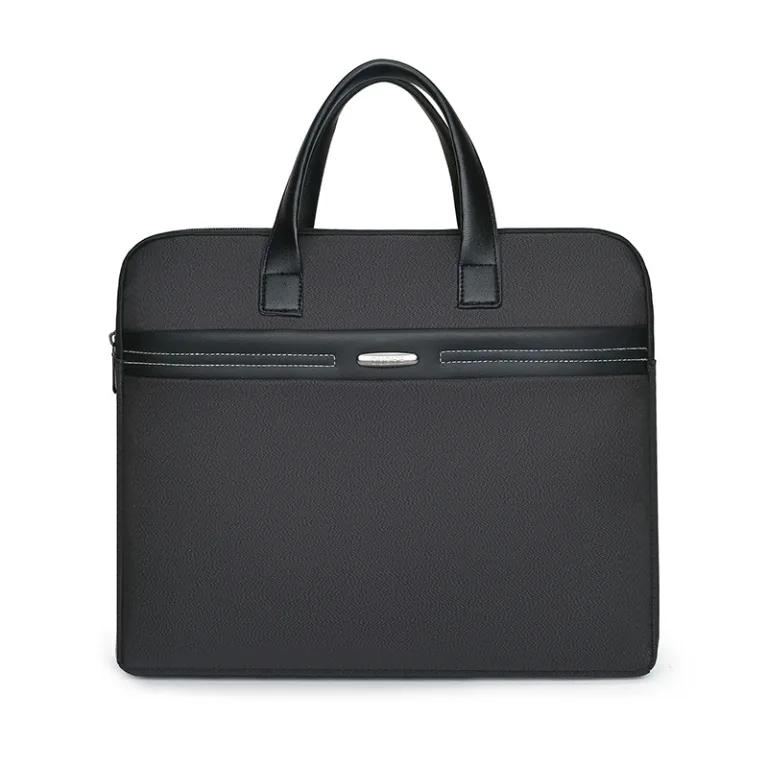
How to Wear a Messenger Bag for Work: Professional Styles, Sizes & Everyday Uses
A messenger bag can be practical, comfortable and professional, but only when it is worn correctly. The wrong strap length, poor weight distribution or unsuitable bag shape can make an otherwise useful work bag look casual or uncomfortable.
Many professionals choose messenger bags because they need to carry a laptop, documents, chargers and personal items while keeping both hands free. Compared with a traditional briefcase, a messenger bag is easier to carry during commuting and walking. Compared with a backpack, it can create a more business-focused appearance.
The challenge is choosing the right style and wearing it in a way that matches the work environment.
This guide explains how to wear a messenger bag for work, how to adjust the strap, where the bag should sit, which shoulder to use, how to match it with professional clothing, and when a messenger bag is a better choice than a briefcase or laptop bag.

What Is a Messenger Bag?
A messenger bag is a soft-sided bag carried with a long shoulder strap. The strap usually allows the bag to rest on one shoulder or across the body. Most messenger bags have a flap, zipper or combination closure and are designed for quick access to documents, devices and daily essentials.
Modern messenger bags are available in several styles:
- slim document messenger bags
- laptop messenger bags
- crossbody work bags
- business messenger bags
- conference messenger bags
- casual canvas messenger bags
- structured Oxford fabric messenger bags
Traditional messenger bags were designed for couriers and bicycle delivery workers. Modern versions have been adapted for office commuting, business travel and professional daily use.
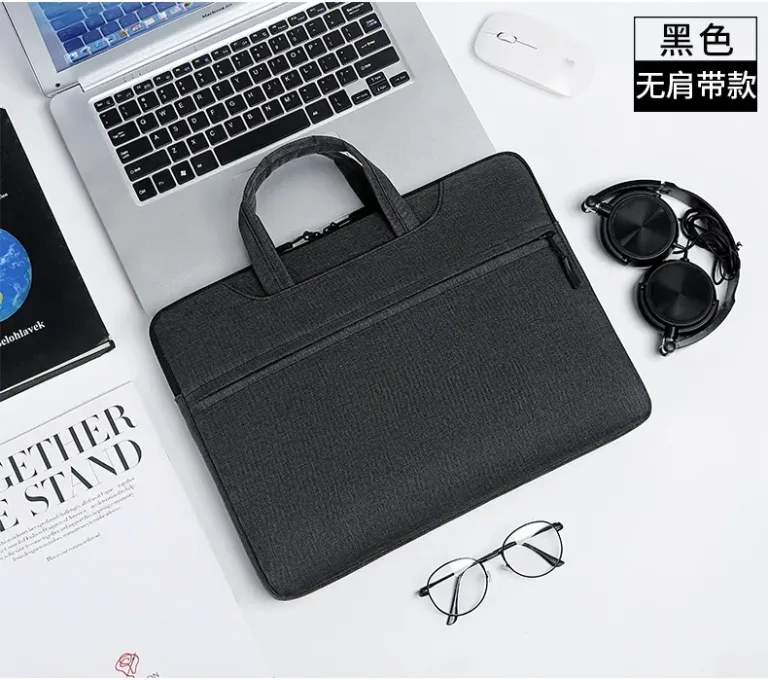
A business messenger bag often includes:
- a padded laptop compartment
- A4 document storage
- internal accessory pockets
- an adjustable shoulder strap
- a rear luggage sleeve
- water-resistant fabric
- a structured base or reinforced panels
Because the bag hangs from one shoulder, it provides fast access while keeping the hands free. This makes it useful for commuting, trade shows, meetings and city travel.
How Should a Messenger Bag Fit?
The most important part of wearing a messenger bag is its position on the body.
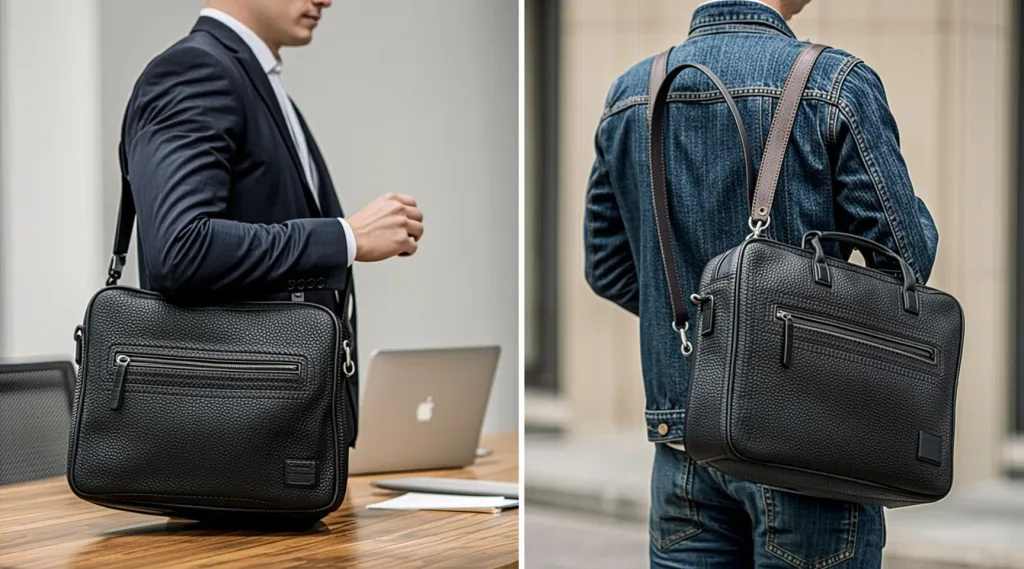
A messenger bag should generally sit around the side of the hip or slightly above it. It should not hang near the knee, and it should not be pulled so tightly that it presses against the chest.
The correct position depends on the size and purpose of the bag.
For office commuting
A medium-size laptop messenger bag should sit around the upper hip. This position keeps the bag stable without restricting walking.
For cycling or walking
The bag can be worn diagonally across the body with the strap tightened slightly. This reduces movement while travelling.
For meetings
A slim messenger bag can be worn over one shoulder or carried by the top handle if one is available. This creates a cleaner appearance when entering a conference room.
For heavier loads
A wider, padded strap is preferable. A narrow strap can place too much pressure on one shoulder, especially when the bag contains a laptop and documents.
The bag should stay close enough to the body to remain stable but loose enough to allow natural movement.
How to Adjust a Messenger Bag Strap
Correct strap length changes both comfort and appearance.
Step 1: Place the strap over one shoulder
Start by putting the strap over the shoulder opposite the side where you want the bag to rest.
For example:
- strap on the right shoulder, bag on the left side
- strap on the left shoulder, bag on the right side
This creates a crossbody position and helps distribute movement across the torso.
Step 2: Adjust the bag to the hip
Move the adjuster until the bottom of the bag reaches the upper or middle hip area. The exact position depends on the bag’s size and your height.
A slim document bag may sit slightly higher. A larger laptop messenger bag should not hang too low because it may swing while walking.
Step 3: Check the top edge
The top edge of the bag should not rise above the chest unless you are cycling or moving quickly. In a professional office setting, a lower and more relaxed position usually looks more natural.
Step 4: Test movement
Walk, sit down and bend slightly. The bag should remain stable without pulling the strap sharply against your neck.
If the bag swings excessively, shorten the strap slightly or move it across the body.
Step 5: Check the weight
The bag should not be overloaded. A messenger bag is designed for practical daily items, but carrying too much weight on one shoulder can become uncomfortable.
One Shoulder or Crossbody: Which Is Better?
Both methods are useful, but they create different appearances and provide different levels of stability.
Wearing a messenger bag on one shoulder
This is the more traditional and formal-looking method.
It works well when:
- entering an office
- attending a meeting
- carrying a lightweight document bag
- moving short distances
- presenting a more polished appearance
A one-shoulder position allows quick removal and gives the bag a cleaner silhouette. It is often suitable for a slim professional messenger bag with limited contents.
However, the bag may slide off the shoulder or swing more easily.
Wearing a messenger bag crossbody
Crossbody carrying is more secure and practical.
It works well when:
- commuting by public transportation
- walking long distances
- travelling through an airport
- carrying a laptop
- moving between meetings
- using both hands
The diagonal strap keeps the bag closer to the body. It also reduces the chance of the bag slipping off the shoulder.
For everyday work, crossbody carrying is usually the most comfortable option. For formal meetings, the bag can be moved to one shoulder or carried by hand before entering the room.
Which Shoulder Should You Use?
There is no universal rule for which shoulder should carry a messenger bag. The best choice depends on comfort, handedness and daily movement.
Many people prefer to place the strap on their non-dominant shoulder. This leaves the dominant hand free for:
- opening doors
- using a phone
- carrying documents
- operating a laptop
- handling travel tickets
Right-handed users may prefer the left shoulder, while left-handed users may prefer the right. However, comfort is more important than convention.
It is also useful to switch shoulders during a long commute. Regularly carrying the bag on only one side can create uneven pressure, especially when the bag is loaded with a laptop or heavy accessories.
A well-designed business messenger bag should have an adjustable strap that allows both left-shoulder and right-shoulder use.
How to Wear a Messenger Bag With Professional Clothing
A messenger bag can work with business-casual and professional clothing when its material, color and structure are appropriate.
With a suit
A slim, structured messenger bag in black, navy or dark gray can work with a suit in less formal business settings. It should have a clean surface, minimal decoration and a controlled shape.
Avoid:
- oversized casual flaps
- bright contrast colors
- excessive external pockets
- worn canvas
- decorative patches
For highly formal environments, a traditional briefcase may create a more conventional appearance.
With business-casual clothing
Messenger bags are particularly suitable for:
- chinos and a button-down shirt
- knitwear and tailored trousers
- a blazer with dark jeans
- polo shirts and office trousers
- smart-casual travel clothing
Oxford fabric, nylon and other technical materials can create a modern business look while remaining lightweight and durable.
With casual workwear
A softer messenger bag can be worn with casual clothing, especially in creative offices, universities, studios and technology companies. The bag should still be clean and appropriately sized for the workplace.
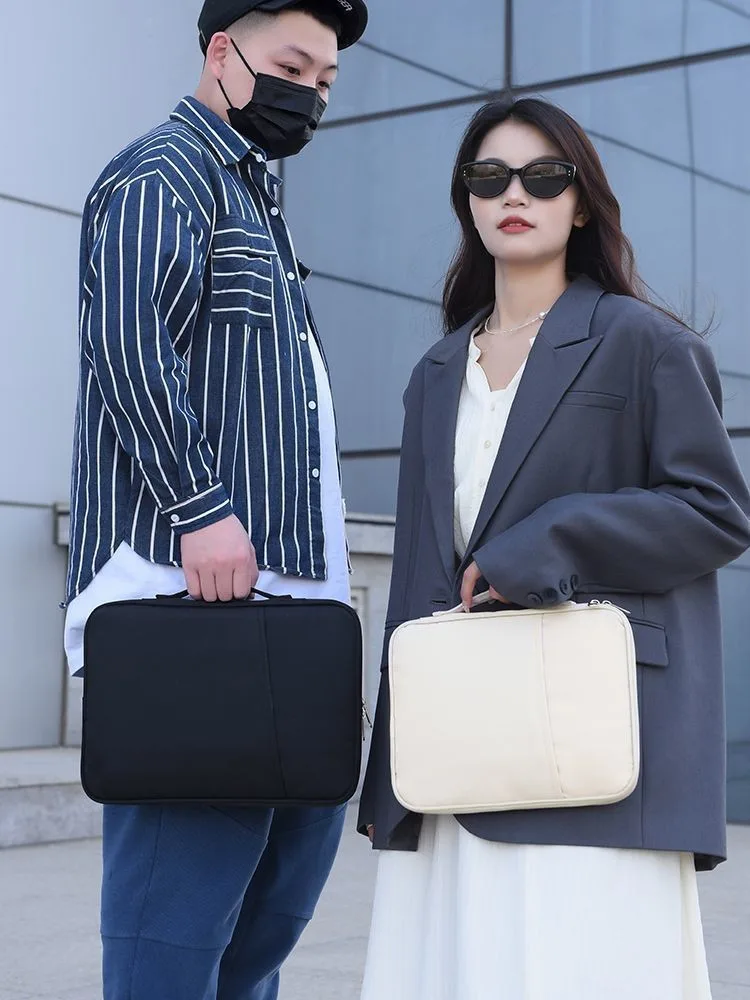
For women’s professional clothing
A messenger bag can be worn with trousers, skirts, dresses or tailored jackets. A slim design with a medium-width strap is often easier to balance with professional clothing than a large, bulky bag.
Neutral colors such as black, gray, navy and muted beige are easier to coordinate across different outfits.
How to Choose the Right Messenger Bag Size
Size affects comfort, appearance and usefulness.
Small messenger bags
Best for:
- phones
- wallets
- notebooks
- light documents
- small tablets
They are easy to carry but may not fit a laptop or large folders.
Medium messenger bags
Best for:
- daily office commuting
- a laptop
- A4 documents
- chargers
- notebooks
- small personal items
This is usually the most versatile size for professionals.
Large messenger bags
Best for:
- multiple documents
- larger laptops
- samples
- accessories
- business travel
Large bags should have reinforced stitching, a wide strap and a stable base. Otherwise, they may become uncomfortable or appear oversized.
Before selecting a size, measure the actual equipment that users carry. A bag should not be chosen only by its external dimensions. Internal padding, zipper construction and compartment shape reduce the usable space.
For corporate programs, a sample should be tested with the intended laptop, documents and accessories before mass production. This is especially important when the bag will be used for employee welcome kits or conference materials.
Messenger Bag vs Briefcase
Messenger bags and briefcases overlap in purpose, but their carrying styles are different.
| Feature | Messenger Bag | Briefcase |
|---|---|---|
| Carrying method | Shoulder or crossbody strap | Top handles, sometimes shoulder strap |
| Appearance | Modern and flexible | Structured and formal |
| Hands-free use | Excellent | Limited unless a strap is included |
| Laptop access | Usually convenient | Depends on the design |
| Daily commuting | Very practical | Practical but less flexible |
| Formal meetings | Suitable in business-casual settings | Usually more traditional |
| Weight distribution | One shoulder or across body | Hand or shoulder |
| Storage style | Flexible compartments | Organized, structured compartments |
A messenger bag may be the better choice for a professional who walks, commutes or moves between locations. A briefcase may be more appropriate for formal meetings, executive settings and traditional industries.
Some modern products combine both formats. A laptop briefcase can include:
- a structured body
- top handles
- a detachable shoulder strap
- a padded laptop compartment
- document organization
These hybrid designs provide more flexibility than a traditional briefcase while maintaining a formal appearance. Businesses comparing both formats can review custom business briefcase options when they need a branded product for corporate teams or client programs.
Messenger Bag vs Laptop Bag
A laptop bag is defined mainly by device protection, while a messenger bag is defined mainly by its carrying format.
A laptop bag may be:
- a briefcase-style case
- a backpack
- a tote
- a messenger bag
- a sleeve
This means a laptop messenger bag is both a messenger bag and a laptop bag.
When comparing the two terms, consider the main priority:
- Choose a messenger format for hands-free mobility.
- Choose a laptop-focused design for stronger device organization.
- Choose a hybrid laptop messenger bag when both needs matter.
A professional laptop messenger bag should include enough padding around the device compartment and should prevent the laptop from moving excessively inside the bag.
For companies purchasing branded laptop bags, the internal dimensions, device protection and compartment layout should be confirmed before logo production. A custom laptop bag manufacturer can adapt the bag around a target laptop size, accessory list and brand specification.
Can a Messenger Bag Look Professional?
Yes. The professional appearance of a messenger bag depends on its design rather than the strap format alone.
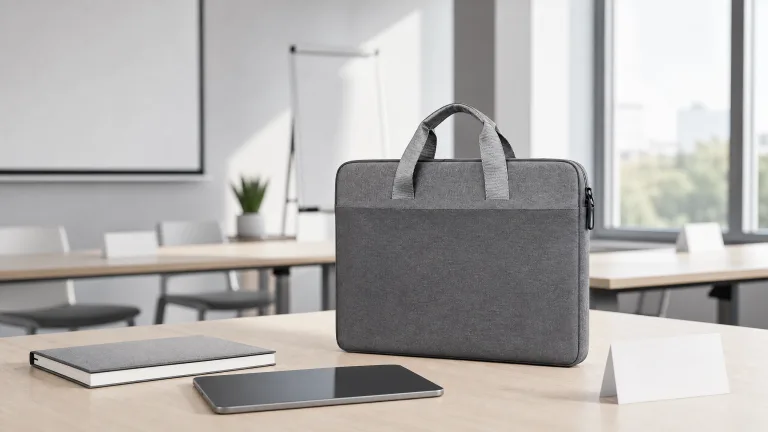
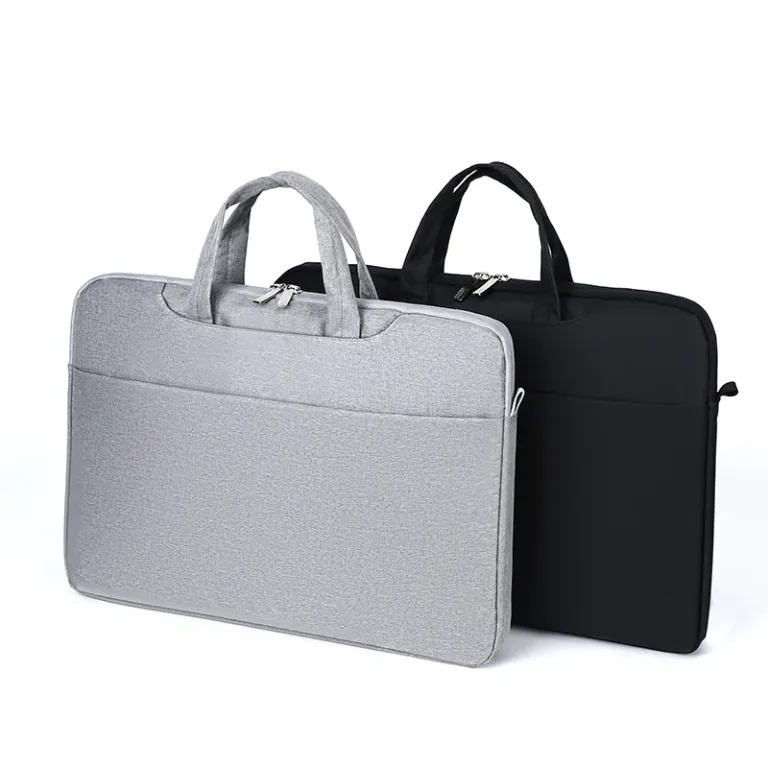
A messenger bag looks more professional when it has:
- a clean rectangular silhouette
- high-quality fabric
- restrained colors
- neat stitching
- minimal branding
- practical compartments
- a stable base
- durable zippers
- an adjustable padded strap
Oxford fabric is often used for modern business bags because it offers a balance between durability, weight and cost. A high-density fabric with a clean finish can look appropriate in office, conference and corporate settings.
The logo should also be proportionate. A large or poorly positioned logo can make a business messenger bag look promotional rather than professional. For branded corporate orders, logo size, placement and printing method should be approved on a physical sample whenever possible.
How to Wear a Messenger Bag at a Business Meeting
A messenger bag can be appropriate for meetings when it is presented carefully.
Before entering the meeting:
- Remove unnecessary items.
- Close all zippers and flaps.
- Shorten or organize the strap.
- Carry the bag by the top handle if available.
- Place it beside your chair or under the table without blocking movement.
Avoid placing a large messenger bag on the conference table unless the meeting setup requires it.
For a formal meeting, a slim structured messenger bag is usually more appropriate than a soft casual model. If the event involves formal suits, presentations or executive meetings, a traditional briefcase may be a safer choice.
For conferences and trade shows, messenger bags provide practical advantages because attendees can carry brochures, laptops, notebooks and personal items while keeping both hands available. Companies organizing such events may also consider custom conference bags with a controlled size and branded exterior.
Common Messenger Bag Wearing Mistakes
Wearing the bag too low
A bag that hangs near the thigh can swing while walking and place unnecessary pressure on the shoulder.
Overloading one compartment
Uneven weight makes the bag tilt and may reduce comfort.
Using a narrow strap for a heavy laptop
A wider padded strap is more suitable for daily computer carrying.
Allowing the bag to swing behind the body
This can make the bag difficult to control in crowded areas. Crossbody positioning keeps it more stable.
Choosing a size that is too large
A large bag may provide more storage but can look bulky and become uncomfortable.
Wearing a casual bag in a formal environment
Canvas, bright colors and oversized external pockets may not match a traditional business setting.
Ignoring the hardware and stitching
Weak strap attachments can fail under repeated use. Check the stitching at the strap connection, handle reinforcement and zipper ends.
How Companies Can Select Messenger Bags for Employees
When a business is choosing messenger bags for a team, individual style preference is only one factor. The purchase should also consider:
- laptop sizes
- average daily load
- employee commuting patterns
- climate and water resistance
- logo placement
- color consistency
- packaging
- replacement requirements
- target budget
- expected order quantity
For a corporate order, it is useful to test the bag with representative contents. A sample review should confirm:
- laptop fit
- document capacity
- strap comfort
- pocket accessibility
- logo visibility
- zipper operation
- overall appearance when worn
If the order is intended for a distributor, promotional campaign or employee program, wholesale business bags should balance unit cost with usable design. Reducing the fabric quality or reinforcement may create higher replacement costs later.
The same evaluation applies when comparing a messenger bag with a briefcase, laptop bag or conference bag. The best product is the one that matches the actual use case rather than the one with the lowest initial price.
Are Messenger Bags Good for Corporate Branding?
Messenger bags are useful for branding because the front flap or main panel provides visible logo space. They can be used for:
- employee onboarding
- sales team equipment
- conferences
- training programs
- promotional events
- client gifts
- distributor collections
Common branding options include:
- screen printing
- heat-transfer printing
- embroidery
- woven labels
- rubber patches
- metal badges
The right method depends on fabric texture, logo detail, required durability and order volume. A simple one-color logo may work well with screen printing, while a detailed multicolor logo may require heat transfer or another method.
Businesses ordering custom bags logo should request a visual proof showing:
- logo size
- logo position
- print color
- distance from seams and zippers
- appearance when the bag is worn
The logo should remain visible without overpowering the design.
Frequently Asked Questions
How should a messenger bag sit on the body?
A messenger bag should usually sit around the upper or middle hip. It should remain close enough to the body to stay stable but not so tight that it restricts movement.
Is it better to wear a messenger bag crossbody?
Crossbody carrying is generally better for commuting, walking and carrying a laptop because it provides more stability and keeps both hands free.
Which shoulder should a messenger bag go on?
Use the shoulder that feels most comfortable. Many people place the strap on their non-dominant shoulder so their primary hand remains free.
Can I wear a messenger bag with a suit?
Yes, if the bag is slim, structured and neutral in color. For highly formal business settings, a traditional briefcase may be a more conventional option.
Is a messenger bag better than a briefcase?
A messenger bag is usually better for mobility and hands-free commuting. A briefcase is usually better for formal appearance and structured document storage.
What size messenger bag is best for work?
A medium-size bag is suitable for most professionals because it can hold a laptop, documents, charger and everyday accessories without becoming excessively bulky.
Can a messenger bag hold a laptop?
Yes. Choose a model with a dedicated padded compartment that matches the laptop’s actual dimensions.
Are messenger bags suitable for corporate gifts?
Yes. Messenger bags are practical corporate gifts because they can carry laptops and documents while providing a large area for logo customization.
How can companies customize messenger bags?
Companies can customize the fabric, color, compartment layout, strap, logo method, labels, packaging and other design details depending on the supplier’s capabilities and order requirements.
Conclusion
Knowing how to wear a messenger bag makes the product more comfortable and more appropriate for professional use. The correct strap length, stable position and suitable clothing combination can make a messenger bag look polished rather than casual.
For daily commuting, a medium-size crossbody messenger bag with a padded laptop compartment is often a practical choice. For formal meetings, a slim structured design or a hybrid laptop briefcase may be more suitable. For conferences and corporate programs, a branded messenger bag can combine useful storage with visible company identity.
The most important factors are fit, weight distribution, material quality, compartment design and the environment in which the bag will be used.