What Is a Briefcase? Complete Guide to Types, Features, Sizes & Uses
If you are wondering what is a briefcase, the short answer is: it is a professional work bag designed primarily to carry documents, laptops, notebooks and other business essentials in an organized format.
The traditional briefcase has a structured rectangular shape, a relatively flat profile and one or two top handles. Modern briefcases have expanded considerably beyond that classic design. They can include padded laptop compartments, shoulder straps, luggage sleeves, multiple organizer pockets and lightweight textile construction.
Today, a briefcase can be made from leather, PU leather, nylon, polyester or Oxford fabric. It may be designed for an executive, an office commuter, a sales representative, a conference attendee or a corporate employee program.
The word briefcase therefore describes a family of professional work-bag designs rather than one exact construction. This guide explains what a briefcase is, the main types, how briefcases differ from other work bags, what to look for when buying one, and what B2B buyers should specify when developing a custom briefcase.
1. What Is a Briefcase? Key Characteristics
There is no single universal specification that every briefcase must follow. Most briefcases are designed around several common characteristics that make them useful as professional work bags.
1.1 A business-oriented purpose
A briefcase is primarily intended for professional items such as documents, contracts, folders, laptops, tablets, notebooks, chargers, pens, business cards and office accessories. This distinguishes a briefcase from many general-purpose bags.
1.2 A structured or semi-structured body
Traditional briefcases tend to maintain their shape. Modern textile versions can be softer, but they normally still have enough structure to protect their contents and keep documents organized.
1.3 Top handles
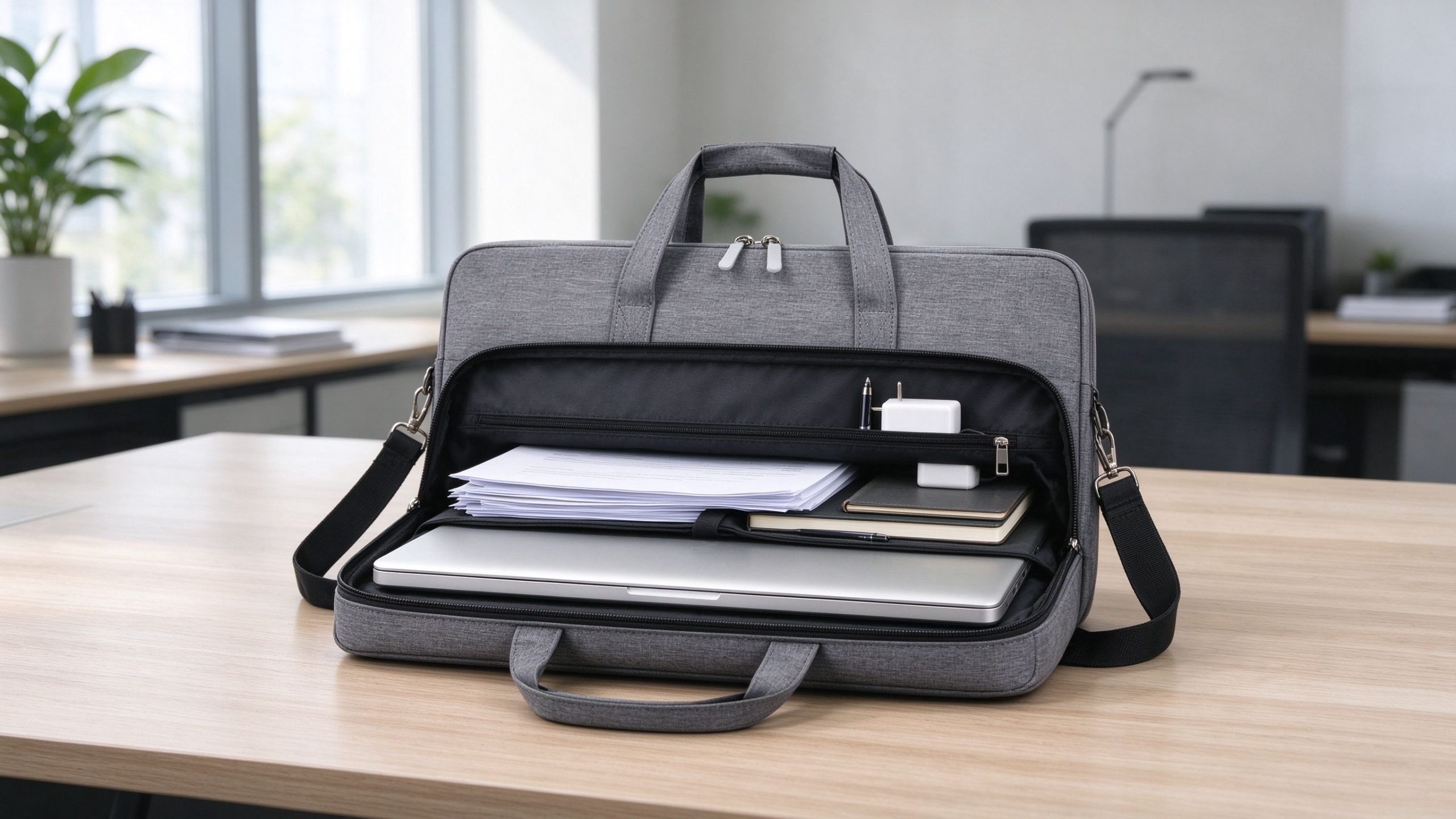
Top handles are one of the most recognizable briefcase features. They allow the bag to be carried by hand and contribute to its formal appearance. Many modern briefcases also include a detachable shoulder strap.
1.4 Document-friendly proportions
A briefcase is normally wider than it is deep. This shape works well for A4 documents, letter-size papers, folders, notebooks and laptops. The exact dimensions vary according to the intended contents.
1.5 Internal organisation
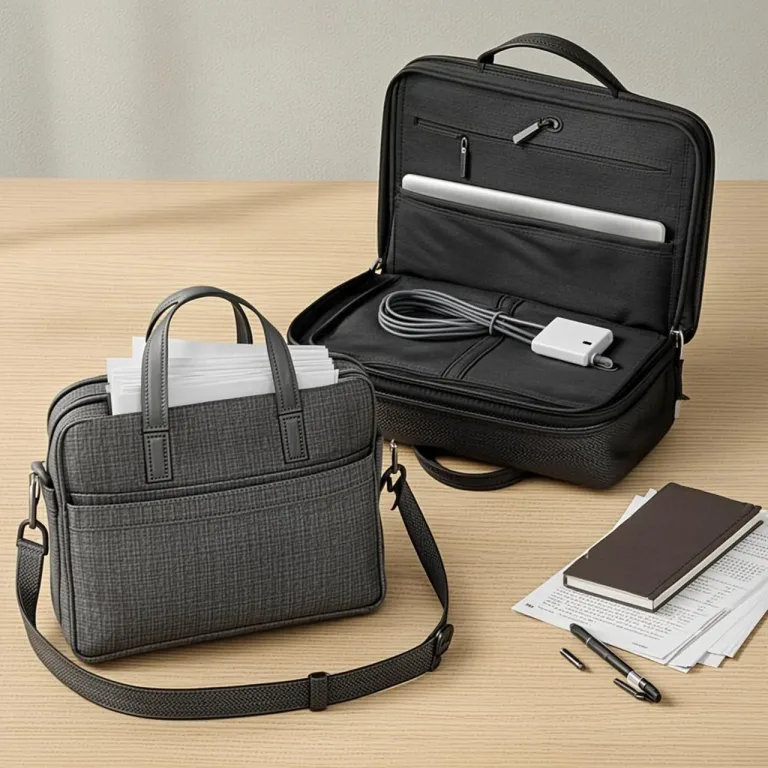
A modern briefcase may include a laptop sleeve, document divider, tablet compartment, zipped pocket, pen loops, phone pocket, charger compartment and a business-card section. The correct layout depends on how the bag will actually be used.
2. Traditional Briefcase vs Modern Briefcase
The traditional briefcase was strongly associated with formal document carrying. A classic design generally emphasizes firm structure, a rectangular shape, top handles, flat document storage and a formal appearance.
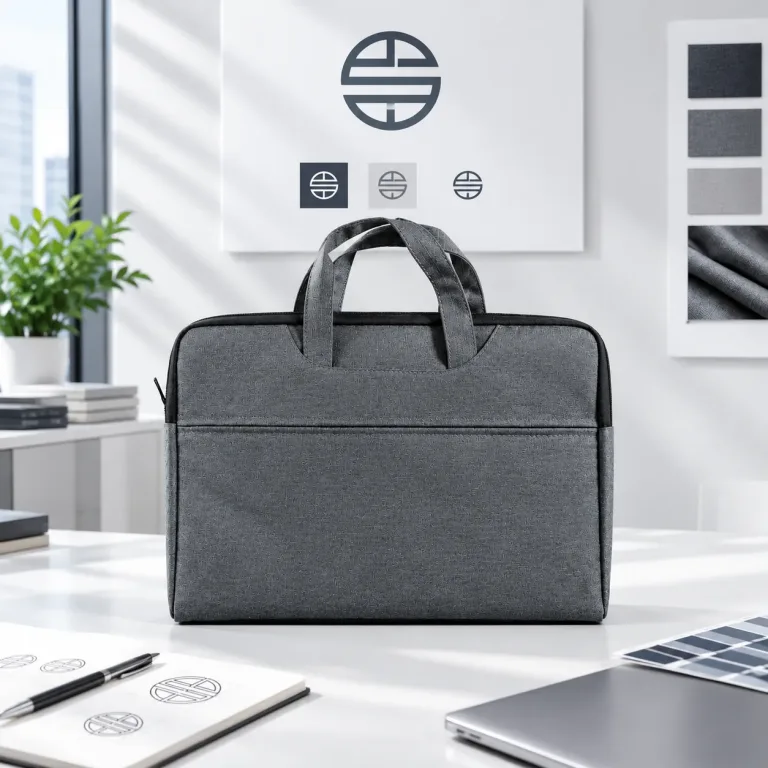
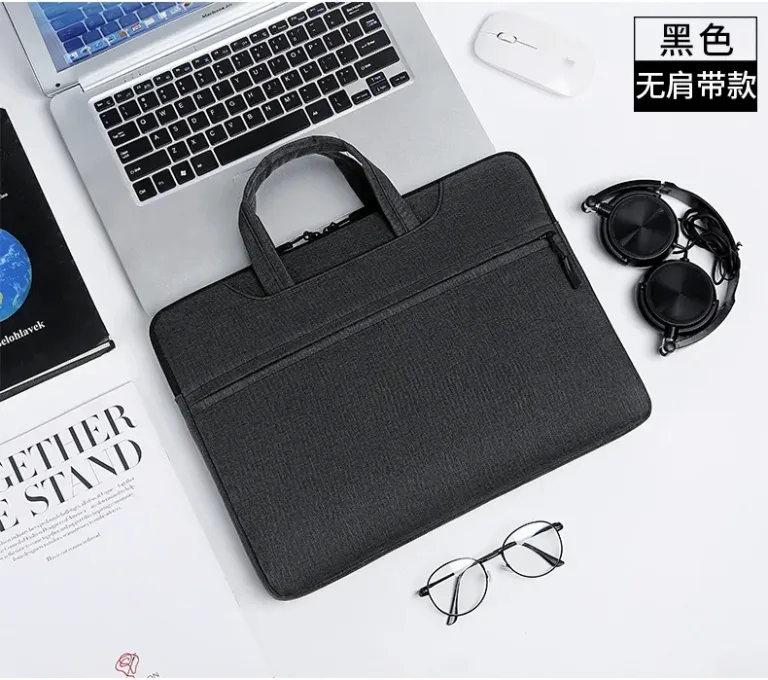
Modern briefcases have become more flexible. They may include laptop protection, lightweight Oxford fabric, adjustable shoulder straps, rear luggage sleeves, multiple accessory pockets, zippered openings and water-resistant textile construction. This evolution allows a briefcase to function as both a formal business bag and a practical everyday laptop bag.
A short historical overview of the briefcase is available on Wikipedia.
| Feature | Traditional briefcase | Modern briefcase |
|---|---|---|
| Structure | Firm, rigid | Structured or semi-structured |
| Shape | Rectangular, flat profile | Rectangular with more layout options |
| Carrying | Top handles only | Top handles plus optional shoulder strap |
| Materials | Leather dominant | Leather, PU leather, Oxford, nylon, polyester |
| Primary use | Documents and files | Documents plus laptop and accessories |
| Typical setting | Formal offices | Offices, commuting, travel and events |
3. Main Types of Briefcases
Not every briefcase is designed for the same user. Understanding the main categories makes it easier to match a model to a working routine or a corporate program.
3.1 Traditional Business Briefcase
A traditional business briefcase focuses on formal presentation and document organisation. It is suitable for executive meetings, legal work, financial services, client presentations, formal offices and professional gifting. Common features include a structured rectangular body, top handles, document compartments, moderate depth and an optional shoulder strap. This is usually the most formal briefcase category.
3.2 Laptop Briefcase
A laptop briefcase combines the visual structure of a business briefcase with dedicated computer protection. It may include a padded laptop compartment, tablet sleeve, charger pocket, document divider, accessory organizer and shoulder strap. It suits office commuting, consultants, sales teams, corporate employees, business travel and training programs.
The laptop compartment should be designed around the actual device dimensions rather than the screen-size label alone. Internal padding, lining, seams and dividers can reduce the usable space compared with the external dimensions.
3.3 Conference Briefcase
A conference briefcase is designed for conferences, seminars, training programs, trade shows, corporate events and employee meetings. It may contain a notebook, documents, a tablet, a laptop, pens, event materials and promotional items. The emphasis is often on controlled cost, useful capacity, branding and easy distribution.
3.4 Executive Briefcase
An executive briefcase normally places more emphasis on professional appearance, material selection, hardware, structure, logo restraint and interior organisation. Leather, PU leather or higher-specification textile materials may be considered depending on the project. For corporate gifting, the design should balance visual presentation with actual usefulness — an overly decorative bag may look impressive initially but provide less long-term value if it does not fit the recipient’s normal work routine.
3.5 Lightweight Textile Briefcase
Textile briefcases use materials such as Oxford fabric, nylon and polyester to provide a lower-weight alternative to rigid or leather designs. Oxford fabric is particularly relevant to corporate and promotional bag programs because it can provide a professional textile appearance while allowing different printing and customization options. Water resistance, abrasion performance and strength depend on the actual fabric specification and construction, so these properties should be confirmed rather than assumed from the word “Oxford.”
| Type | Best for | Typical contents |
|---|---|---|
| Traditional business briefcase | Formal meetings, legal and financial work | Documents, folders, notebooks |
| Laptop briefcase | Commuting, consultants, sales teams | Laptop, charger, documents, accessories |
| Conference briefcase | Events, training, trade shows | Notebook, tablet, event materials |
| Executive briefcase | Executive use, corporate gifts | Laptop, presentation documents, personal items |
| Lightweight textile briefcase | Corporate programs, promotional orders | Documents, tablet, everyday work kit |
4. What Can You Carry in a Briefcase?
The contents depend on the design.
A compact briefcase might carry a laptop, charger, notebook, phone and pens. A larger work briefcase might carry a laptop, tablet, charger, A4 documents, a presentation folder, a notebook, mouse, headphones, power bank and business cards. A conference briefcase may instead be designed around event documents, a notebook, a badge, a tablet, promotional materials and small personal items.
The best briefcase is therefore not necessarily the largest one. A bag that is too large may encourage unnecessary contents and become heavier than needed.
5. How Big Should a Briefcase Be?
Briefcase size should be determined by the largest items that need to fit inside. Start by listing the laptop dimensions, protective case, documents, folders, charger, notebook, tablet and accessories, then determine the required internal width, height and depth.
- Width must accommodate the laptop or documents with sufficient clearance for easy insertion and removal.
- Height should allow documents and folders to remain reasonably flat without catching against the opening.
- Depth matters when the user carries thick folders, chargers, multiple devices, samples or catalogues. A very deep briefcase may lose some of the slim appearance associated with traditional business bags.
Because padding, lining, dividers and seams reduce usable internal space, the safest approach is to design from the actual contents outward. The business briefcase size guide covers document, folder and depth planning in detail, while the laptop bag size guide explains how to measure a device and verify compartment fit.
6. Does a Briefcase Need to Be Leather?
No. Leather is only one material option.
- Genuine leather is often chosen for a premium appearance, traditional business styling and executive gifts. The main disadvantages are greater weight and higher material cost.
- PU leather can provide a leather-like appearance at a controlled cost with a consistent surface.
- Oxford fabric suits corporate programs, promotional orders, lightweight business bags, laptop briefcases and conference bags.
- Nylon is useful when low weight and flexibility matter for commuting or travel.
- Polyester is often considered for promotional programs, event bags and cost-sensitive projects.
- Canvas works for casual business styles, creative workplaces and lifestyle-oriented designs.
Material should be selected according to the intended use, target weight, budget, construction and branding requirements rather than the assumption that a briefcase must be leather.
7. How a Briefcase Compares With Other Work Bags
Briefcases overlap with several other work-bag formats. The practical difference is usually design priority rather than a strict boundary.
7.1 Briefcase vs Laptop Bag
A laptop bag generally prioritizes computer transportation, while a briefcase emphasizes professional presentation and organized business carry. A modern laptop briefcase can therefore be both. Choose a laptop bag when laptop protection and low weight matter most and the user carries relatively few documents; choose a briefcase when professional appearance, documents and structured organisation are important. The full briefcase vs laptop bag guide compares them in detail.
7.2 Briefcase vs Messenger Bag
A messenger bag normally uses a long shoulder strap for shoulder or crossbody carrying. A briefcase normally emphasizes hand carrying, although many modern briefcases also include a shoulder strap. Briefcases offer a more formal appearance, better document presentation and a stable structure that sits neatly beside a chair. Messenger bags provide hands-free movement, quick access and convenient commuting. The messenger guide on strap position and professional styling explains the wearing side in more detail.
7.3 Briefcase vs Satchel
A satchel can resemble a soft briefcase: both may have top handles, shoulder straps, rectangular bodies, laptop compartments and document storage. The distinction is mainly one of design priority. A briefcase generally emphasizes formal business use, structure and document organisation, while a satchel emphasizes flexibility, everyday use and multiple carrying options. The satchel vs briefcase comparison covers this distinction in depth.
7.4 Briefcase vs Portfolio Bag
A portfolio bag is generally slimmer and more focused on presentations and documents. A portfolio may carry proposals, contracts, a notebook, pens, business cards and a thin tablet. A briefcase usually offers more capacity for a laptop, charger, documents, accessories and personal work items. The portfolio bag vs briefcase guide identifies this difference as one of the main distinctions between the two formats.
7.5 Briefcase vs Backpack
A briefcase generally provides a more formal appearance and convenient document access. A backpack can be better for longer commutes and heavier loads because it distributes weight across two shoulder straps. If the user needs maximum hands-free carrying, very large capacity or heavy loads, a backpack or other larger work bag may be more practical.
8. What Makes a Briefcase Professional?
Professional appearance comes from the complete design rather than one material. Important factors include shape, proportion, colour, stitching, hardware, logo size, pocket layout, handle construction and strap design.
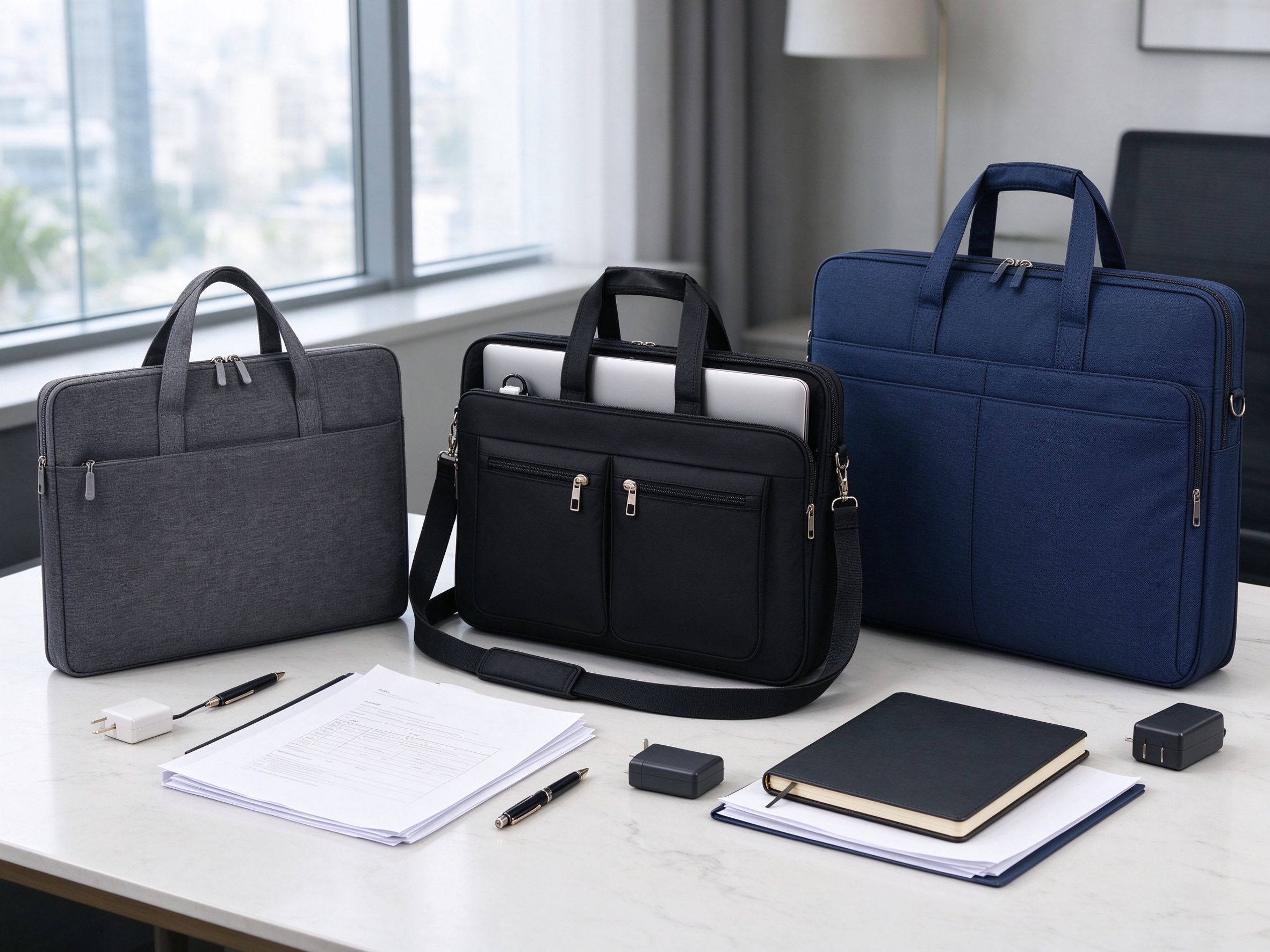
For formal environments, common visual choices include black, dark gray or navy exteriors, minimal decoration, controlled logo placement and clean rectangular construction. A textile briefcase does not necessarily look casual — a well-structured Oxford fabric bag can have a professional appearance when the proportions, hardware and branding are appropriately controlled.
8.1 Handles and Shoulder Straps
Handles are central to the traditional briefcase format. Review handle length, drop, padding, attachment points, reinforcement and grip comfort. A shoulder strap adds flexibility; for a laptop-heavy bag, consider strap width, padding, adjustment range, attachment strength and whether it is detachable or fixed. The bag should be tested when fully loaded — a strap that feels comfortable on an empty sample may feel very different when carrying a laptop, charger and documents.
8.2 Internal Organisation
A good briefcase should organize the contents without creating unnecessary complexity. A practical layout might include a main laptop compartment, flat document section, front organizer, zipped valuables pocket, charger compartment and pen holders. Avoid adding pockets simply because more pockets appear more sophisticated — each pocket should correspond to an item the user actually carries.
For corporate projects, it is useful to create a simple contents list before developing the internal layout. A sales employee may carry a laptop, charger, product brochures, contracts, notebook and business cards. A conference attendee may carry a tablet, notebook, event documents, badge and charger. An executive may carry a laptop, presentation documents, notebook, charger and personal accessories. These different requirements may justify different briefcase designs.
9. How to Choose a Briefcase for Work
Start with the working environment.
- Formal office: prioritize a structured appearance, document organisation, controlled branding and laptop protection.
- Business-casual office: consider lightweight construction, a shoulder strap, flexible storage and textile materials.
- Frequent commuting: prioritize low empty weight, a padded shoulder strap, stable construction, comfortable handles and appropriate capacity.
- Business travel: look for laptop protection, document storage, a shoulder strap, a luggage sleeve and a secure closure.
- Conferences: prioritize controlled cost, useful capacity, logo visibility, easy distribution and a reusable design.
10. What Businesses Should Specify When Ordering Custom Briefcases
A B2B buyer should provide more than a product name. A useful specification should include:
- Product purpose: whether the bags are for employees, executives, sales teams, conferences, training, client gifts or promotional programs.
- Contents: a list of what recipients actually need to carry.
- Dimensions: laptop size, document format, required internal dimensions and desired external dimensions.
- Construction: material, lining, padding, handles, shoulder strap, closure and hardware.
- Branding: logo artwork, logo size, logo position, preferred decoration method and corporate colours.
- Packaging: individual packaging, labels, cartons, shipping marks and private-label requirements.
For buyers developing a branded professional work bag, the custom business briefcases manufacturer page is a relevant next step, because the project can be defined around actual users, contents and branding requirements rather than simply selecting a generic category.
11. Briefcase Branding Options
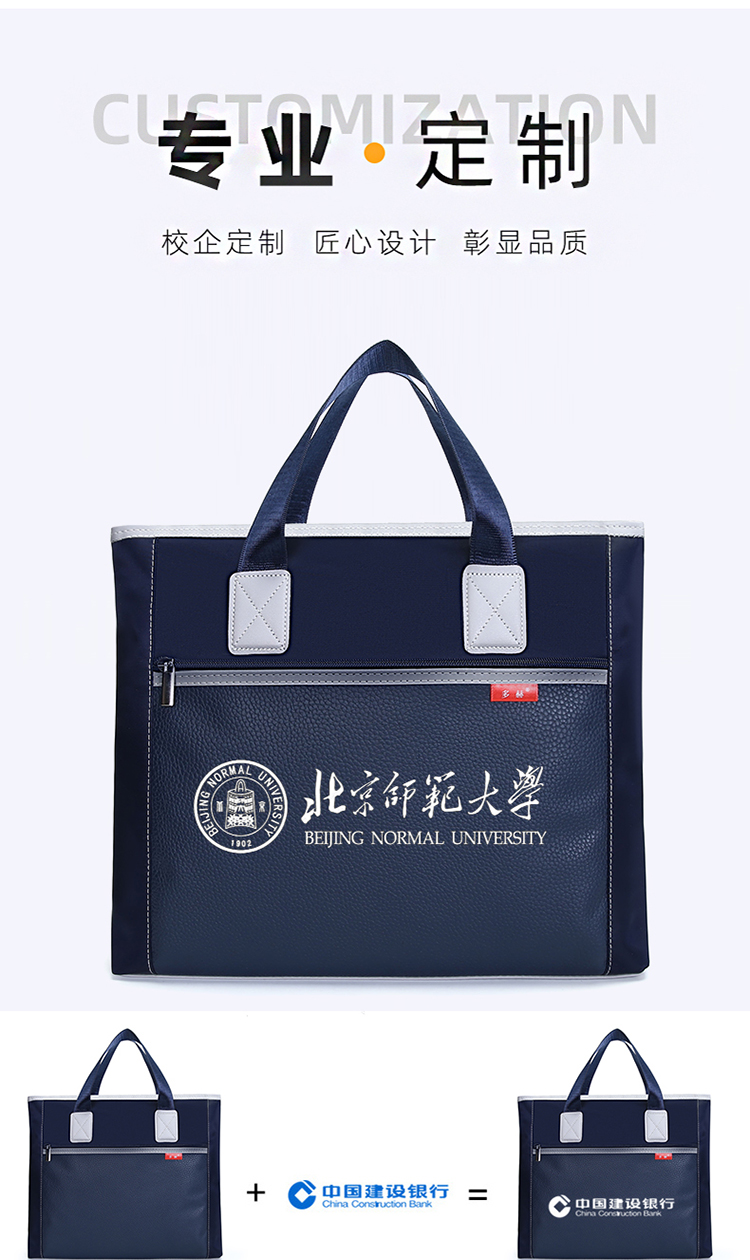
Depending on the material and design, branding may include screen printing, heat-transfer printing, embroidery, woven labels, rubber patches, metal badges and embossing on suitable surfaces.
The logo should be evaluated in relation to the bag. A formal executive briefcase may benefit from a small, restrained logo. A conference bag may require more visible event branding. An employee onboarding bag may need a subtle corporate mark so that it remains useful after the initial program. The custom bags with logo page can be used when comparing branding approaches and logo placement.
12. How to Test a Briefcase Before Bulk Production
A sample should be tested with the actual contents.
- Fit test: place the actual laptop, protective case, charger, documents and notebook inside.
- Carry test: test hand carrying, shoulder carrying, walking, sitting, entering a vehicle and moving through a building.
- Access test: check whether the user can remove the laptop, reach the charger, retrieve documents and access small accessories.
- Branding test: check logo position, logo size, colour, surface compatibility and visual balance.
- Construction test: inspect stitching, zippers, handles, strap attachments, base, edges and hardware.
The sample should represent the final production specification as closely as possible.
13. When Is a Briefcase the Right Choice?
A briefcase is usually a strong option when the user needs a combination of professional appearance, laptop protection, document storage, organized compartments, hand carrying and optional shoulder carrying. It is especially suitable for office professionals, executives, consultants, sales teams, legal professionals, corporate employees, conference participants and business travelers.
A different format may be preferable when the user needs maximum hands-free carrying, very large capacity or heavy loads. In those cases, a backpack or other larger work bag may be more practical.
14. Frequently Asked Questions
What is a briefcase used for?
A briefcase is designed to carry professional work items such as documents, laptops, notebooks and business accessories in an organized, professional format.
Are briefcases only for formal offices?
No. Modern briefcases can be made from lightweight textile materials and designed for business-casual workplaces, commuting, conferences and travel.
Can a briefcase hold a laptop?
Many modern briefcases include padded laptop compartments. Actual compatibility should be confirmed using the laptop’s physical dimensions rather than screen size alone.
Is a briefcase better than a backpack?
It depends on the use case. A briefcase generally provides a more formal appearance and convenient document access. A backpack can be better for longer commutes and heavier loads because it uses two shoulder straps.
Can a briefcase have a shoulder strap?
Yes. Many modern briefcases include a detachable or adjustable shoulder strap.
What material is best for a briefcase?
There is no single best material. Leather, PU leather, Oxford fabric, nylon, polyester and canvas can all be appropriate depending on appearance, weight, budget and intended use.
Can businesses customize briefcases?
Yes. Custom projects can specify dimensions, compartments, materials, colours, logos, handles, straps, packaging and other construction details.
What should I provide when requesting a custom briefcase?
Provide the intended use, target quantity, laptop dimensions, contents list, preferred material, logo artwork, colour, packaging requirements and delivery destination. A sample should then be evaluated before bulk production.
15. Final Takeaway
Now that you know what is a briefcase, remember: it is not defined only by a rectangular shape or a leather exterior. A modern briefcase is a professional work bag built around organized carrying. It may be lightweight or structured, hand-carried or fitted with a shoulder strap, designed mainly for documents or built around a laptop.
The right briefcase depends on what needs to be carried, how the bag will be carried, how formal the environment is, how much organisation is required, how often the user commutes and whether the bag is for personal or corporate use.
For B2B buyers, the most important step is to define the intended use before choosing a model. Laptop dimensions, document requirements, internal organisation, material, branding and packaging should all be established before sampling. A good briefcase is therefore not simply a bag that looks professional — it is a work tool whose dimensions, construction and organisation match the user’s actual routine.