Laptop Bag vs Backpack for Work: Which One Is Better?
Choosing between a laptop bag vs backpack for work depends on more than personal style. This guide compares carrying comfort, laptop protection, document storage, commuting, professional appearance, branding and corporate ordering to help you decide which format fits your daily work routine. The laptop bag vs backpack for work question affects daily comfort, professional image and even long-term posture.
Choosing between a laptop bag and a backpack depends on more than personal style.
Both can protect a computer and carry work essentials, but they distribute weight differently, create a different professional impression and suit different commuting patterns.
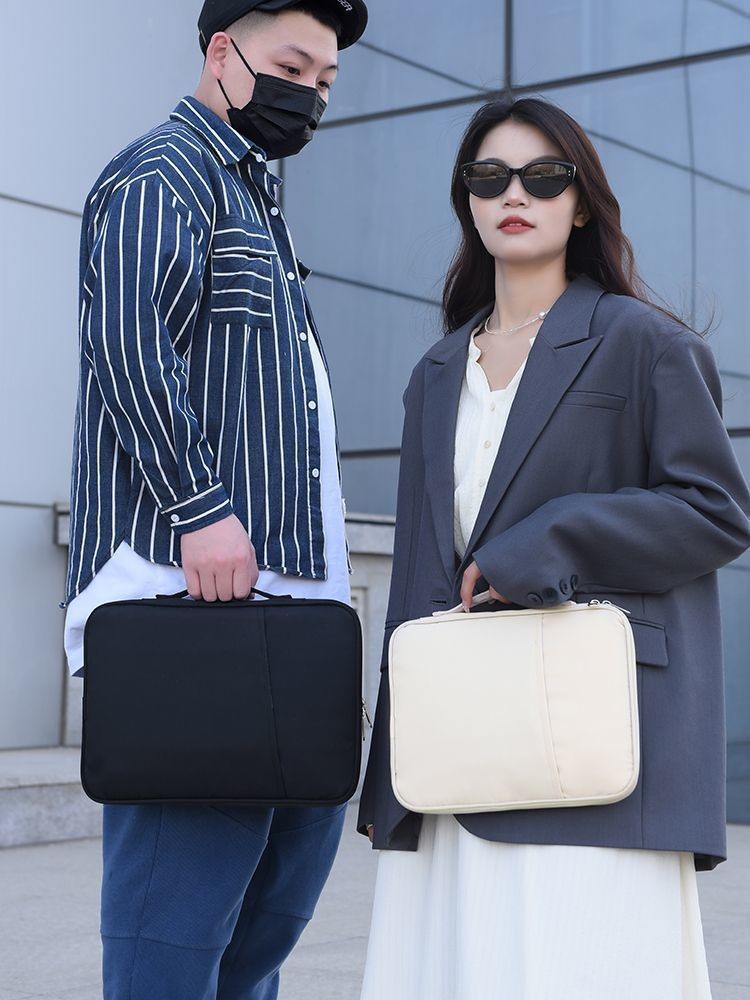
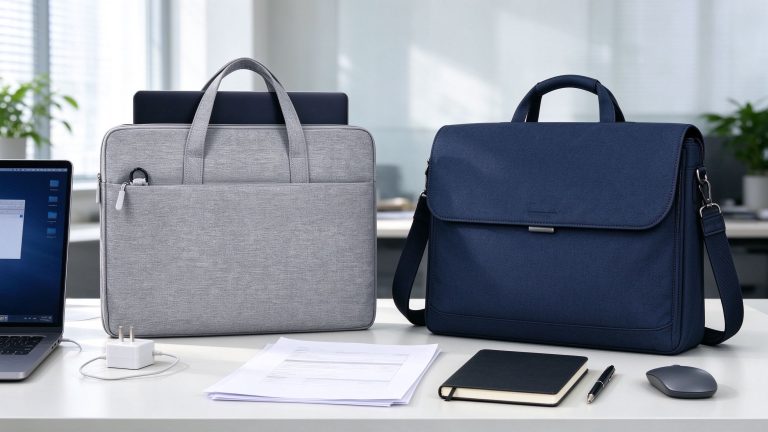
A laptop bag usually refers to a briefcase, shoulder bag, messenger bag or sleeve designed around a computer and related work items. It may provide a more formal appearance, easier document access and a convenient hand-carry option.
A backpack distributes weight across two shoulders and may be more comfortable for longer commutes or heavier loads. It can also provide more room for personal items, clothing and travel accessories.
Neither option is automatically better for every professional. The better choice depends on:
- Laptop size
- Daily carry weight
- Commute length
- Walking and public-transit use
- Document requirements
- Workplace formality
- Need for hands-free movement
- Corporate branding or procurement requirements
This guide compares laptop bags and backpacks for work and explains which format is more suitable for commuting, meetings, travel, employee programs and corporate orders.
What Counts as a Laptop Bag?
Any laptop bag vs backpack for work comparison starts with what a laptop bag actually is. A laptop bag is a work bag designed around a computer and business accessories.
Common formats include:
- Laptop briefcase
- Laptop shoulder bag
- Laptop messenger bag
- Crossbody laptop bag
- Laptop sleeve
- Conference laptop briefcase
- Slim business case
A laptop bag may include:
- Padded laptop compartment
- Tablet sleeve
- Document divider
- Charger pocket
- Front organiser
- Top handles
- Detachable shoulder strap
- Rear luggage sleeve
Laptop bags belong to the broader briefcase product family adapted for computer carry, so the term does not define one exact shape or capacity. A slim sleeve may carry only a computer, while a business laptop briefcase may carry a laptop, documents, notebook, charger and accessories.
The current BriefcaseCustom laptop-bag collection includes laptop briefcases, messenger bags, sleeves and corporate laptop bags, confirming that “laptop bag” is a product family rather than one fixed format.
What Counts as a Work Backpack?
On the backpack side of the laptop bag vs backpack for work comparison, a work backpack is a two-strap bag designed to carry work items on the back.
A business-oriented backpack may include:
- Padded laptop compartment
- Tablet sleeve
- Main storage section
- Front organiser
- Side pockets
- Water-bottle pocket
- Travel or luggage sleeve
- Padded back panel
- Adjustable shoulder straps
Some backpacks are designed for office commuting, while others are built for travel, outdoor use or general everyday carry.
A work backpack belongs to the general backpack family adapted for business use. It may provide more total capacity than a slim laptop bag, but it can also look more casual depending on the material, structure, colour and hardware.
The Main Difference: One-Shoulder or Two-Shoulder Carry
The clearest practical difference in the laptop bag vs backpack for work comparison is weight distribution.
Laptop bag
A laptop bag is usually carried:
- By hand
- On one shoulder
- Across the body
This can make it easier to access documents and devices quickly. It may also create a more formal appearance.
Backpack
A backpack is carried on both shoulders. This can help distribute weight across the upper body, especially when the user walks or commutes for longer periods.
The trade-off is access. To reach the laptop compartment, the user normally needs to remove or rotate the backpack.
A practical decision should begin with the carrying pattern rather than the product’s appearance.
Laptop Bag vs Backpack for Work: Daily Commuting
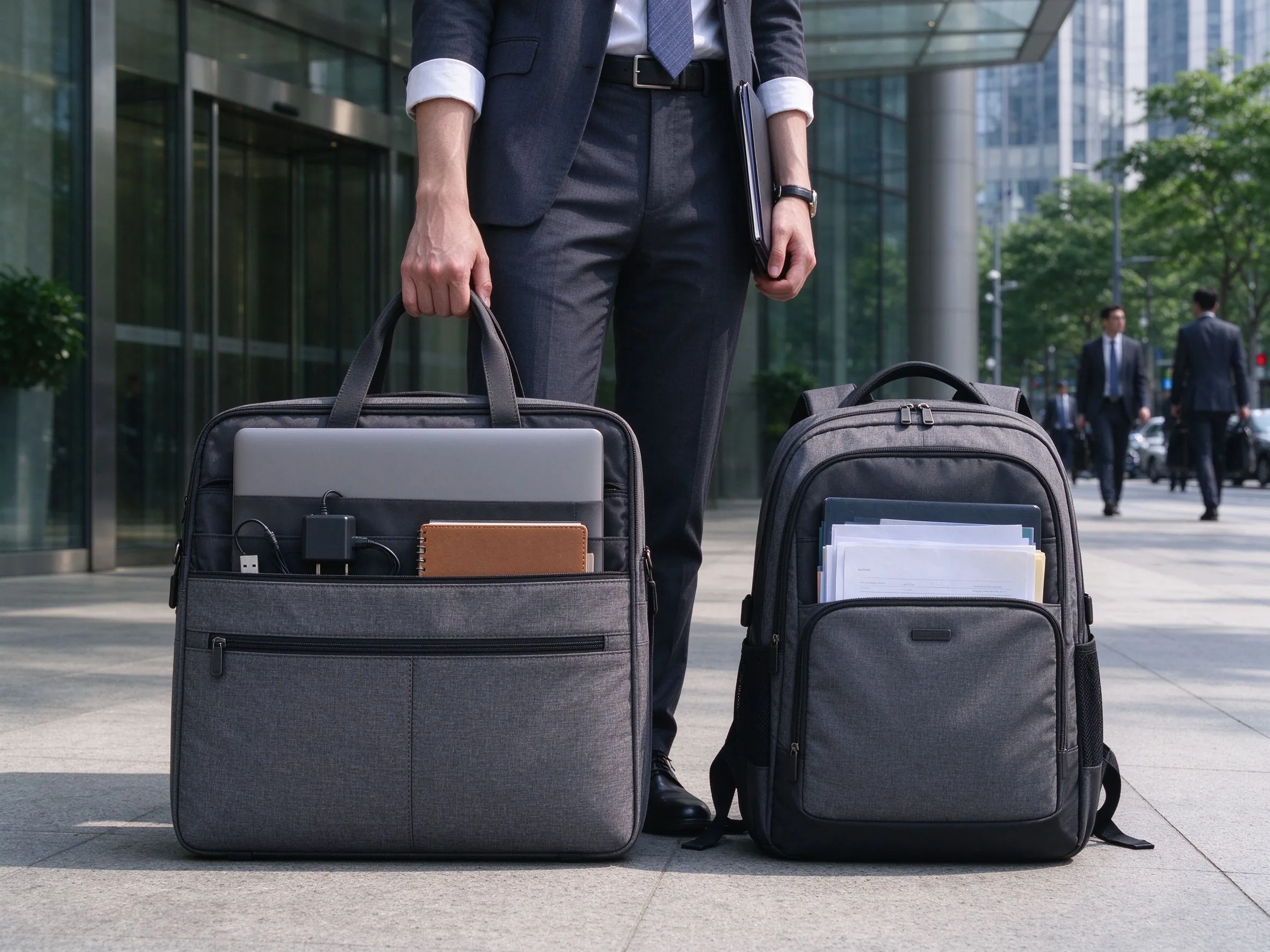
Choose a laptop bag when:
- The commute is short
- The user carries a light load
- The work environment is formal
- Documents need to be accessed frequently
- The user moves between meetings
- Hand-carrying is acceptable
- The bag must transition easily from commute to client meeting
A laptop briefcase or shoulder bag can work well for office-based professionals who carry a computer, notebook, charger and a few documents.
Choose a backpack when:
- The commute includes substantial walking
- The user uses public transportation
- The user carries a heavier laptop setup
- Hands-free movement matters
- The user carries personal or travel items
- The bag is worn for longer periods
A backpack may be more practical for employees who move between buildings, campuses, stations or customer sites.
The right choice depends on the actual load. A small backpack is not automatically more comfortable than a well-balanced laptop bag, and a large laptop bag may become tiring when fully loaded.
Weight Distribution and Carrying Comfort
Carrying comfort depends on:
- Total loaded weight
- Position of the laptop
- Strap width
- Padding
- Bag balance
- Commute duration
- User posture
- How often the bag is removed and carried
Laptop bag comfort
A laptop bag places most of the load on one hand or one shoulder. This may be acceptable for a light setup or short commute.
Potential advantages:
- Easy to put down
- Easy to access
- Professional appearance
- Convenient for short trips
Potential limitations:
- Uneven weight distribution
- More pressure on one shoulder
- Less suitable for heavy loads
- Can swing while walking if worn crossbody
Backpack comfort
A backpack can spread the load across two shoulders and keep the bag close to the back.
Potential advantages:
- Better for longer walks
- More suitable for heavier loads
- Leaves both hands free
- Can hold personal and work items together
Potential limitations:
- Less convenient for quick access
- May feel too casual in some offices
- A poorly designed back panel or strap can still be uncomfortable
- A large backpack may encourage overpacking
A physical sample or product test should be performed with the complete daily carry rather than an empty bag.
Professional Appearance

For client-facing professionals, the laptop bag vs backpack for work choice is often decided by formality and impression.
Laptop bag appearance
A structured laptop bag may communicate:
- Formality
- Organisation
- Client-facing professionalism
- Traditional business style
- Direct document access
This can be useful for:
- Executives
- Consultants
- Sales representatives
- Client-facing employees
- Legal and finance professionals
- Corporate meetings
Backpack appearance
A work backpack may communicate:
- Mobility
- Practicality
- Modern work style
- Commuting convenience
- Casual professionalism
It can be suitable for:
- Technology teams
- Designers
- Students and trainees
- Field staff
- Hybrid workers
- Employees with longer commutes
The material and structure make a major difference. A clean Oxford or nylon backpack with restrained branding may look professional, while a soft outdoor-style backpack may feel less appropriate in a formal business environment.
Likewise, a slim laptop briefcase may look more professional than a bulky promotional bag.
Laptop Protection
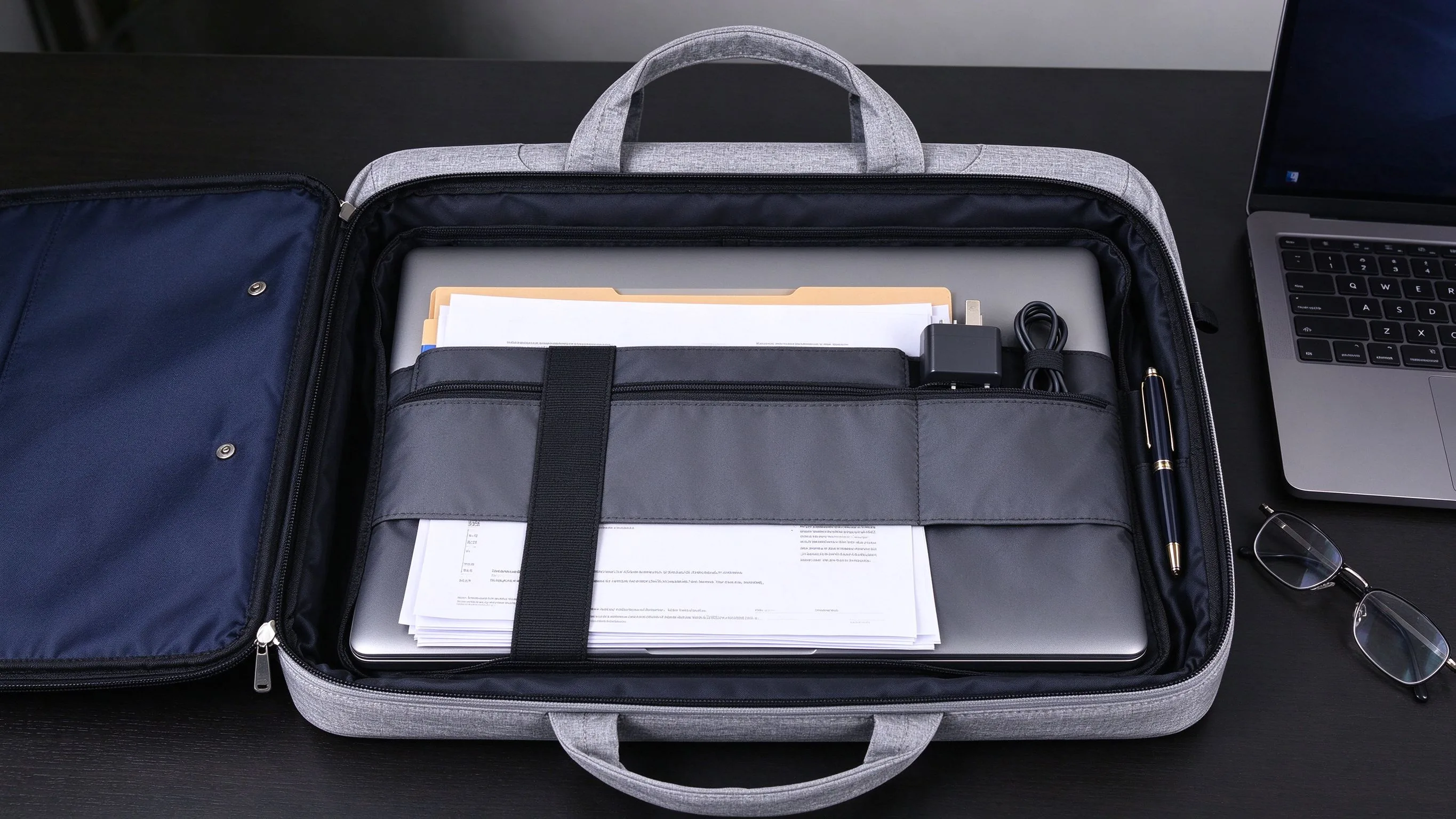
Both formats can protect a laptop if the internal compartment is properly designed.
Review:
- Laptop-compartment dimensions
- Padding thickness
- Side protection
- Base protection
- Closure
- Device movement
- Contact with chargers and hard accessories
Do not choose a bag only by screen-size label. Two laptops with the same advertised screen size may have different physical dimensions.
Measure:
- Laptop length
- Laptop width
- Laptop thickness
- Protective-case dimensions
- Charger size
The current BriefcaseCustom laptop-bag guidance recommends confirming actual device dimensions before sample or bulk approval rather than relying only on a general screen-size description.
A laptop bag may offer a more structured device compartment. A backpack may offer more surrounding space, but the device should still be held securely rather than allowed to move within a large cavity.
Document and Paper Storage
Documents often influence the decision more than the laptop itself.
Laptop bag for documents
A briefcase or shoulder bag may be better when the user regularly carries:
- A4 documents
- Presentation folders
- Contracts
- Brochures
- Quotations
- Notebooks
The more formal structure may keep papers flatter and easier to retrieve.
Backpack for documents
A backpack may hold documents, but loose papers can bend if the main compartment is not structured.
A work backpack should include:
- Dedicated document sleeve
- Flat divider
- Stable back panel
- Adequate width and height
- Protection from chargers and other hard items
If the user carries documents to meetings, a laptop bag may offer a more convenient format even when a backpack would be more comfortable for the commute.
Access and Organisation
Laptop bag access
Laptop bags often provide faster access to:
- Laptop
- Documents
- Notebook
- Phone
- Business cards
- Charger
This can be useful at:
- Airport security
- Client meetings
- Conference registration
- Office reception
- Training events
A front pocket or organiser section can keep small items separate from the main compartment.
Backpack access
Backpacks may provide more total storage but often require the user to:
- Remove the bag
- Place it on a surface
- Open the main compartment
- Search through the contents
Some work backpacks add side-access or rear-access laptop compartments, which can improve convenience. However, the user should still test whether the chosen layout works with the actual device and accessories.
Capacity and Overpacking
A laptop bag is often designed around a defined work kit.
A backpack may encourage the user to add:
- Clothing
- Lunch
- Water bottle
- Gym items
- Books
- Travel accessories
- Extra electronics
This can be useful, but it can also create excessive weight.
Laptop bag capacity
Choose a laptop bag when the intended contents are relatively controlled:
- Laptop
- Charger
- Notebook
- Documents
- Small accessories
Backpack capacity
Choose a backpack when the user needs to combine work and personal items or travel between locations.
For a corporate program, the product should not be made larger simply to create the impression of high capacity. A larger bag can increase:
- Weight
- Material use
- Shipping volume
- Storage requirements
- Risk of overpacking
Laptop Bag vs Backpack for Work: Business Travel
Laptop bag for travel
A laptop briefcase or shoulder bag can be useful for:
- Short business trips
- Meetings after arrival
- Airport document access
- Carrying a laptop with papers
- Combining with a suitcase
A rear luggage sleeve can make the bag easier to attach to a rolling case.
Backpack for travel
A travel backpack may be better when the user needs:
- Hands-free movement
- Extra clothing
- Multiple accessories
- Longer walking between transport points
- A single carry solution
The bag should still provide:
- Padded laptop compartment
- Secure closure
- Good strap adjustment
- Suitable document storage
- Balanced load placement
A large travel backpack may be less suitable for formal client meetings unless the design has a structured business appearance.
Laptop Bag vs Backpack for Work: Conferences and Training
Conference and training programs often require attendees to carry:
- Laptop or tablet
- Charger
- Notebook
- Training documents
- Badge
- Brochures
- Promotional items
A laptop briefcase may be suitable when:
- The event is formal
- Branding is important
- Documents must stay organised
- The bag is distributed with a controlled kit
- The event uses a business-oriented dress code
A backpack may be suitable when:
- Attendees move between sessions
- The program lasts all day
- Participants carry personal items
- Hands-free movement matters
- The audience includes students, trainees or mobile employees
BriefcaseCustom’s conference-bag content describes laptop-ready conference bags around devices, chargers, documents, notebooks and event materials, with the format chosen around what attendees actually need to carry.
For event buyers, a conference bag manufacturer can help compare a laptop briefcase, document bag or other event format based on contents, branding and distribution requirements.
Materials and Branding
Both laptop bags and backpacks can be made from:
- Oxford fabric
- Nylon
- Polyester
- Canvas
- PU leather
- Genuine leather
Oxford fabric
Oxford fabric can support:
- Professional appearance
- Moderate weight
- Daily use
- Logo customization
- Corporate colours
- Bulk production
Nylon and polyester
These materials may suit flexible, lightweight or travel-oriented products.
Canvas
Canvas can create a more casual or lifestyle-oriented appearance.
PU leather
PU can provide a smoother, more formal look.
Genuine leather
Leather may suit premium corporate programs but can affect cost and weight.
Branding options may include:
- Silk-screen printing
- Heat transfer
- Embroidery
- Woven labels
- Rubber patches
- Metal badges
- Embossing on suitable materials
A laptop briefcase may provide a clear front-panel branding area. A backpack may offer front-panel, strap or woven-label placement.
The custom bags with logo page is relevant when a corporate buyer needs to choose a logo method that fits the material, surface area and intended use.
What Is Better for Corporate Employee Programs?
In the laptop bag vs backpack for work comparison for corporate orders, the employee profile matters more than personal preference.
Employee onboarding
A laptop bag may work well when the company provides:
- Laptop
- Charger
- Notebook
- Documents
- Welcome materials
A backpack may be better when employees commute long distances or need to carry personal items alongside the issued equipment.
Sales and field teams
A laptop bag may provide easier access to:
- Product brochures
- Contracts
- Quotations
- Business cards
- Presentation materials
A backpack may be better for representatives who walk frequently or carry a heavier technical kit.
Corporate gifts
A structured laptop briefcase may feel more formal and gift-oriented.
A backpack may feel more practical for younger teams, technology companies or active commuters.
Training and conferences
The choice should depend on:
- Event duration
- Contents
- Attendee profile
- Distribution method
- Branding goals
- Whether the bag should be reused daily
The commercial pages for custom business briefcases manufacturer and wholesale briefcases both position laptop-ready briefcases around employee programs, client gifting, sales teams and event distribution, making a briefcase the more natural option when formal business presentation is a priority.
When to Choose a Laptop Bag
Choose a laptop bag when:
- The workplace is formal
- You carry documents regularly
- Client access is important
- The daily load is moderate
- You want a hand-carry option
- The product is intended as a corporate gift
- The bag needs a structured business appearance
When to Choose a Backpack
Choose a backpack when:
- The commute is long
- You walk or cycle frequently
- You need both hands free
- The load is heavier
- Work and personal items are combined
- The environment is business-casual
- You need more flexible capacity
When a Hybrid Approach Makes Sense
Some users need both.
For example:
- Use a backpack for the commute.
- Use a slim laptop sleeve or briefcase for client meetings.
- Use a laptop briefcase inside a larger travel bag.
- Use a convertible bag with handles and backpack straps.
For corporate programs, a hybrid solution may be useful when employees have different work routines. However, each added carrying mode increases design complexity, weight and cost.
A practical custom product should not include extra straps or compartments unless they solve a real user problem.
What Buyers Should Specify to a Manufacturer
For a custom laptop bag or backpack project, provide:
- Laptop model and dimensions
- Protective-case dimensions
- Charger and accessory list
- Document requirements
- Daily user profile
- Preferred carry format
- Internal compartment layout
- Material
- Colour
- Logo artwork
- Logo placement
- Packaging
- Quantity
- Delivery destination
- Required in-hands date
If the project serves several user groups, list their differences.
For example:
- Office employees: laptop, charger, documents
- Sales staff: laptop, brochures, contracts, samples
- Trainees: laptop, workbook, notebook, badge
- Executives: laptop, documents, premium presentation requirements
For a structured laptop-bag project, custom laptop bag manufacturer page is the most relevant commercial starting point.
Sample Testing Before Bulk Production
A physical sample should be tested with the actual contents.
Check:
- Laptop fit
- Protective-case fit
- Charger space
- Document fit
- Pocket access
- Strap or handle comfort
- Weight distribution
- Closure operation
- Logo placement
- Colour
- Loaded stability
For a backpack, also test:
- Shoulder-strap adjustment
- Back-panel comfort
- Bag movement while walking
- Laptop access
- Stability when placed on the floor
For a laptop bag, test:
- Handle comfort
- Shoulder-strap comfort
- Document access
- Balance when carried by one side
- Suitability for formal meetings
An empty sample does not show the true user experience.
Common Mistakes
Choosing a backpack only because it holds more
More capacity can create more weight and encourage overpacking.
Choosing a laptop bag only because it looks formal
A formal bag may become uncomfortable during a long commute.
Ignoring documents
A laptop bag or backpack may fit the computer but not the actual folders and papers.
Using screen size as the only fit standard
Actual laptop dimensions are required.
Forgetting accessories
Chargers, mice, headsets and adapters take space.
Selecting a corporate product without user testing
A bag that works for executives may not work for field staff or trainees.
Adding unnecessary hybrid features
Extra straps and compartments can increase weight and reduce usable space.
Skipping sample approval
Bulk production should follow a tested and approved reference.
Laptop Bag vs Backpack Checklist
Before choosing or ordering, confirm:
- Laptop dimensions
- Protective-case dimensions
- Charger and accessory sizes
- Document and folder requirements
- Daily commute conditions
- Expected loaded weight
- Preferred carrying method
- Workplace formality
- Internal compartment layout
- Material and padding
- Strap or handle requirements
- Logo method and placement
- Packaging
- Quantity
- Sample approval
- Delivery date
Final Thoughts
Most laptop bag vs backpack for work decisions come down to commute length, load weight and workplace formality. A laptop bag is usually the better choice for formal work settings, document-heavy routines, client meetings and controlled corporate programs.
A backpack is usually the better choice for longer commutes, heavier loads, hands-free movement and work environments where practicality is more important than traditional business formality.
The right answer depends on the complete work system:
- What the user carries
- How long the bag is worn
- How often the contents are accessed
- Whether documents must remain flat
- How formal the environment is
- Whether the product is for one employee or a larger corporate program
For individual users, the decision should be based on comfort and daily use rather than appearance alone. For corporate and wholesale buyers, the product should be specified around the actual laptop, accessories, documents, recipient profile, branding and distribution requirements.